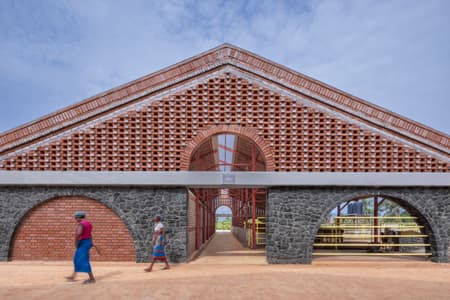
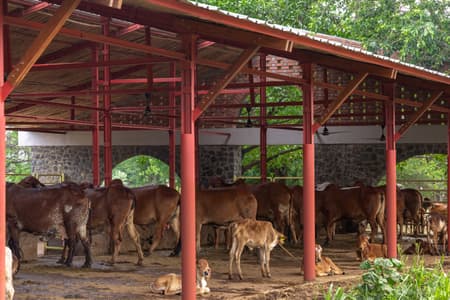
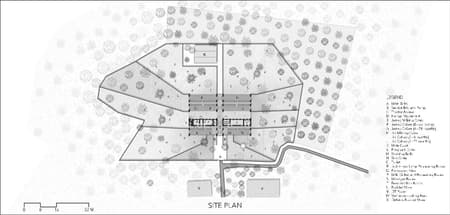
Set within a 350-acre fruit orchard in Dahanu, Maharashtra, the ‘Gaughar’ occupies nearly 14 acres of a larger rural campus that includes a tribal school for 600 children and a skill development centre. More than an isolated structure, the gaushala forms part of a living landscape, one shaped by agriculture, learning, and care. Conceived as a complete reimagining of an existing cow shelter, the project reflects a shift in how spaces for animals are imagined: not as back-of-house infrastructure, but as environments that directly influence health, behaviour, and dignity.
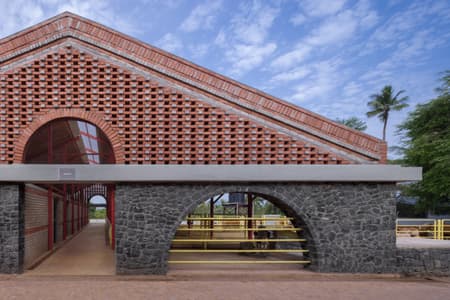
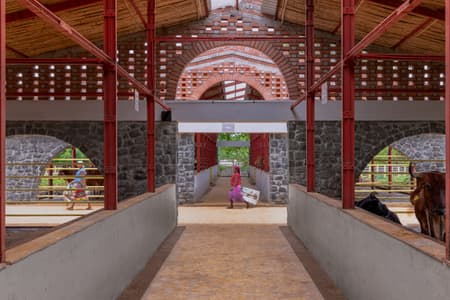
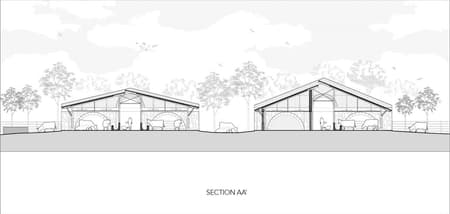
The earlier gaushala was congested, poorly ventilated, and unhygienic, resulting in compromised animal wellbeing and strenuous daily operations. The new design approaches the cow shed as an open, breathable system, one that allows light, air, and movement to flow freely through the built form. Locally sourced black basalt stone, exposed brick, and handcrafted elements give the architecture a grounded presence, while carefully placed openings, skylights, and ridge ventilation bring in soft daylight and continuous airflow. What emerges is a crafted environment for 400 cows - climate-responsive, humane, and rooted in empathy, where architecture supports both care and cyclical ecology rather than merely accommodating function.
Designing for Animal Comfort and Operational Clarity
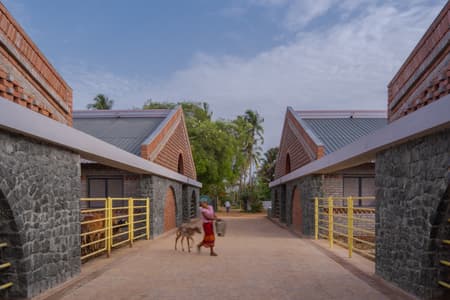
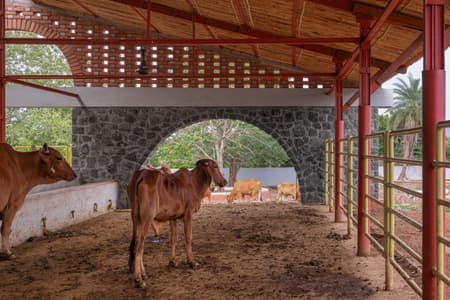
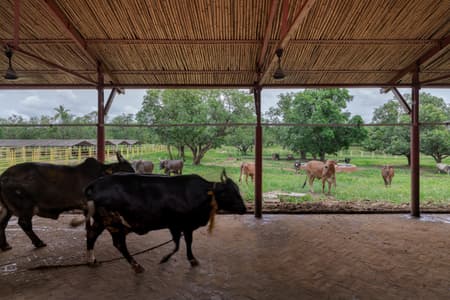
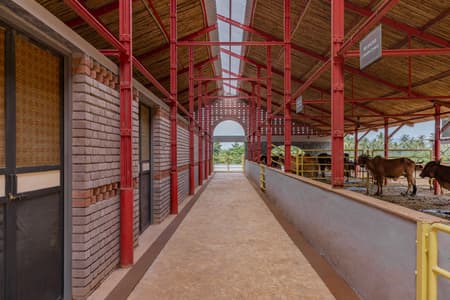
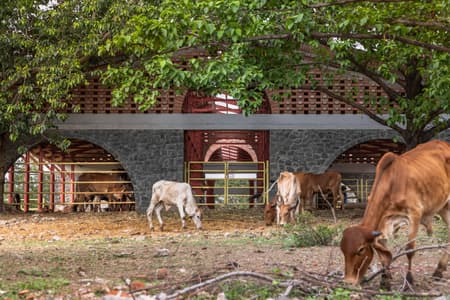
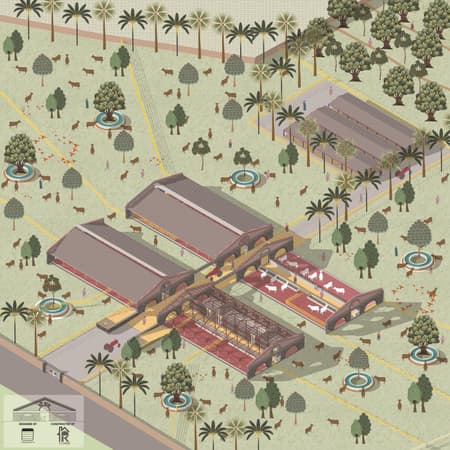
The spatial organisation of the gaushala was developed through a simultaneous engagement with masterplanning and architectural detailing. At the larger scale, the site is structured into clearly defined zones for cattle, services, and open paddocks, ensuring hygiene, ease of movement, and long-term operational clarity. Indoor sheds extend seamlessly into outdoor enclosures, allowing the animals to move freely between shaded and open areas, encouraging natural behaviour and reducing stress.
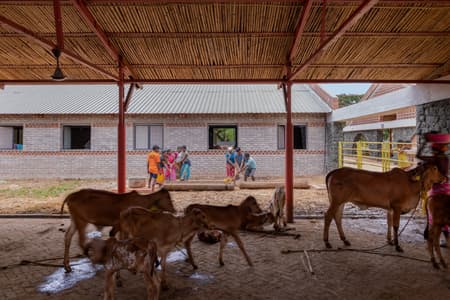
Equal attention was given to the daily routines of caretakers and service staff. Circulation paths for people and cattle are carefully separated, while inflow and outflow services like fodder supply, veterinary access, milk collection, ghee processing, and compost handling, are organised into distinct yet interconnected zones. This separation improves efficiency while maintaining cleanliness across the campus. Gentle ramps support the movement of tractor trolleys and also allow for easier handling of sick or injured animals, making the everyday functioning of the gaushala safer and less strenuous.
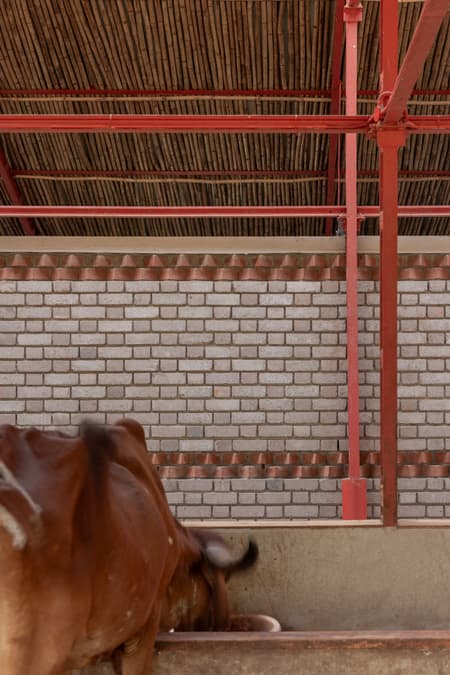
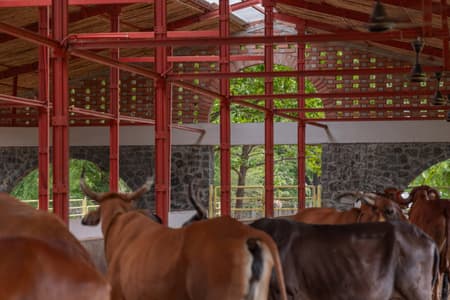
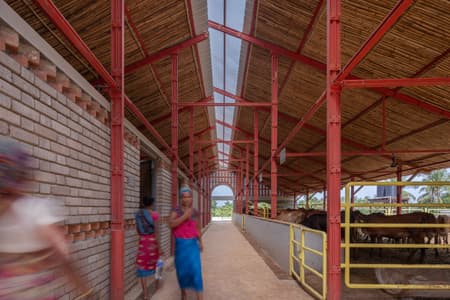
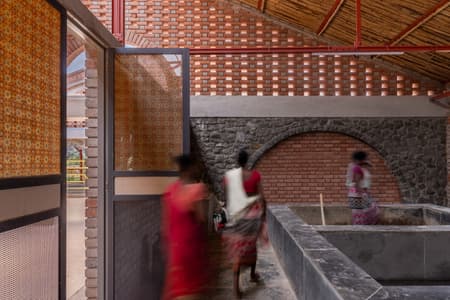
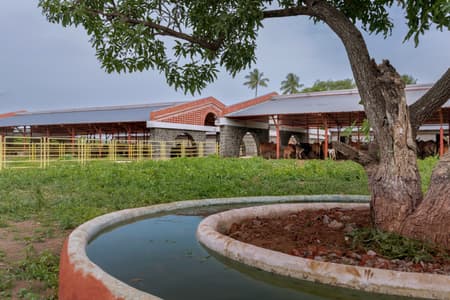
At a finer scale, architectural detailing becomes a direct extension of animal care. Rounded water troughs reduce the risk of injury, breathable brick flooring improves hygiene and cow belly health, and reinforced MS columns with rounded caps double up as scratching surfaces. In the open paddocks, drinking water troughs or 'Havadas' were designed as communal water bodies inspired by the logic of an earthen pot or matka. Lined with lime-plaster, these water bodies remain naturally cool. A tree planted at the centre allows the surrounding soil to regulate heat and the shade of the tree creates a comfortable, sheltered space for the cows to drink water in the open. Daylight enters through central skylights, while ridge ventilation ensures that warm air escapes, allowing the interiors to remain dry, odour-free, and comfortable throughout the day. These elements translate functional requirements into an architecture that is tactile, responsive, and empathetic.
Architecture Rooted in Place and Craft
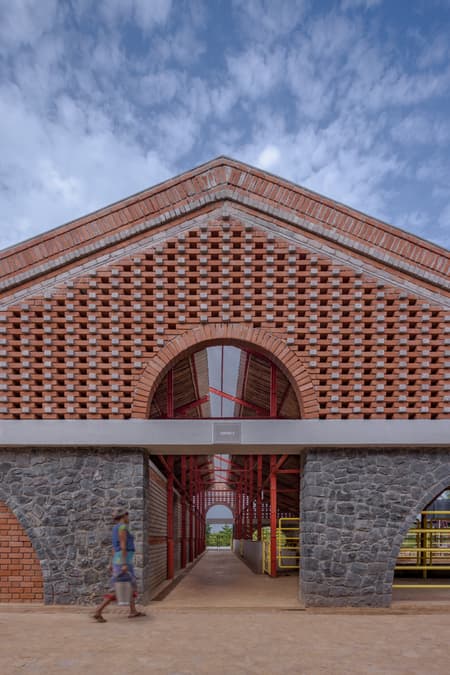
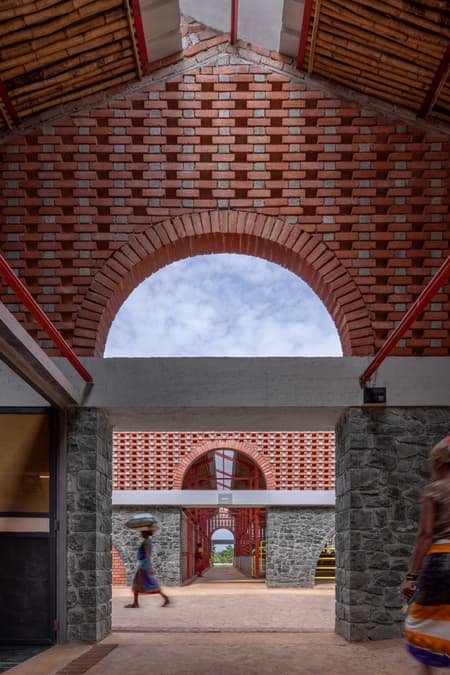
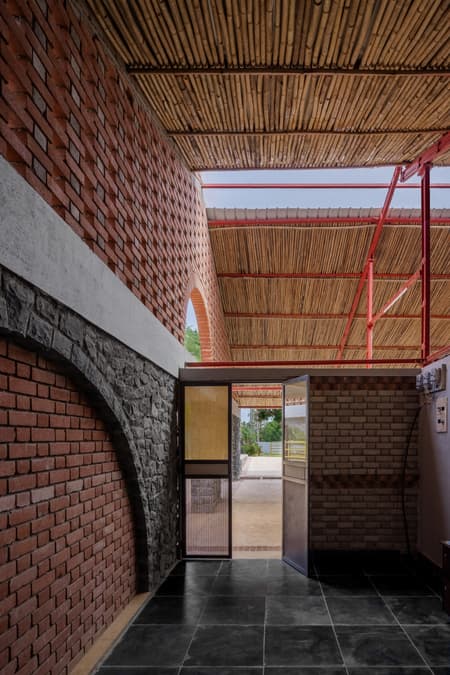
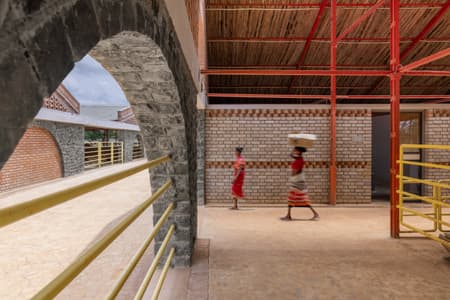
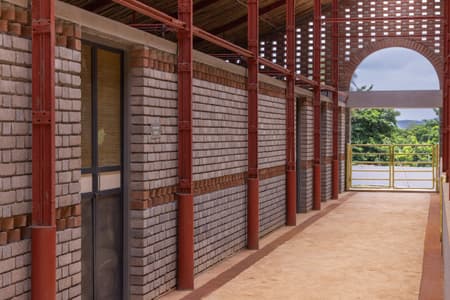
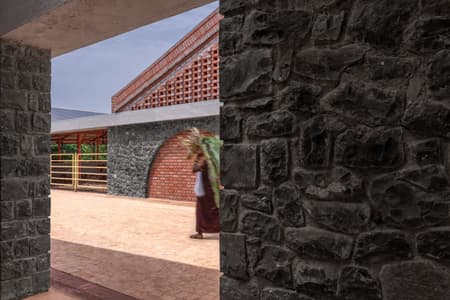
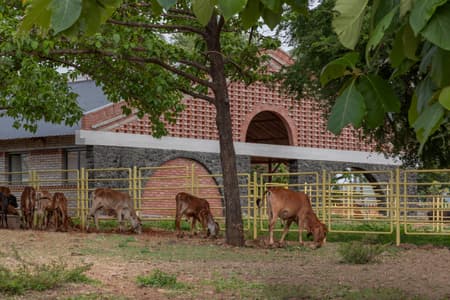
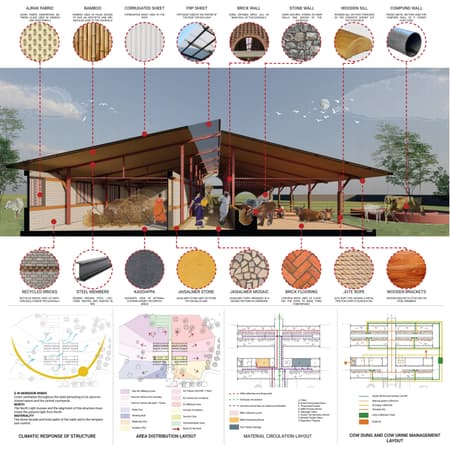
Material choices for the gaushala were informed by the local context of Dahanu - its climate, availability of resources, and long-standing craft traditions. The primary structure is built using locally sourced black basalt stone, assembled into a rhythmic sequence of arched walls that provide both structural stability and spatial character. These arches lend the sheds a grounded, almost civic presence, while also reviving traditional masonry skills that are slowly disappearing from contemporary construction practices.
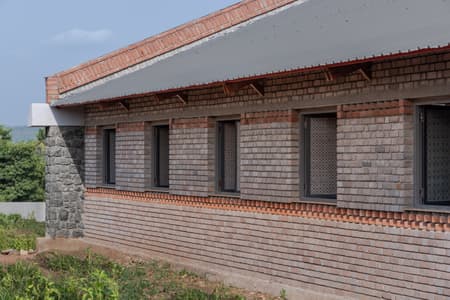
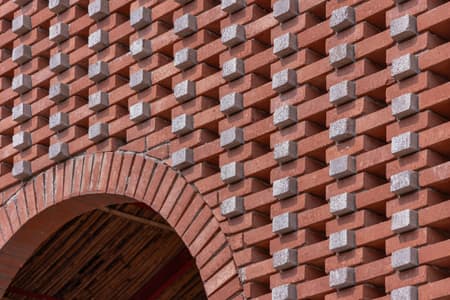
Exposed brick jalis, manufactured in Kesarjan using recycled construction waste, are integrated into the walls to introduce porosity and lightness. They allow air and daylight to filter through the sheds, creating constantly shifting patterns of light and shadow while improving thermal comfort. The material palette remains deliberately restrained - stone, brick, bamboo, and metal, chosen for durability, breathability, and their ability to age with dignity in a coastal environment.
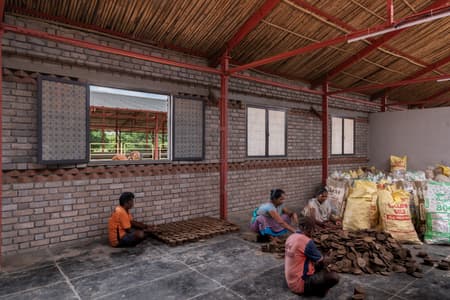
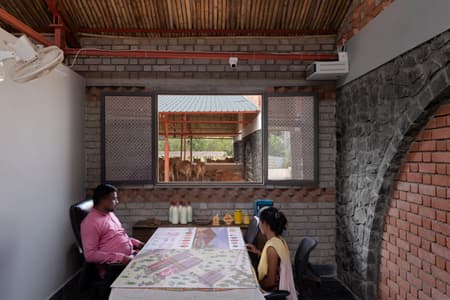
Beneath the industrial roofing sheets, a bamboo false ceiling crafted by artisans from Dang (a tribal region known for its bamboo work), adds a crucial climatic layer. Acting as natural insulation, it reduces heat gain and tempers the interior environment during humid summers. Beyond its environmental performance, the bamboo ceiling softens the scale of the sheds, bringing a sense of warmth and craftsmanship into an otherwise utilitarian structure.
Climate-Responsive and Regenerative Systems
The gaushala is designed as a passive, climate-responsive environment where natural ventilation and daylight reduce dependence on mechanical systems. Arched openings, brick jalis, ridge vents, and skylights work together to maintain continuous airflow, ensuring thermal comfort and healthier living conditions for the animals. The thermal mass of basalt stone and exposed brick further stabilises internal temperatures, while open-to-sky paddocks contribute to a healthier microclimate across the site.
Functionally, the gaushala operates as part of a larger regenerative system embedded within the orchard landscape. Cow dung is composted on site and used as organic manure for the adjoining fruit farm. Water is sourced from natural retention ponds within the larger campus, while wastewater from the gaushala is channelled back into these ponds and agricultural fields. This closed-loop system reinforces the interdependence between livestock, farming, and land, allowing resources to circulate rather than be extracted or wasted.
Community, Ecology, and a Living Landscape
Local sourcing of materials and collaboration with regional artisans played a significant role in shaping both the architecture and its social impact. Stone masons, bamboo craftsmen, and carpenters from surrounding regions contributed to the construction process, embedding local knowledge into the built form. Cultural elements such as Ajrakh fabric panels and handcrafted wooden details bring subtle layers of memory and identity into the agricultural setting, without becoming ornamental.
Over time, the gaushala has evolved into a living landscape rather than a static building. Cows, caretakers, birds, orchards, and water bodies coexist within a shared ecological system. The results of this approach are tangible: milk productivity has increased threefold, ghee output has improved significantly, and there have been no cow deaths due to illness—marking a decisive shift from the conditions of the earlier facility.
Rethinking Agricultural Architecture
'Gaughar' challenges conventional perceptions of agricultural architecture and animal shelters. It demonstrates that spaces designed for livestock need not be anonymous or purely utilitarian, and that care, dignity, and architectural intent can be integral to their functioning. More than a shelter for cattle, the gaushala stands as an example of how architecture can act as stewardship. It is a place where craft meets ecology, where systems are designed to sustain one another, and where the built environment quietly supports the shared lives of animals, caretakers, and the land they inhabit.