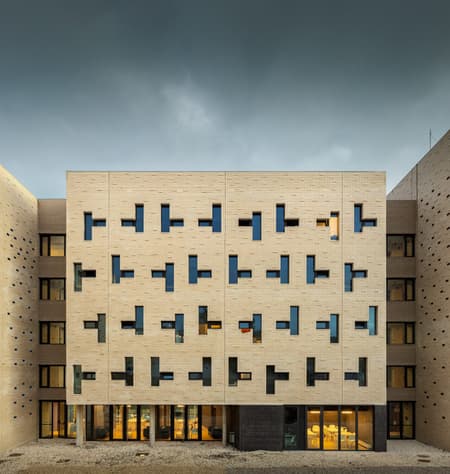
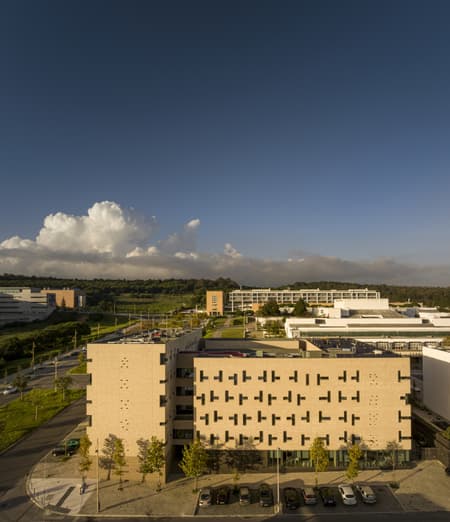
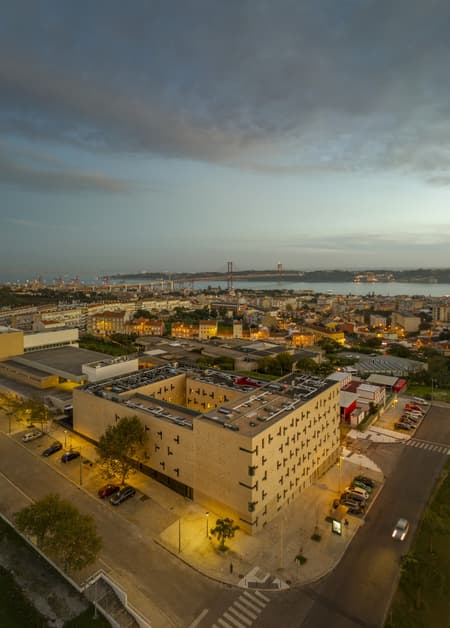
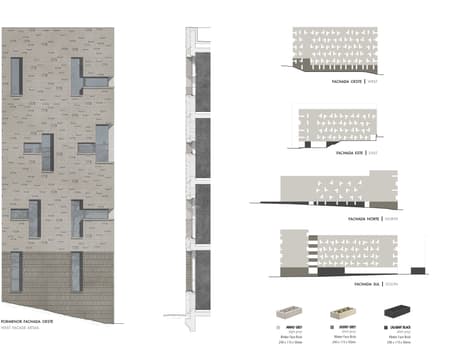
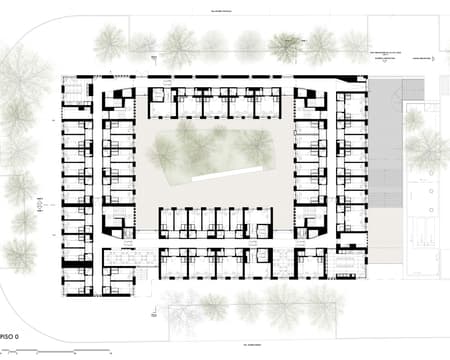
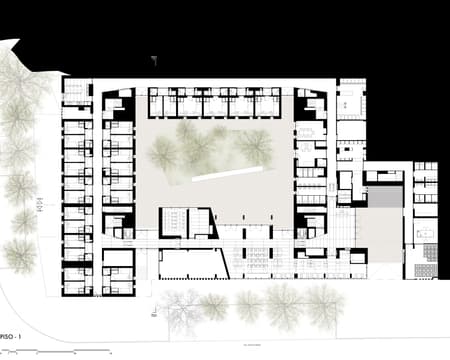
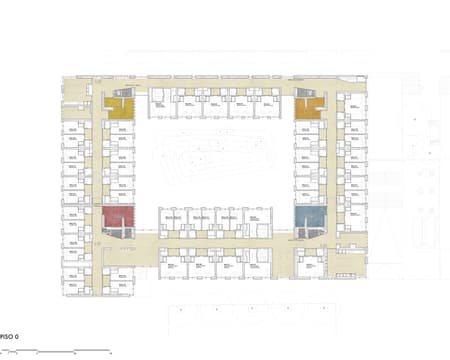
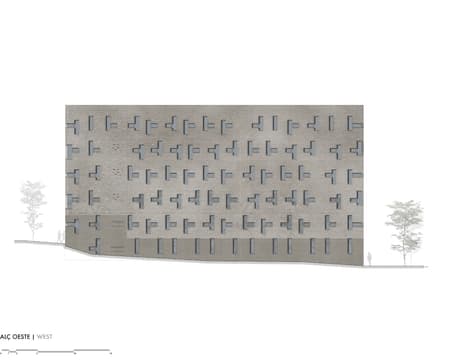
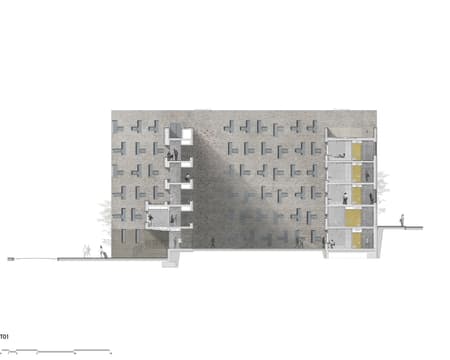
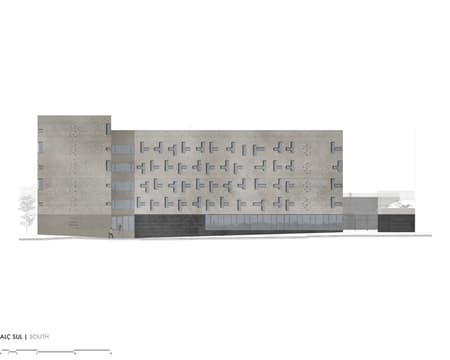
The project for the Students Residence at Pólo da Ajuda – ULisboa was developed considering the density of the program combined with the limitations of the plot area and the maximum permissible facade height.
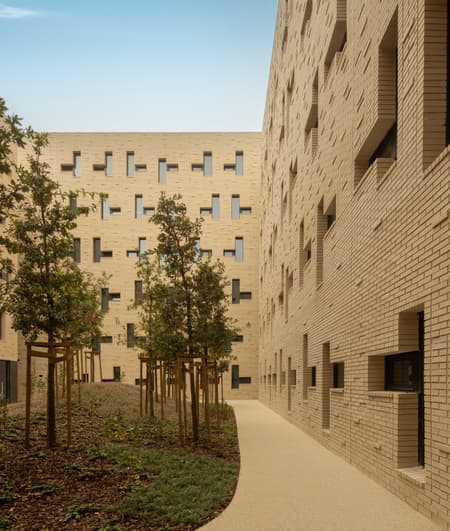
Between the new building and the existing canteen building, a public path is created to connect the streets on the North and South of the site.
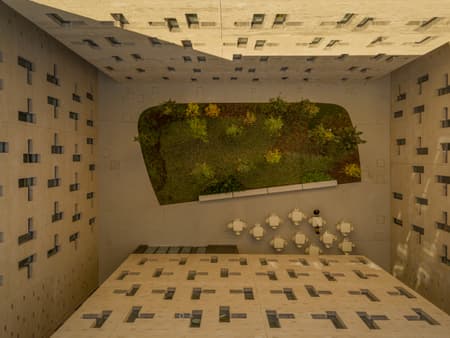
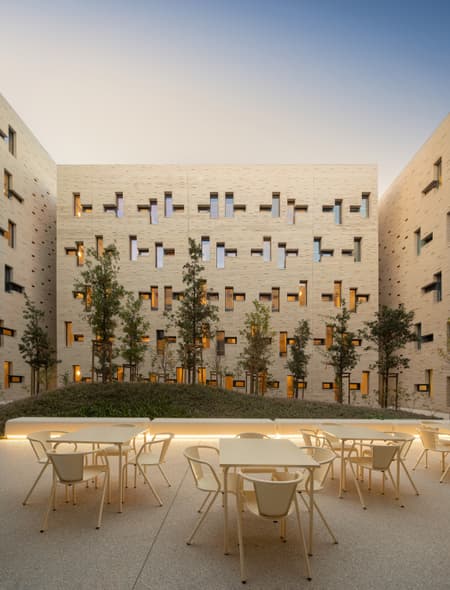
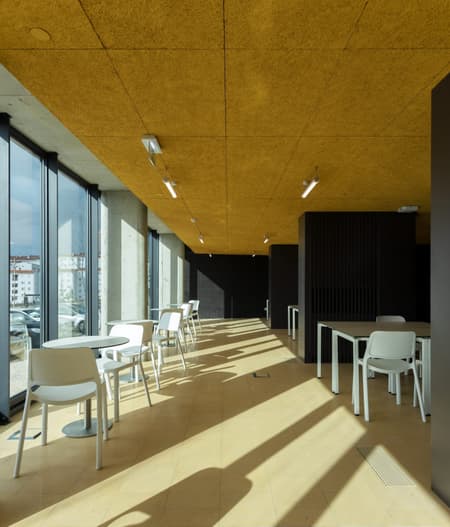
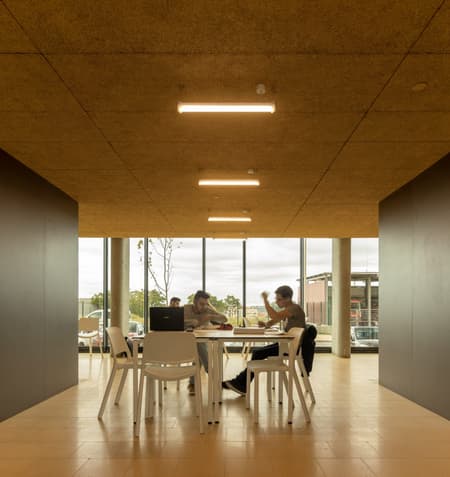
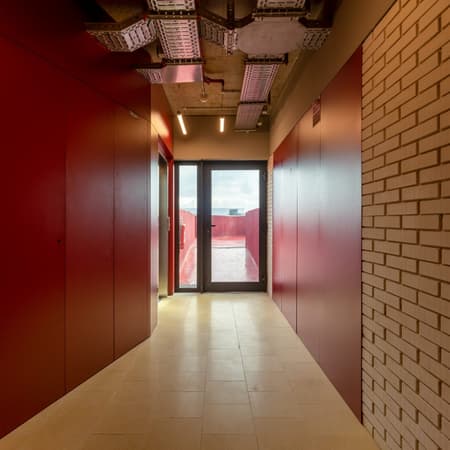
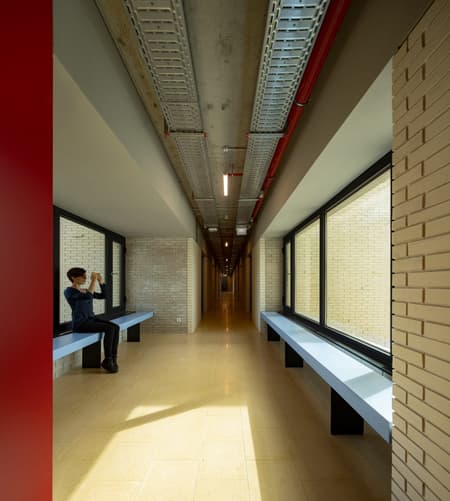
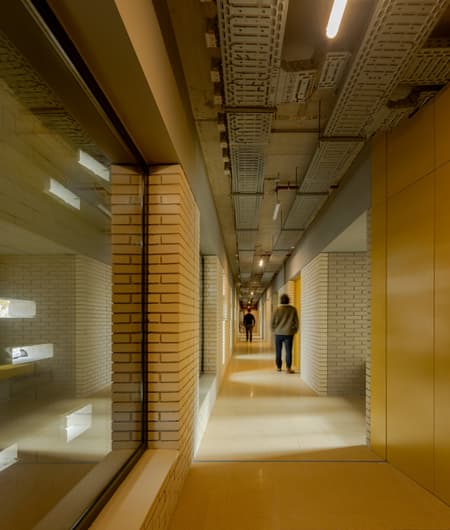
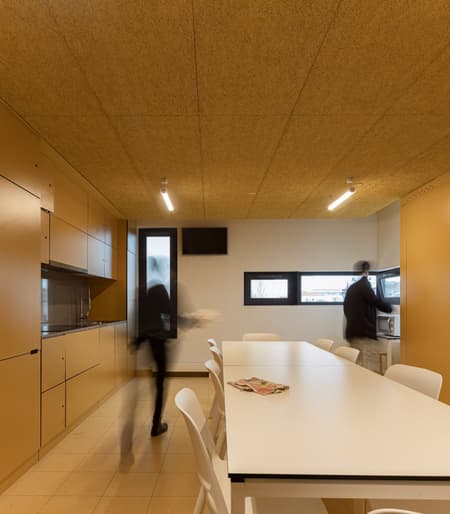
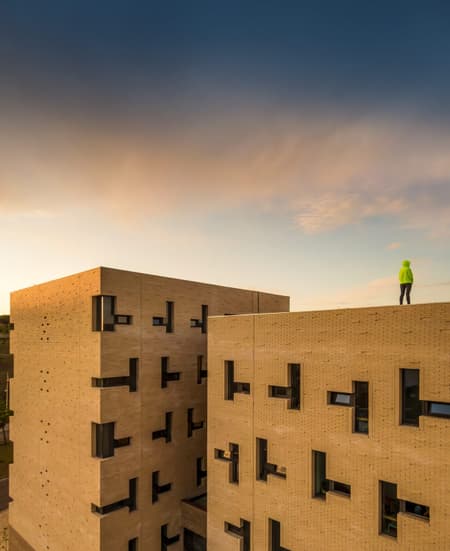
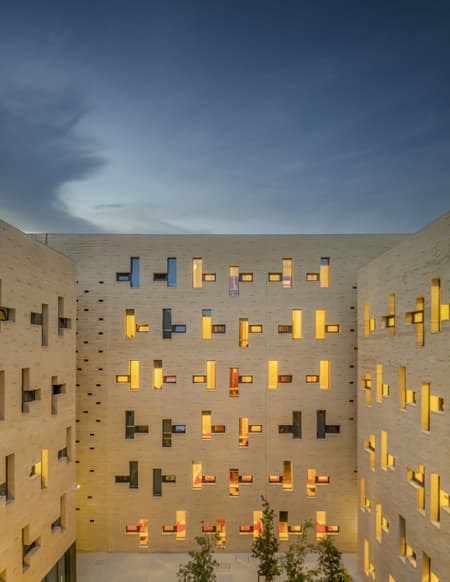
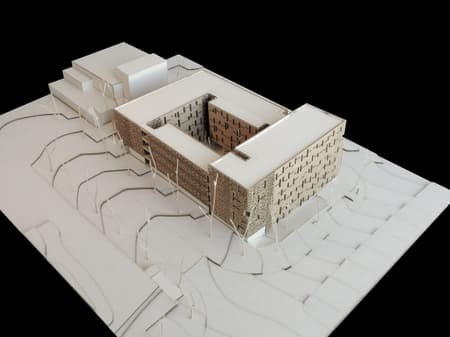
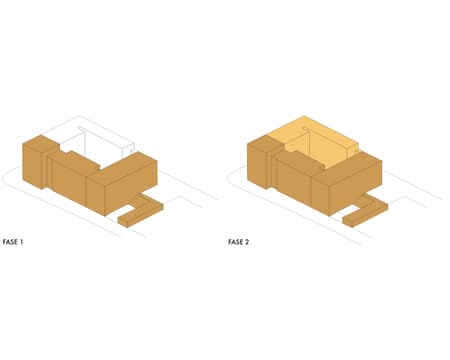
The implantation of the building is developed around a central courtyard. The building consists of three interconnected blocks, corresponding to three different phases of construction. Each block can function independently during the construction process. The circulation within the building is continuous, in “loop”, when all the construction phases are completed. The creation of visual crossings through the central courtyard and interior common use spaces, such as social and study rooms, contributes to dematerialize the compact condition of the building.
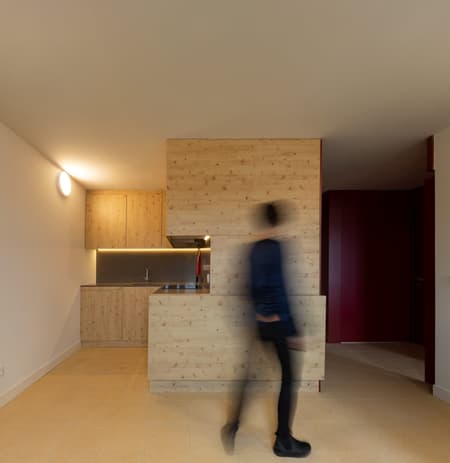
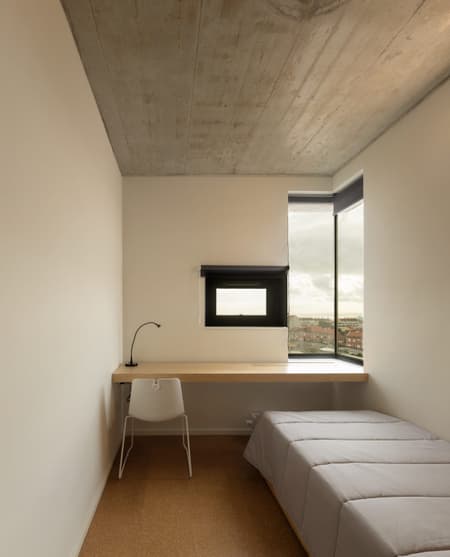
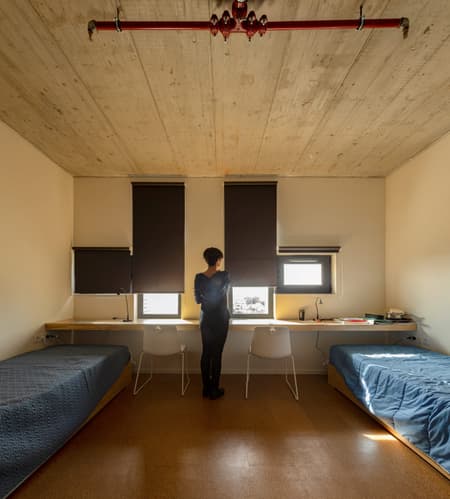
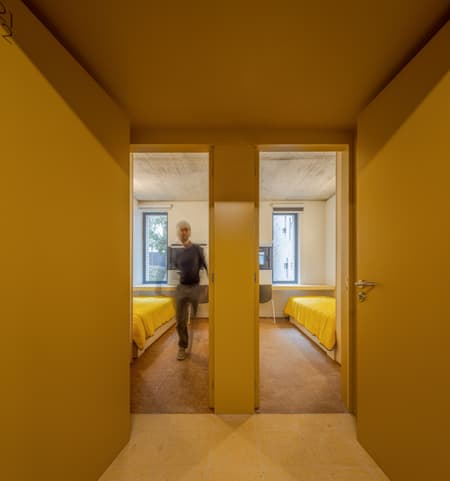
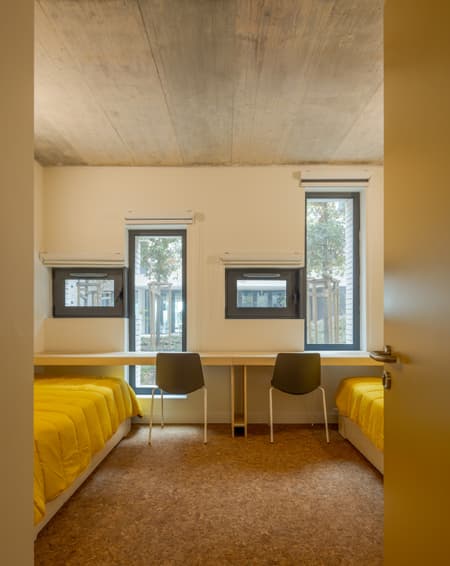
The project is based on the use of a modular unit, equivalent to a single room, to set all kinds of housing units and necessary spaces. This modular unit contributes for the optimization of the project considering the areas and the overall construction economy.
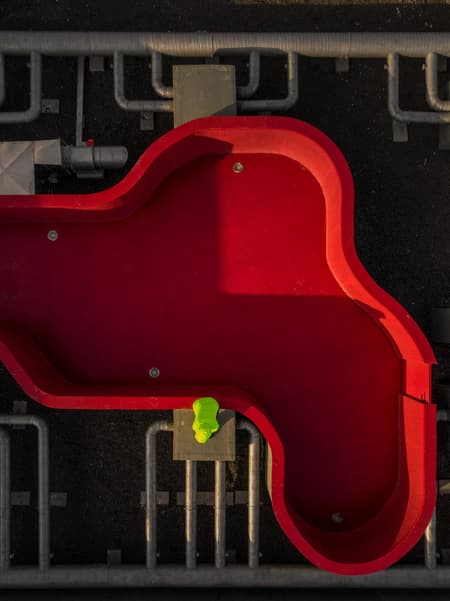
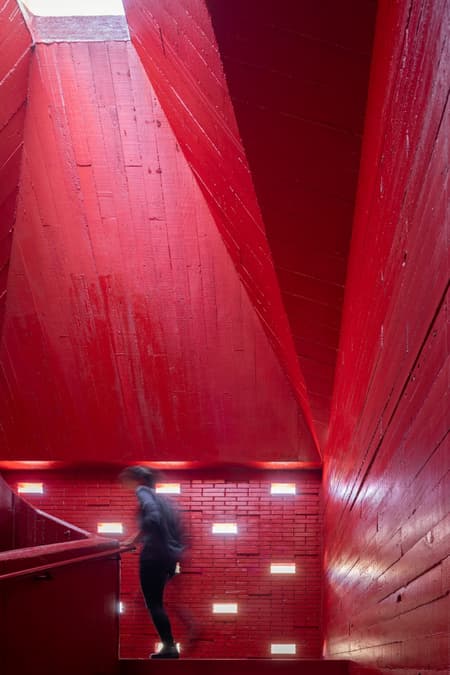
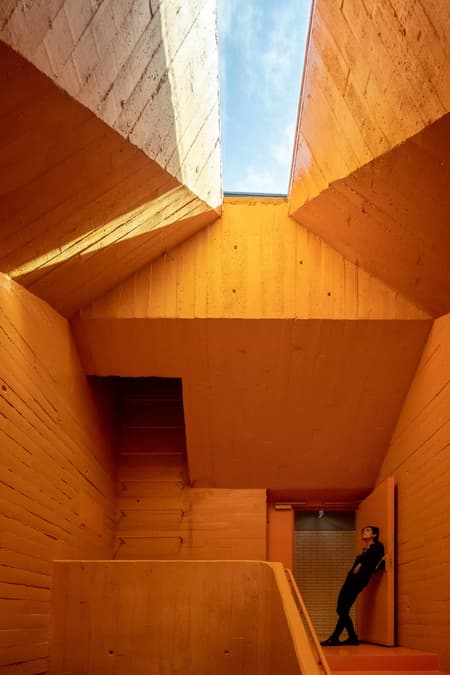
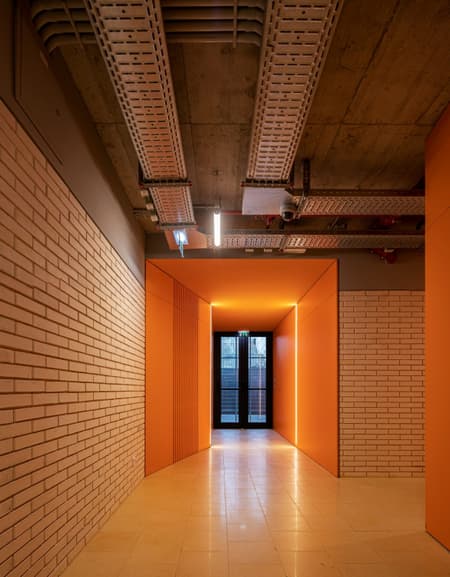
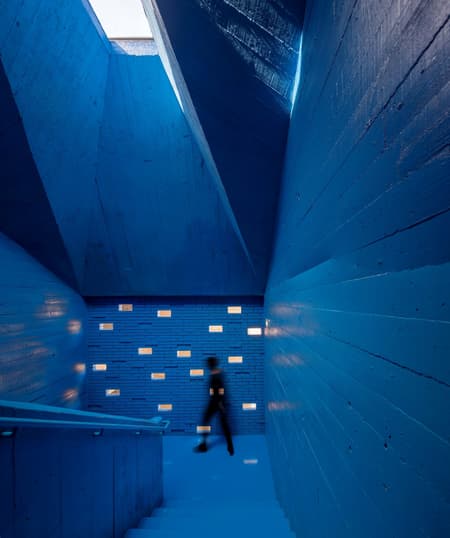
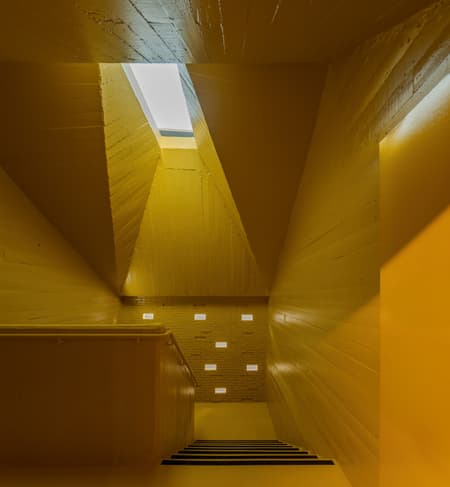
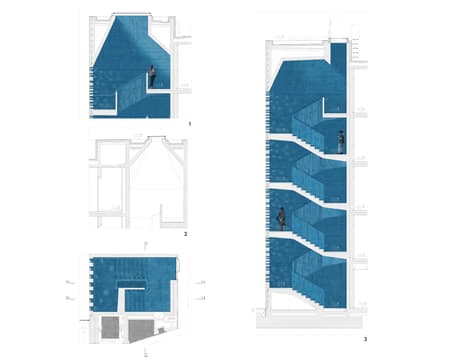
The public areas and the service spaces that support the building functional dynamics are located on the ground floor. The ground floor has a connection with the street on the South of the site. This level is characterized by a visual permeability between the street and the courtyard. The vertical accesses are located near the sculpted corners of the inner central courtyard. There is a terrace on the top of the building that provides a view over the city and the Tagus estuary.