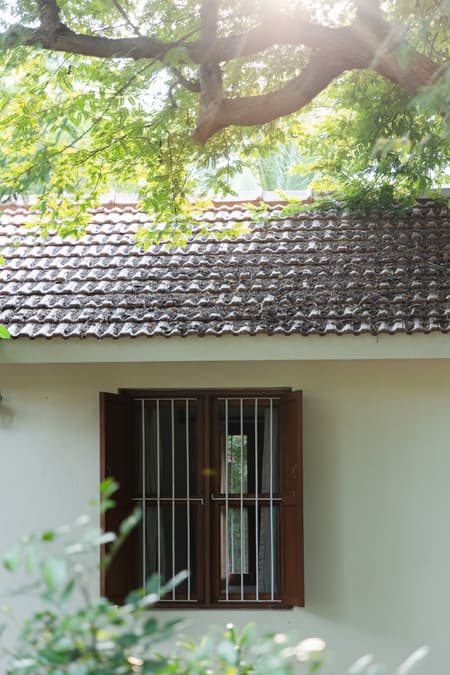
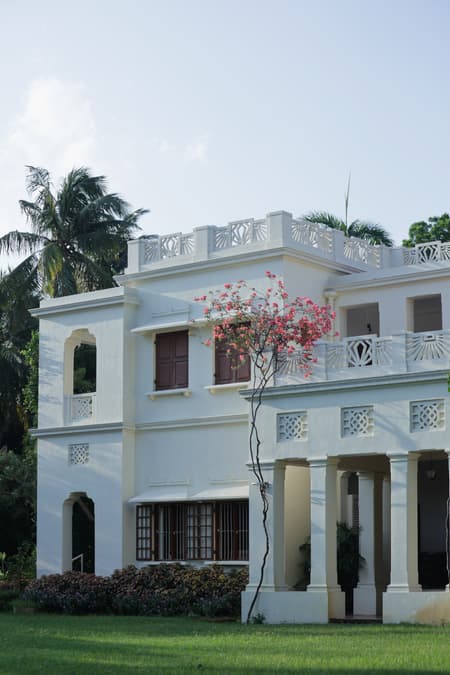
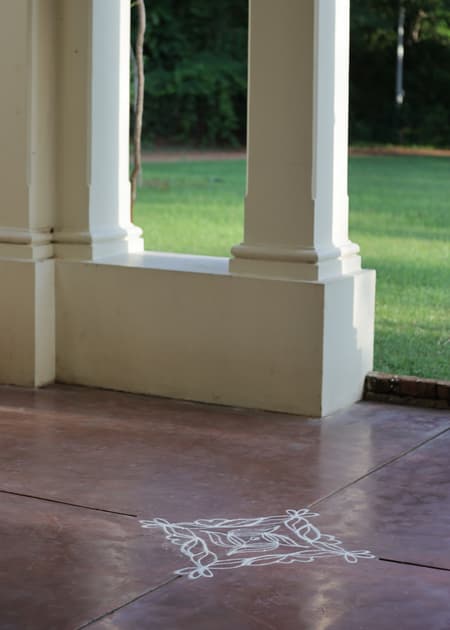
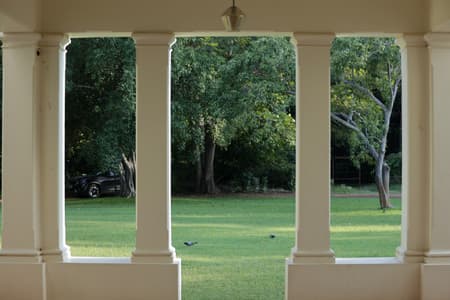
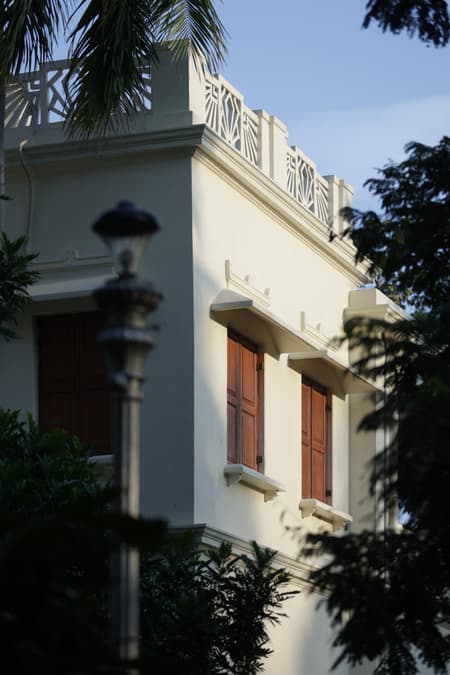
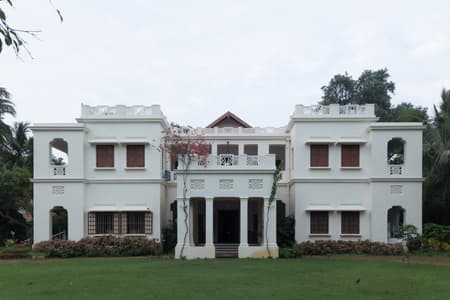
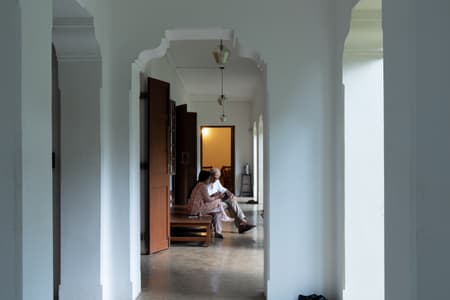
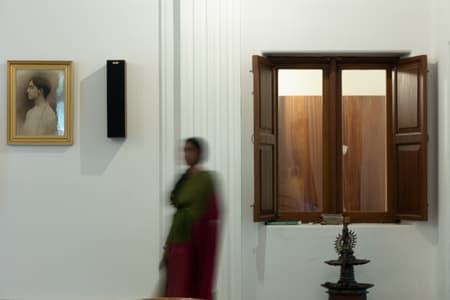
Vasanta Vihar, the headquarters of Krishnamurti Foundation India and a Retreat and Study Centre. An oasis of calm in the busy city of Chennai, the old house which is a Heritage building identified by INTACH, is surrounded by trees and has an air of timeless beauty. Krishnamurti gave many talks at Vasanta Vihar. Main building was the home of Jiddu Krishnamurti(1895-1986).
The Retreat and Study Centre is open to the public who wish to know the life and philosophies of Jiddu Krishnamurti. It has a wide range of Krishnamurti’s works, biographies and memoirs of Krishnamurti, including a large collection of audio and video recordings, monographs, bulletins and newsletters.
The public are welcome to attend periodic weekend residential retreats and public video showings. It has a bookshop on the campus. The guest house provides accommodation for individuals and small groups intending to stay for a few days of quiet retreat.
MAIN BUILDING
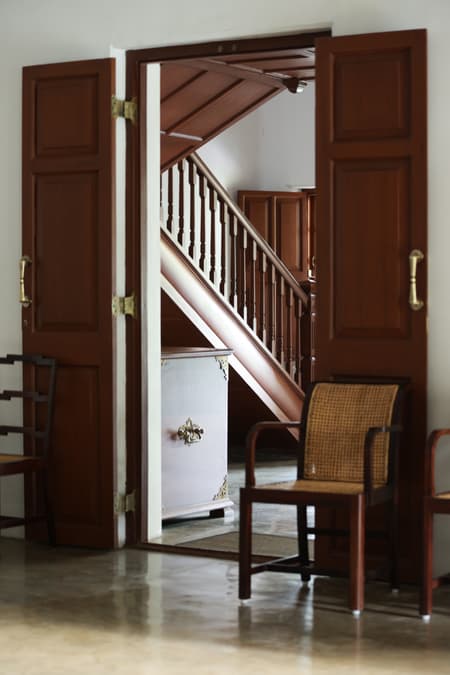
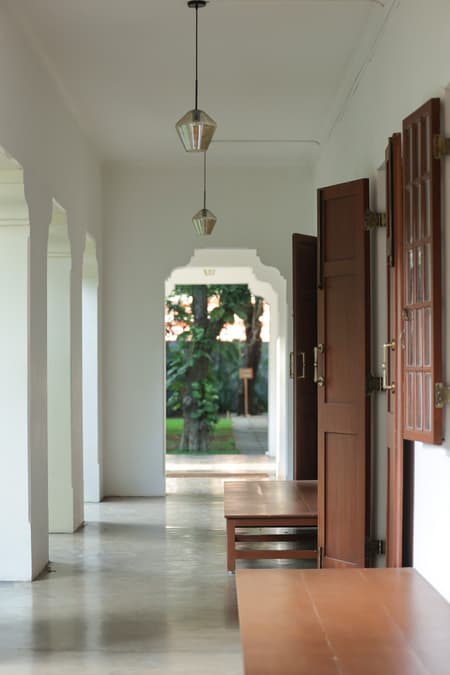
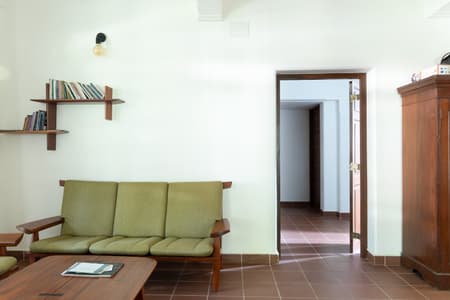
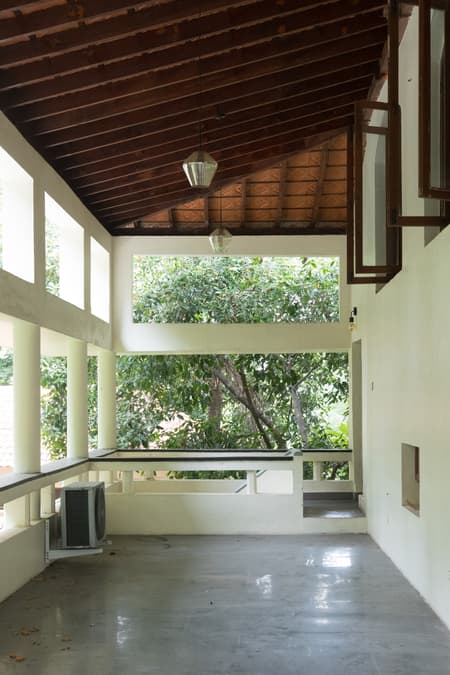
The main building houses the administrative functions of the institution along with guest accommodation. The main building is a heritage structure which was meticulously restored to its original grandeur.
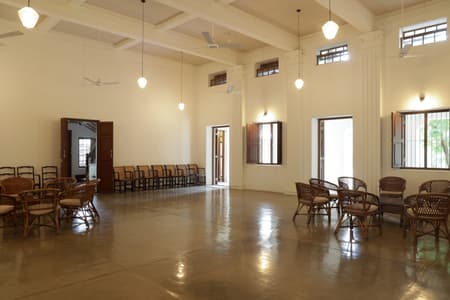
MAIN AUDITORIUM HALL
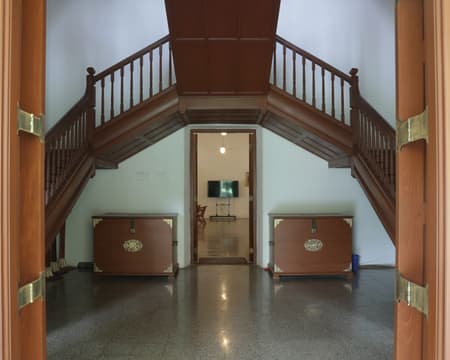
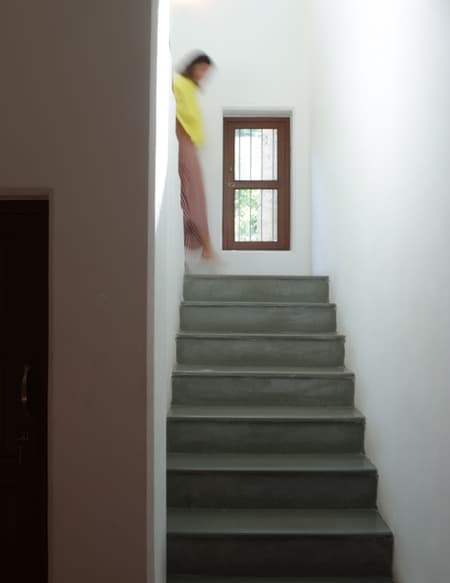
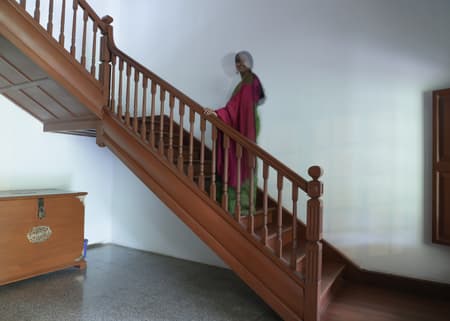
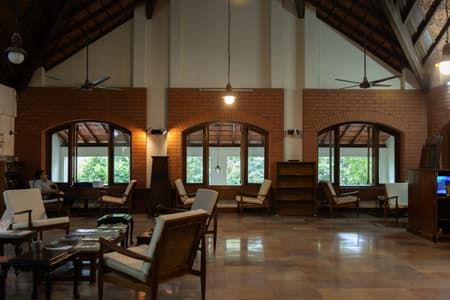
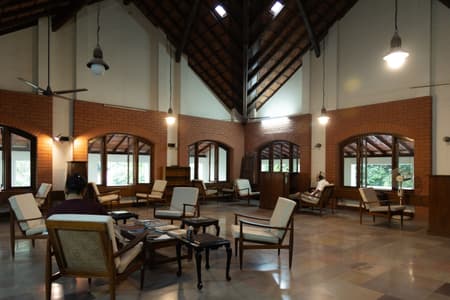
The spectacular wooden staircase, through which you enter the hall, transports us to the bygone era, forming an iconic element of the main building. Necessary acoustic measures were added in the auditorium roof as the hall was almost a cuboid, with a history of acoustic issues during AV sessions.
After removal of the old false ceiling, we were greeted by the beautiful grid of beams with plaster band details, which gave us an opportunity to insert acoustic fibre boards for better acoustics. A pattern of Lights, Fans & speaker systems were worked out to maintain a sense of symmetry and balance.
Most of the artificial lighting is warm light to bring a mystic effect accentuating the philosophies of sir Jiddu Krishnamurti, so they get transported to his era, live. Sufficient use of simple edison design bulbs further compliments the mysticism & adds a vintage touch.
ADMINISTRATOR, TREASURER & WRITER:
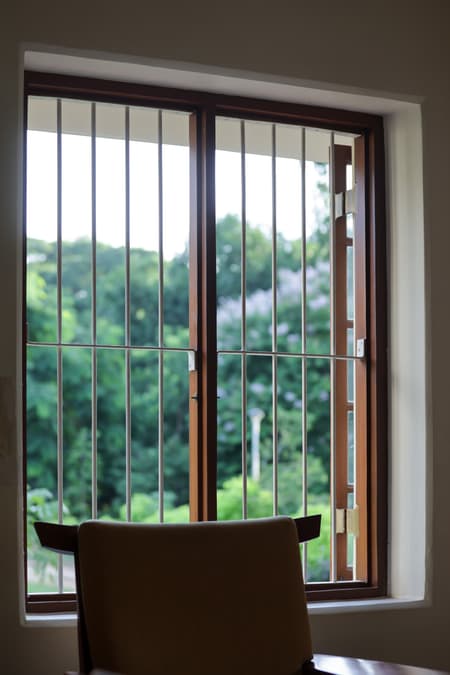
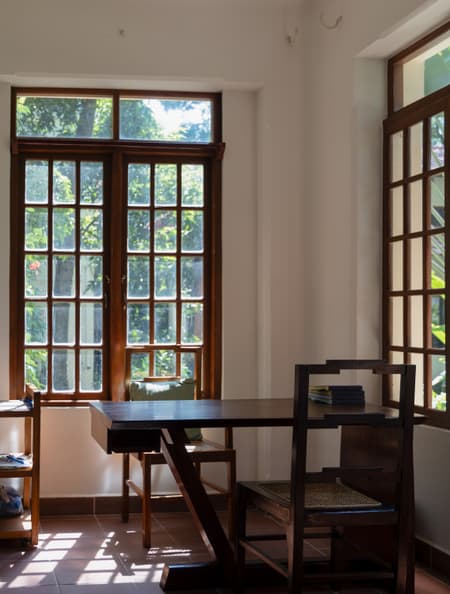
A simple approach to planning is adopted with the main intention to declutter. Hence the concept of Desk with visitor chair was done away with. Planning was done with aligning the desk spaces as linear running mahogany wood tops along the length of the wall. This helped maximise refreshing views to the outside environment making the occupants break away from their laptop screens. Visitors chairs were provided as add ons to enable face to face informal and casual interaction, lending a sense of personal touch, especially to the human mind who is coming in search of peace and tranquillity. Overall, the traditional notion of office operations was intentionally done away by adopting such a method.
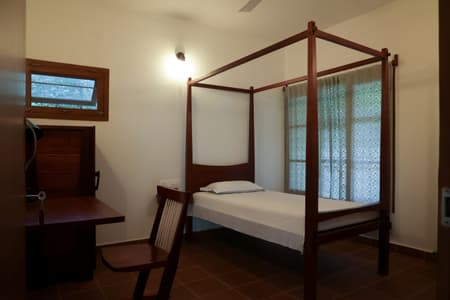
GUEST ROOMS IN MAIN BUILDING:
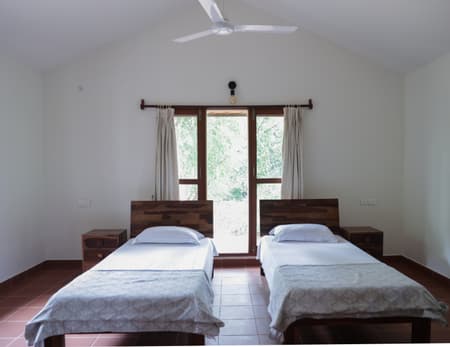
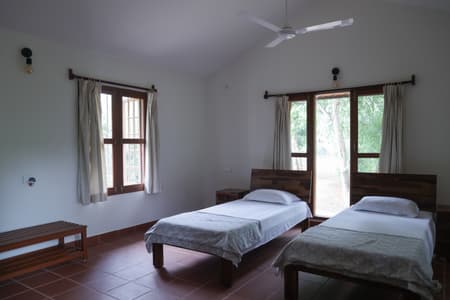
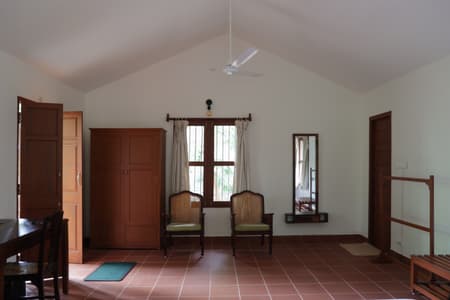
Each room has bedding with a study desk and a mirror unit. The study centre encourages its visitors to indulge in book reading hence the study table in every room was mandatory.
ALL FURNITURE(ALL BUILDINGS):
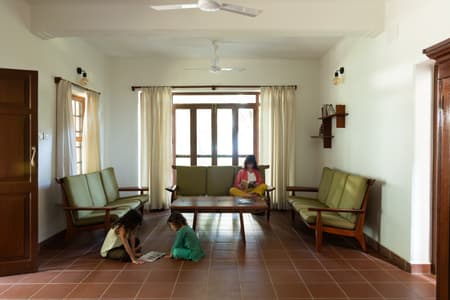
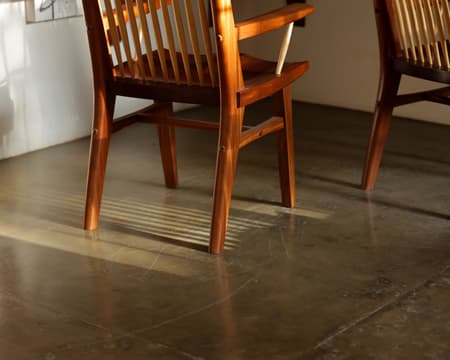
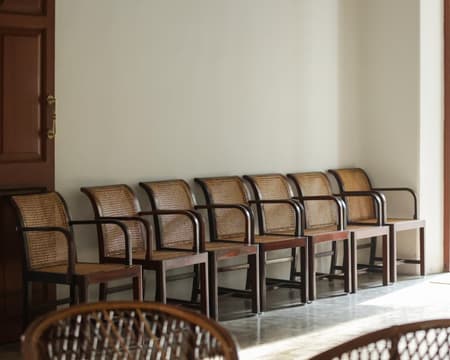
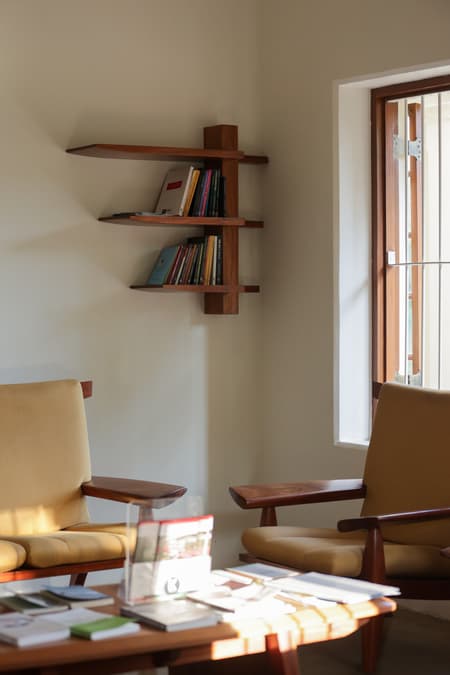
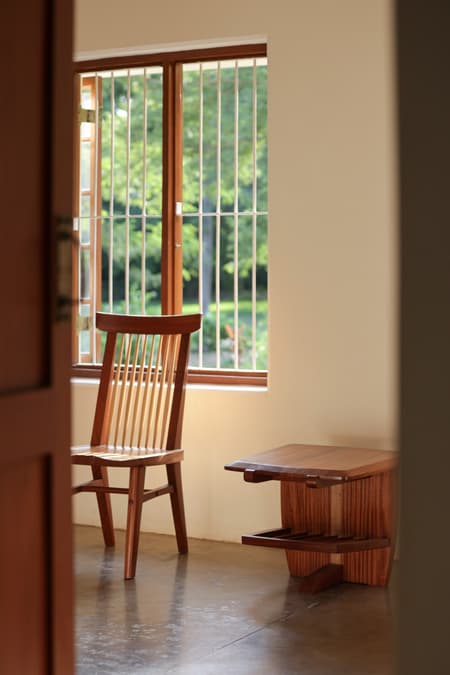
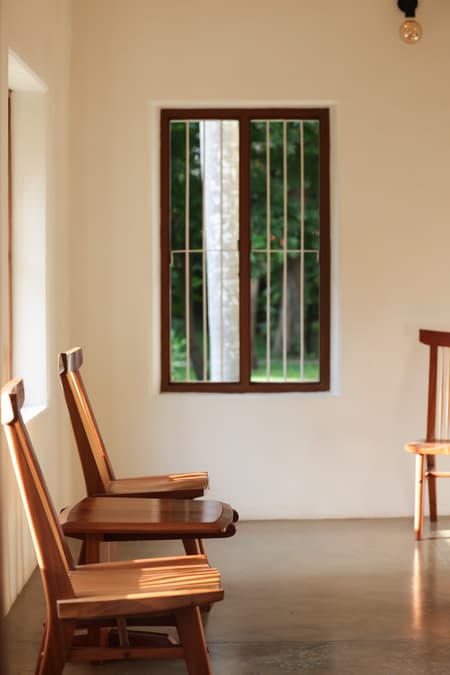
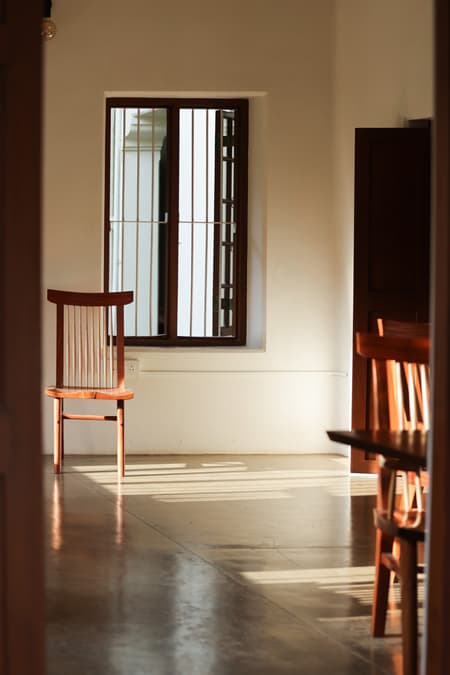
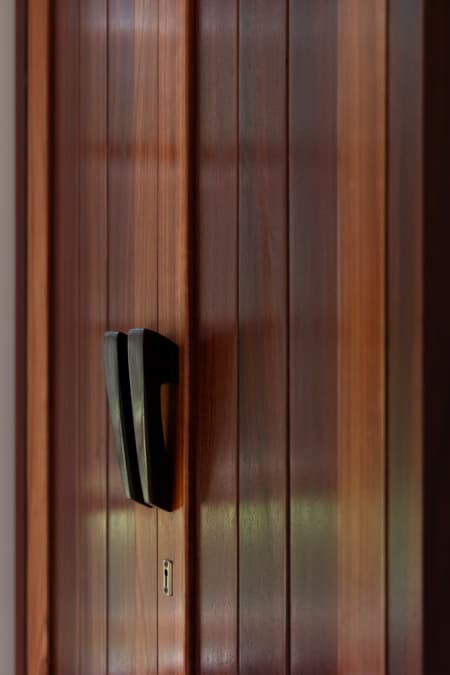
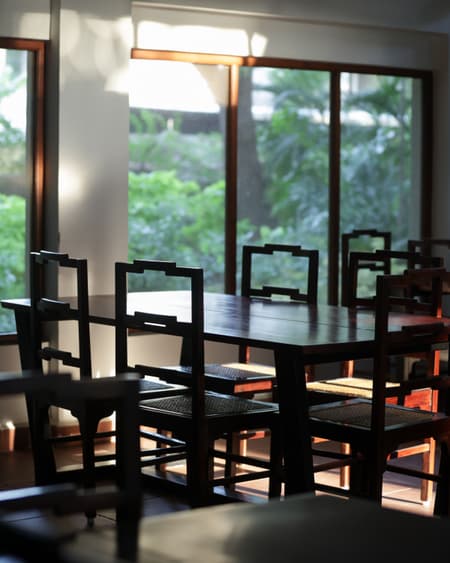
All existing furniture, most of them teakwood or country wood, was restored with appropriate treatment. New furniture were meticulously chosen from Shakti Ganapati, mahogany wood, to ensure they blended in well with the japandi style moodboard. Every new furniture piece is a sculpture in itself. One can spend hours appreciating the same.
Overall, an honest attempt to bring back the glory of the heritage building by a sensitive approach to restoration was adopted.
GULMOHAR GUEST HOUSE:
This building behind the main building was the out house in the earlier days. Currently this building is used as a guest house for the public who enrol for the retreats happening regularly.
Compared to the main building, this was worst affected due to neglect and haphazard renovations without any specific methods of restoration techniques adopted. The entire building had to be addressed with water proofing as most of the roof & wall portions had huge cracks & seepages.
The only current complaint the building has, guests are not willing to vacate them, post our renovation exercise.
PALM HOUSE:
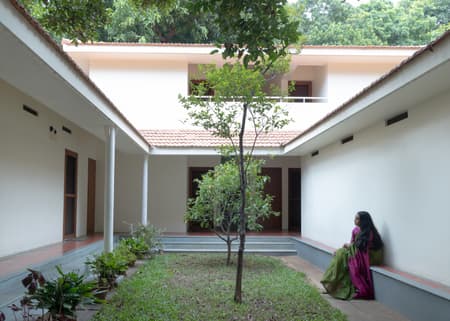
Though a central courtyard is present, there were no windows facing the internal courtyard due to privacy reasons. The guest house has a sloped roof adding to high heat retention & the hot air had no way to draft out due to single bank windows & pitched roof. Small horizontal slits were added along the courtyard side enabling the hot air draft to escape outside. A drastic reduction in temperatures can be felt when one walks into the room from the outside.
TOILETS:
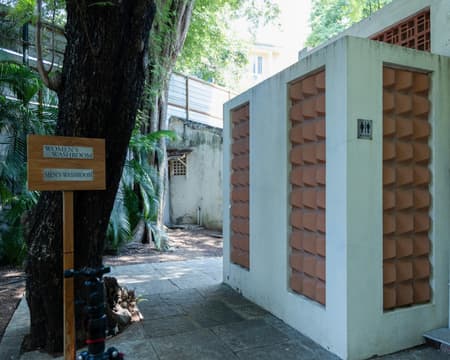
An experiment in color was carried out. With dark grey floor & wall dado tiles as background, simple white sanitary fixtures were installed. Dark grey tiles absorb all the light, whereas the white sanitary fixtures reflected all the light they absorbed, thus acting like light fixtures themselves. Pictures in this panel are taken without any artificial lights on and just trickle of natural light through a small ventilator. One can appreciate how light & colours play an important role in the design scope. Scientific approach is needed when we experiment with novel ideas.
DINING:
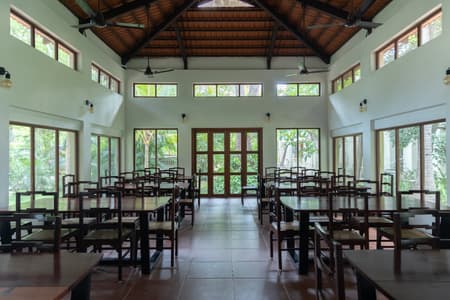
The dining hall is a pyramidal sloped roof structure with mangalore tile roofing. The old teak wood framed plastic wire chairs were restored well with cane wire. With no windows, entire wall openings were closed with high quality aluminium mosquito mesh. Entire roof tiles were removed and relaid after proper treatment & painting.
Adjacent hand wash areas were renovated with the same grey and white material palette.
COTTAGES:
Cottages are lined along the SE corner of the site, the lowest topography level within the campus. Located close to the manmade pond, these cottages are affected by persistent floods the Chennai city often witnesses. The flooring of these cottages were raised a little above the current flood levels. Concrete sloped roofs were completely water proofed by removing the top most mangalore tile layer, recommended concrete waterproofing of sloped roof. All mangalore tiles were meticulously washed manually by human labour, treated and painted before being relaid over the sloped roof. Similar design elements as Palmhouse & Gulmohar are followed.
For Banyan guest house, a new mangalore tile sloped sunshade was added atop a large window matching the overall theme of spaces.
Courtyards of Mahogany and sarovar were not used earlier. A facelift was given by adding thinnai, a most common feature of South Indian Vernacular architecture, to the courtyard spaces. One can often see guests huddling there discussing or debating the interpretation of sir JK’s philosophies.