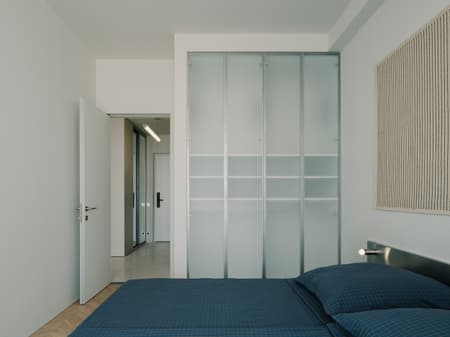
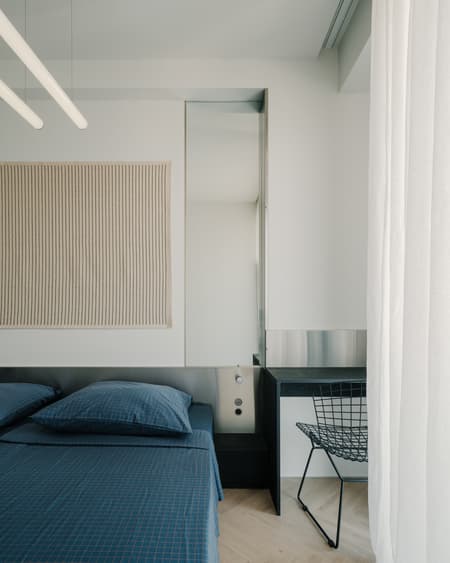
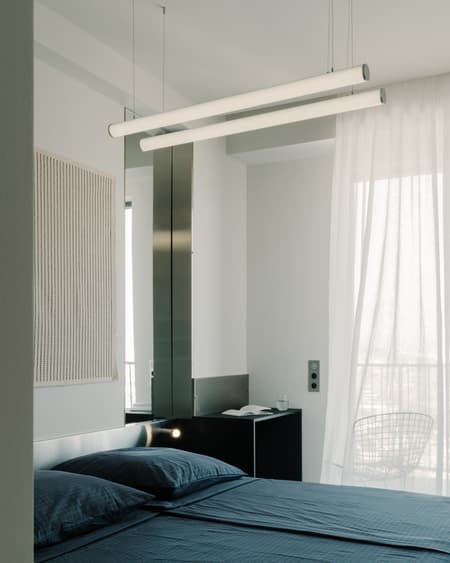
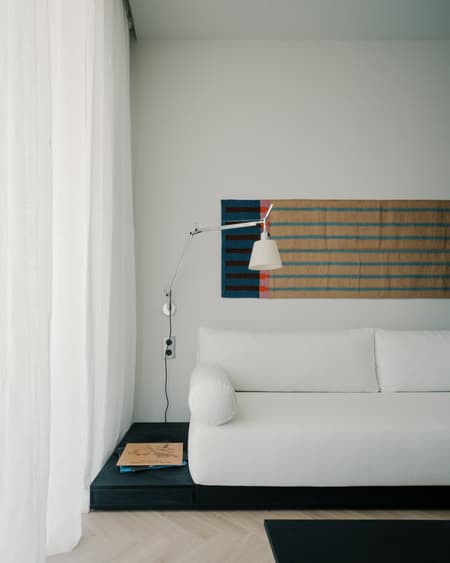
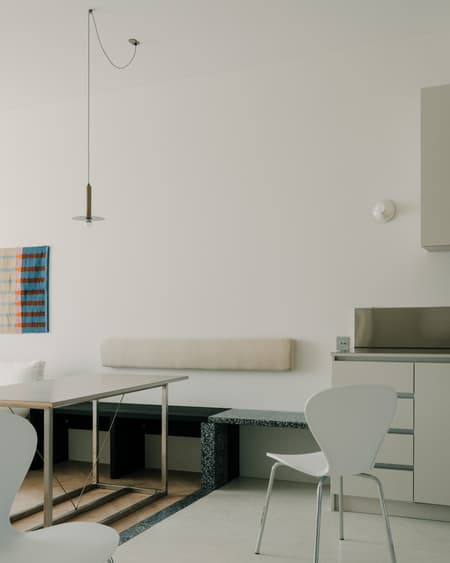
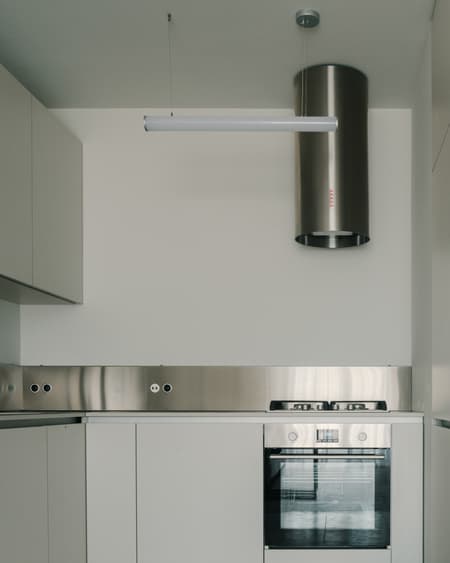
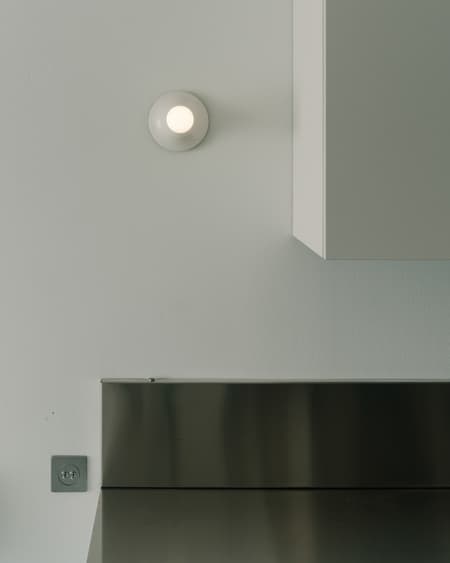
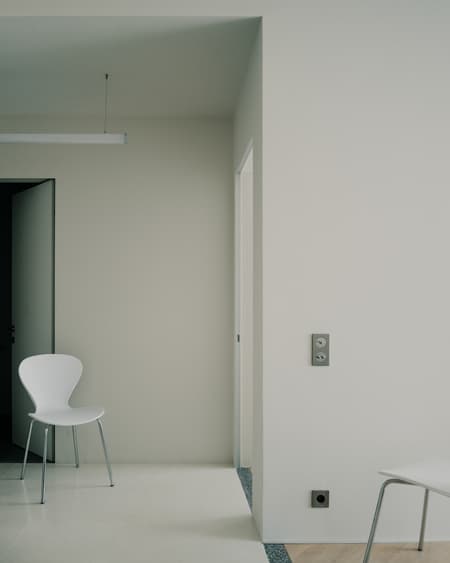
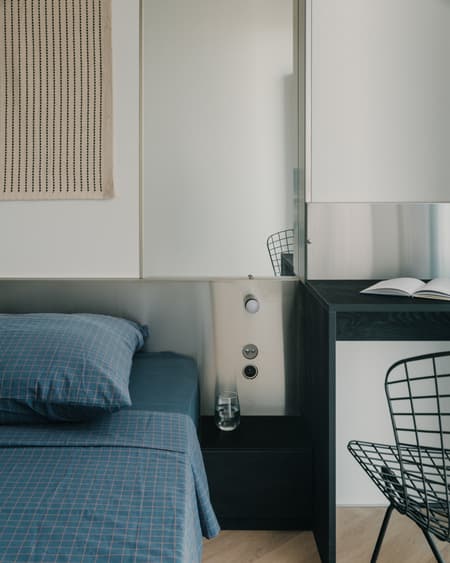
The project responds to a growing tendency in Tbilisi to design apartments for rental use—a shift that has transformed the city’s housing culture. Interiors are now designed for constant circulation rather than permanence, so architects are asked to design ‘for the market’ rather than a specific occupant. It starts from that point, questioning how to design when the client is the market and housing is treated as an investment
This condition raises a critical question: how to design for unknown occupants? Whose needs and habits are entirely unknown? Instead of treating this anonymity as a limitation, the project approaches it as a design challenge - the design is intentional, but not personal; it prepares room for life without determining its form.
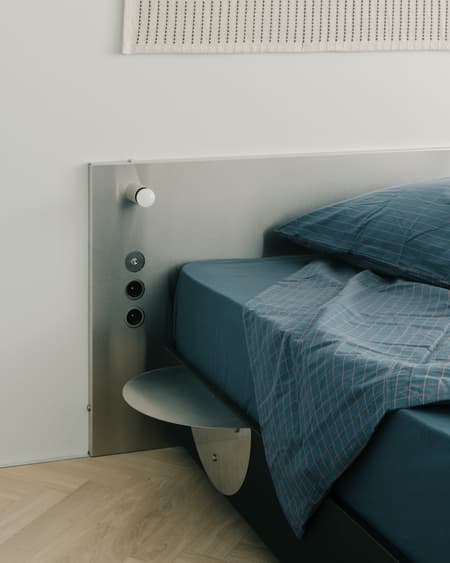
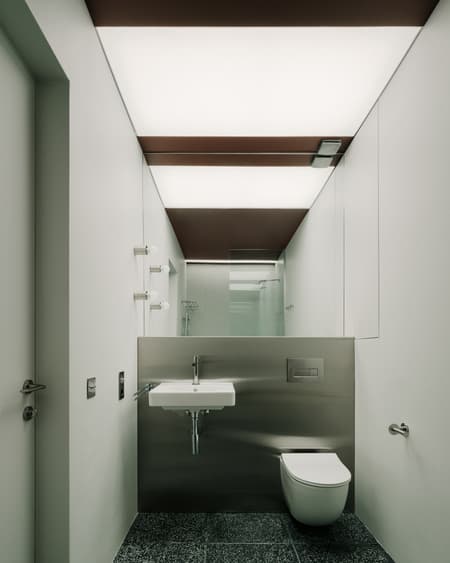
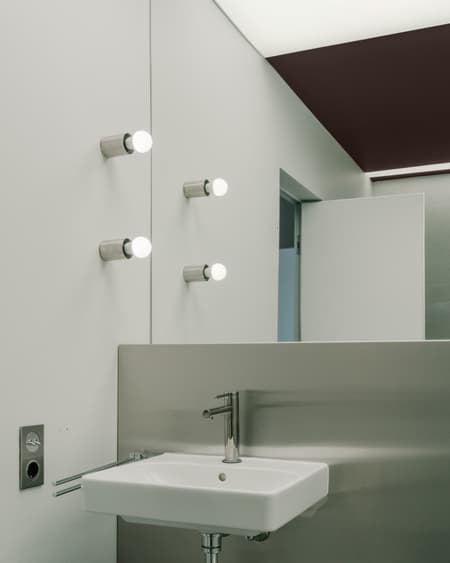
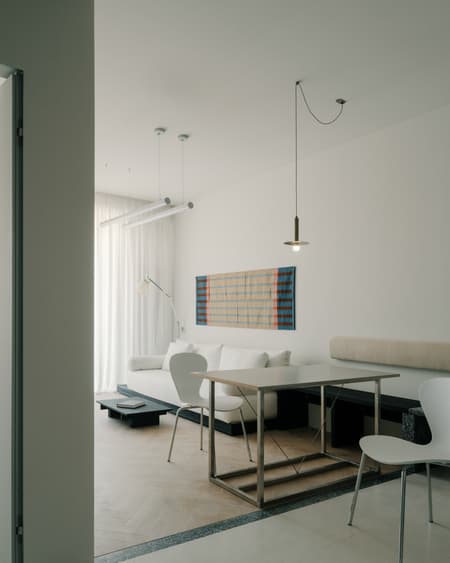
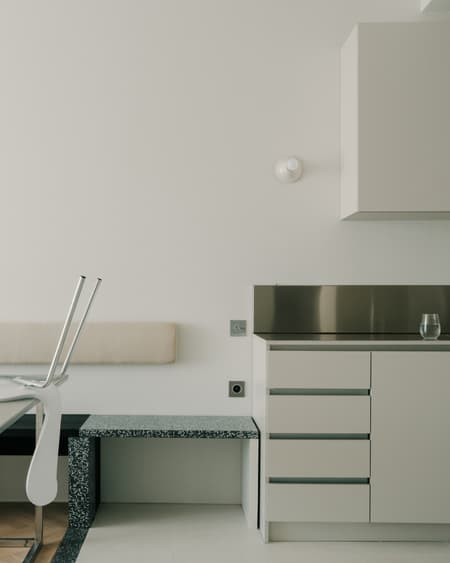
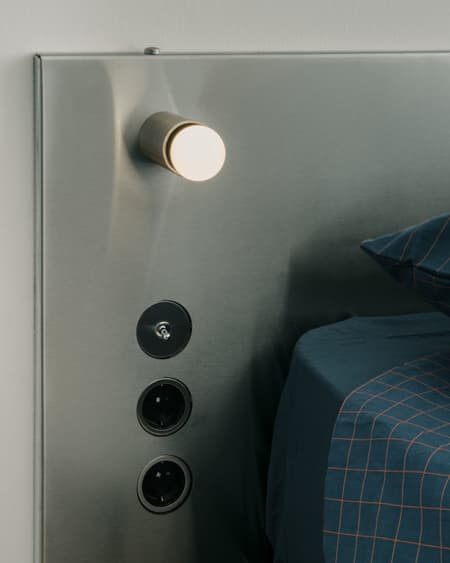
Although the apartment was commissioned for the rental market, the design itself resists the logic of mass production. Built-in furniture, lighting, and materials shape the space through texture, light, and color. Each element is designed to last through many tenants while allowing personal touches to show over time, making the interior deeply specific rather than generic. A single material — stainless steel — becomes a recurring thread that connects the three main zones of the apartment, taking on a different role in each: shifting from surface to object, from backdrop to detail. Through reflectivity the stainless steel gathers light and color from its surroundings, changing with each moment of the day.
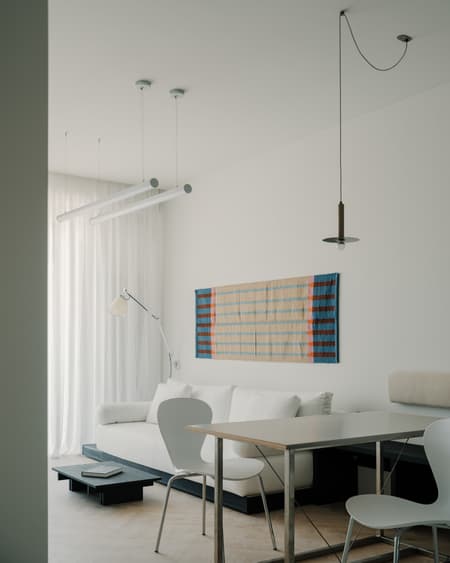
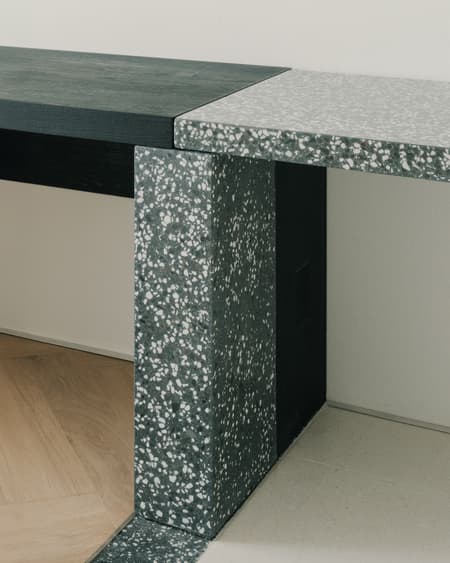
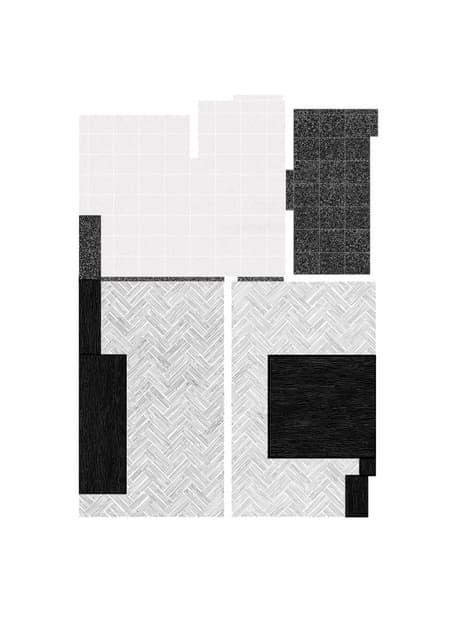
The entrance and kitchen form a continuous surface of white terrazzo, guiding movement through the apartment. A thin line of black terrazzo marks the transition—an edge that both divides and connects the spaces. Color appears through woven surfaces that act as both ornament and a tactile experience. Their presence adds a quiet domestic rhythm to the space, introducing warmth and depth within the muted palette.
The project reflects on the shifting role of architects and designers, asking whether individuality, care, and authorship can still exist within a market-driven housing culture. As similar commissions emerge, the project evolves into a series that continues to reinterpret what it means to design for the market and explores how spaces can retain identity and intention even when their inhabitants remain unidentified.