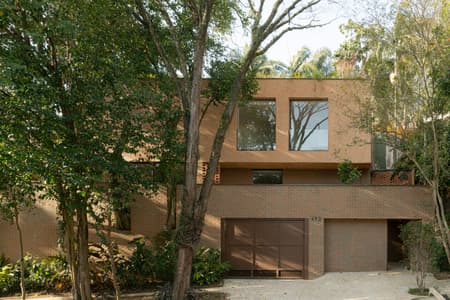
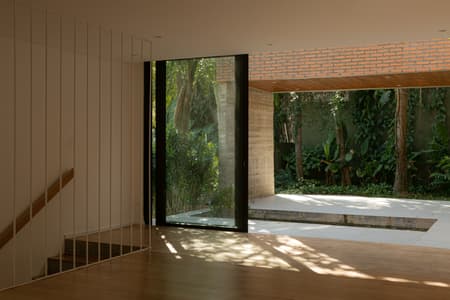
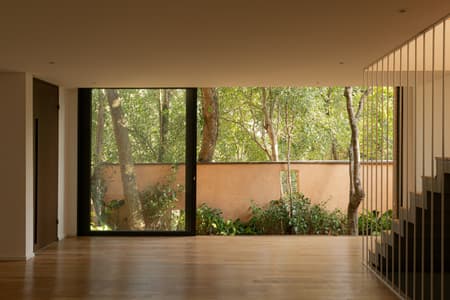
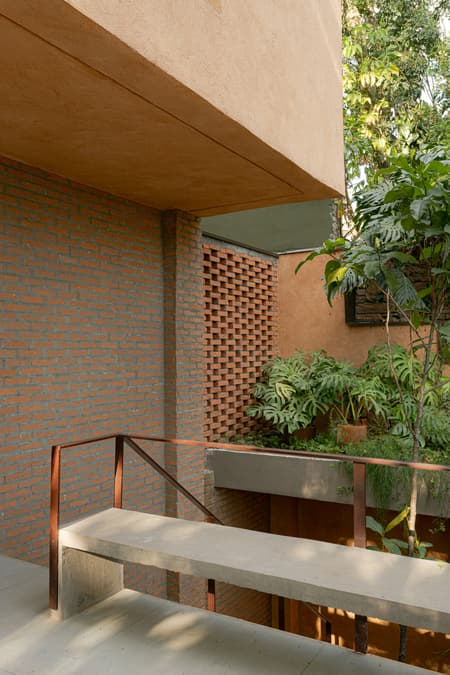
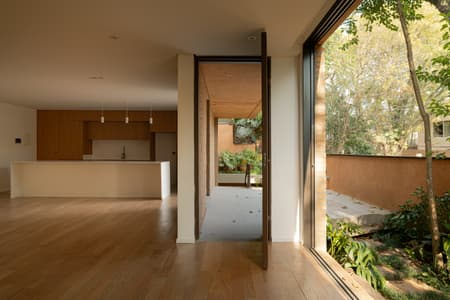
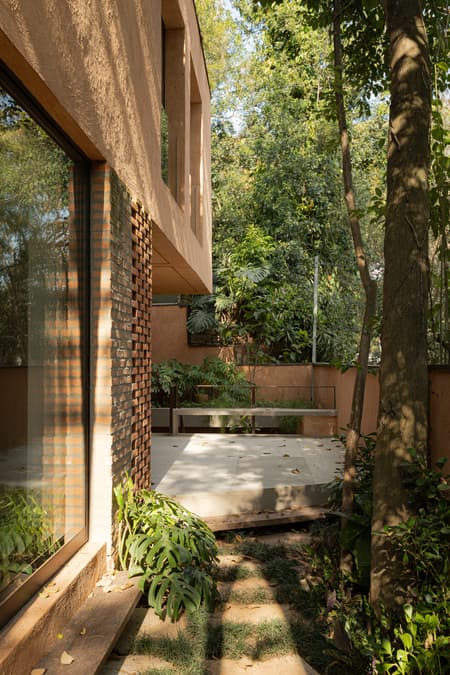
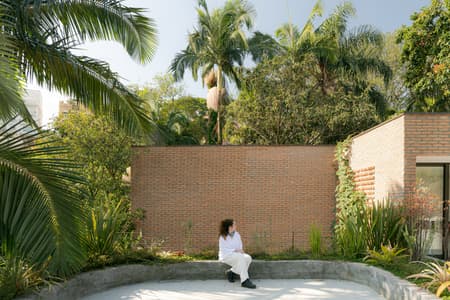
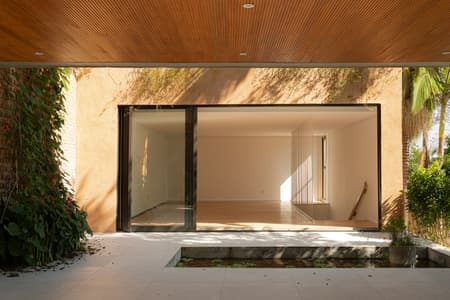
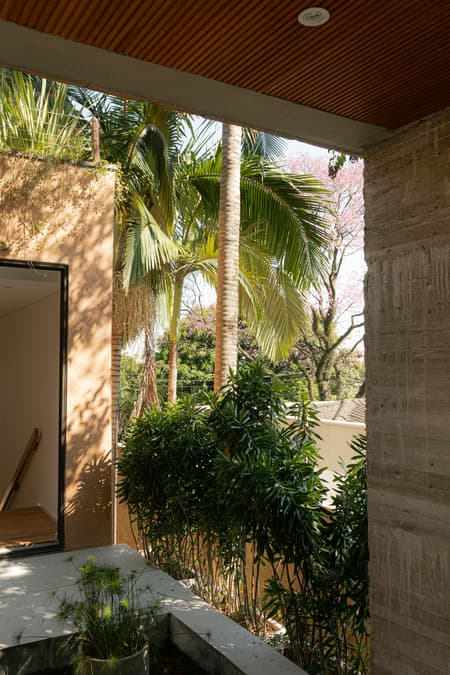
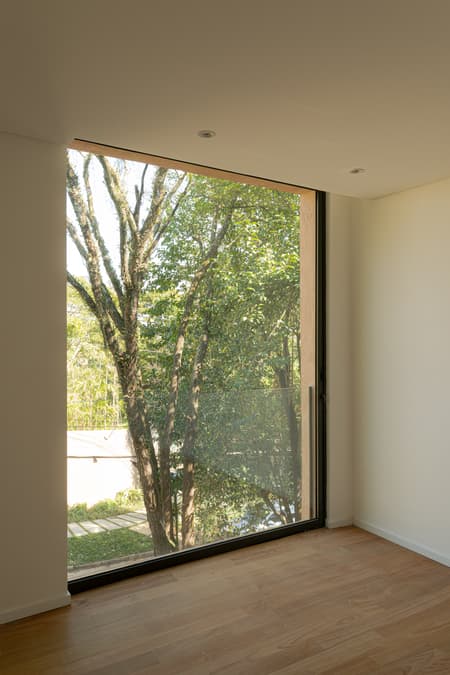
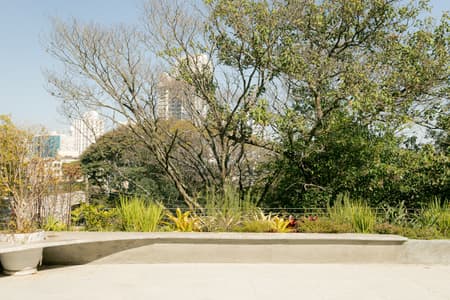
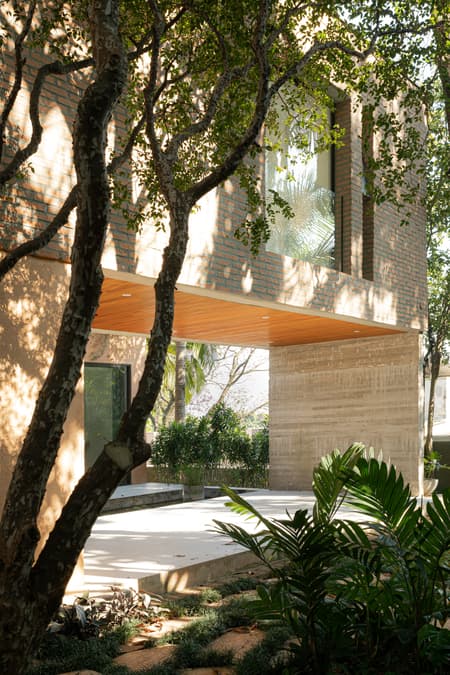
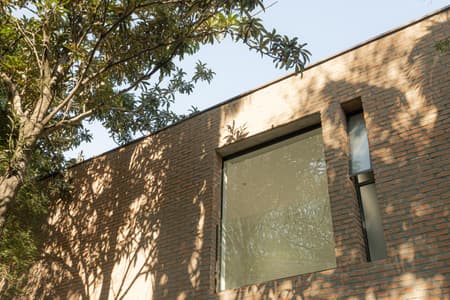
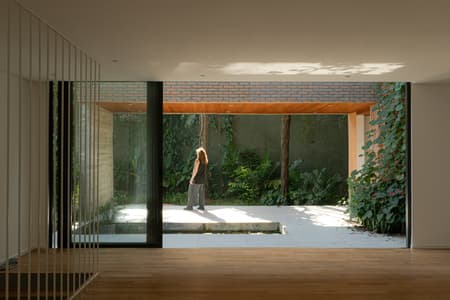
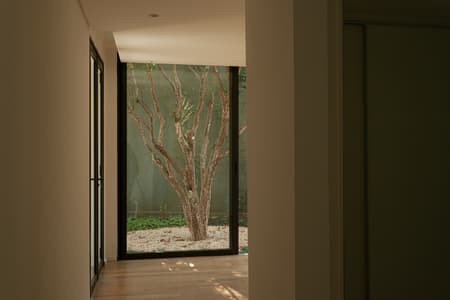
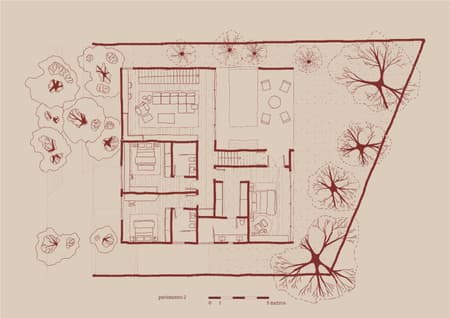
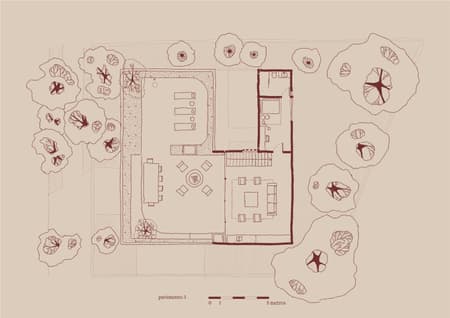
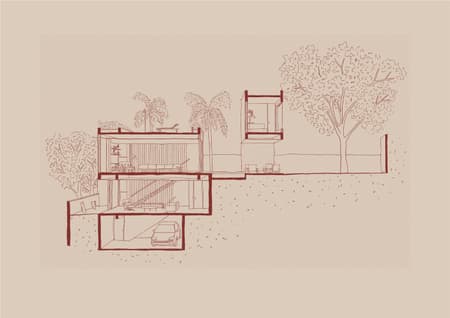
The design for Casa Tamanás was primarily shaped by its sloping topography and the existing landscape. Built on a hillside lot populated with various fruit trees, the core architectural strategy involved making precise cuts into the built volume. These are not mere openings but carefully considered frames that curate views of the surroundings, capturing scenes that shift from treetop canopies to ground-level gardens. This approach creates a seamless visual connection, anchoring the architecture within its immediate context.
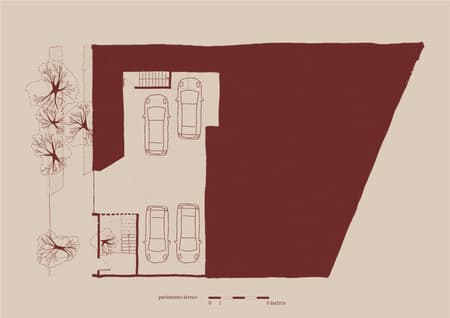
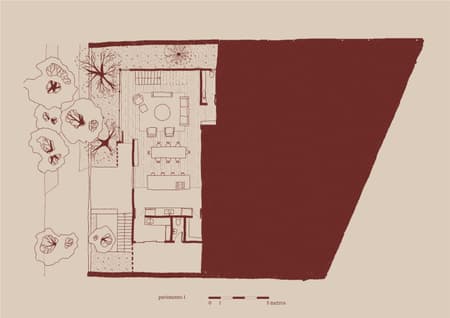
The slope of the land dictated the vertical organization of the program, arranging functions according to the homeowners' daily lives. The ground floor accommodates the garage and a pedestrian entrance. One level up, the main social areas are located, with a continuous space housing the kitchen and dining room. The second floor is dedicated to privacy, containing the bedrooms and a TV room that opens onto a garden. At the top level, a weekend retreat was designed to maximize the connection with the outdoors, featuring a spacious terrace, a barbecue area, and a living room.
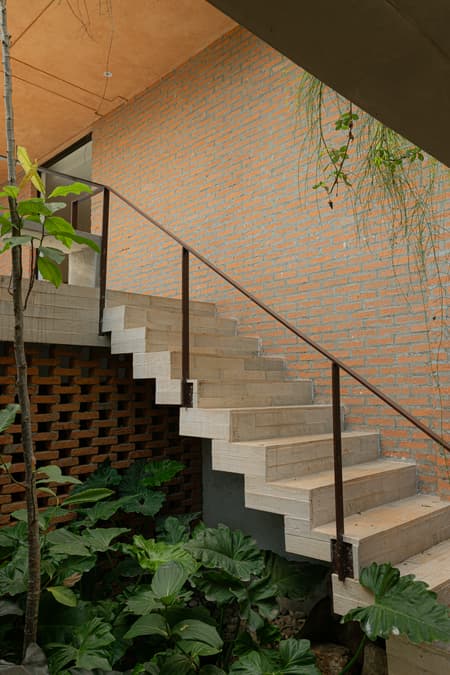
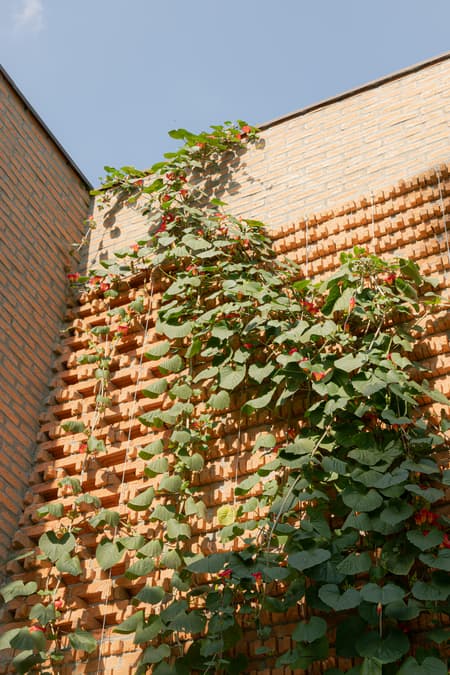
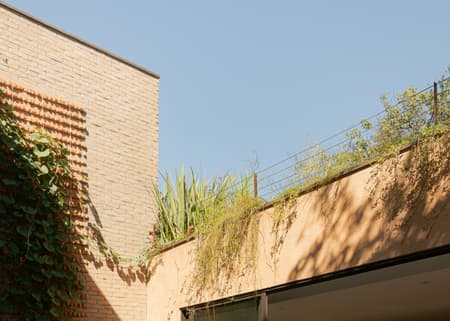
Anchoring the composition at its center, a water mirror introduces a sense of calm and unity. Its reflective surface not only adds a layer of visual depth, capturing light and sky, but also aids in passive cooling. Next to it, a wall was constructed using bricks that were damaged during transport. Reclaimed and repurposed, they form a perforated screen—a cobogó—that functions both as a boundary and as a filter in front of a window. This constructive gesture embeds the memory of the building process into the project, transforming waste and an accidental breakage into a deliberate and meaningful design opportunity.