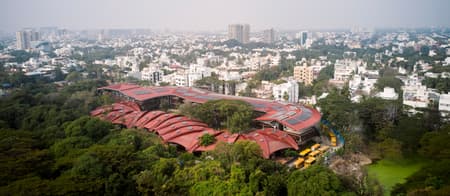
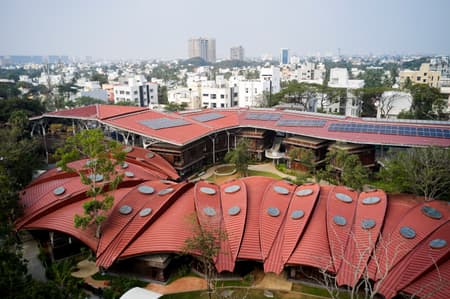
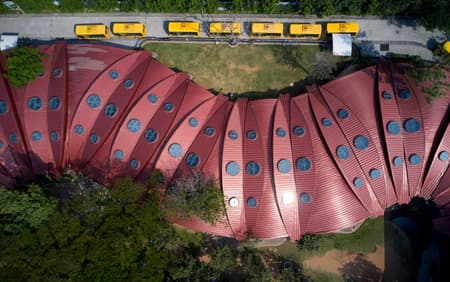
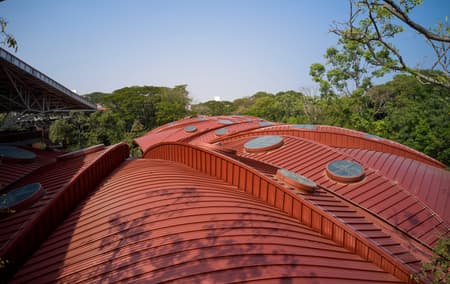
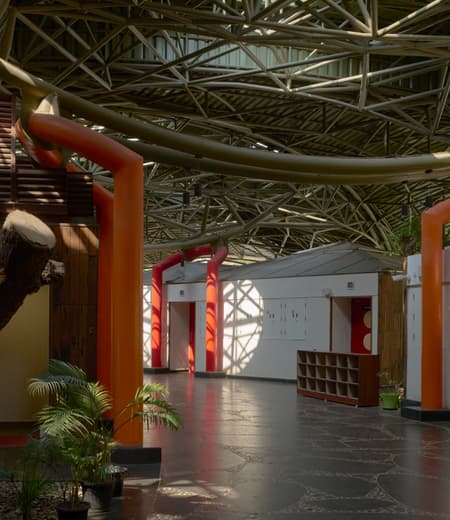
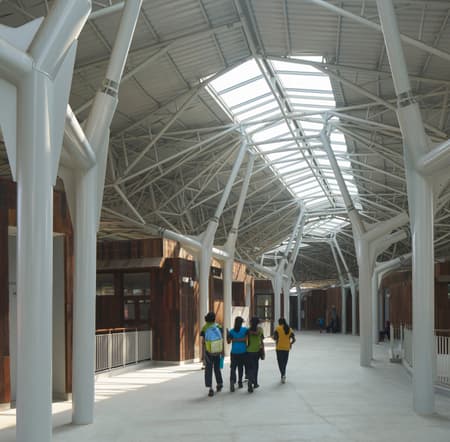
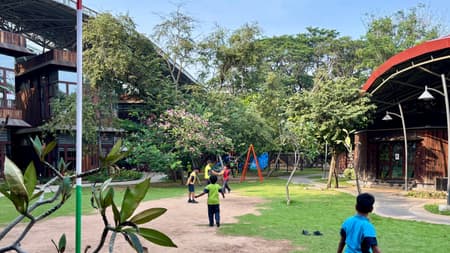
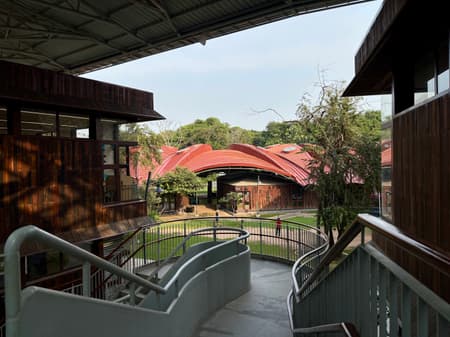
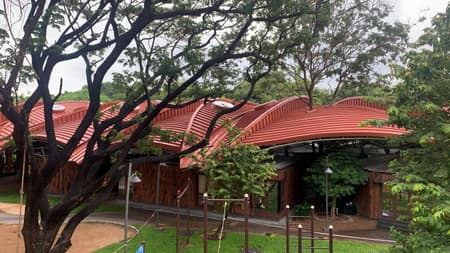
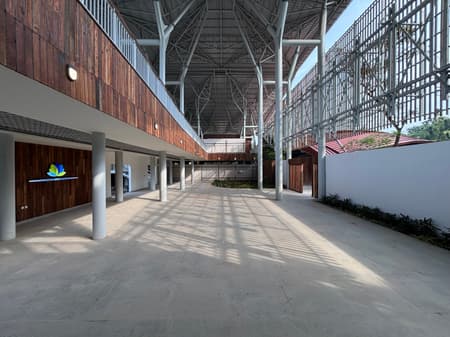
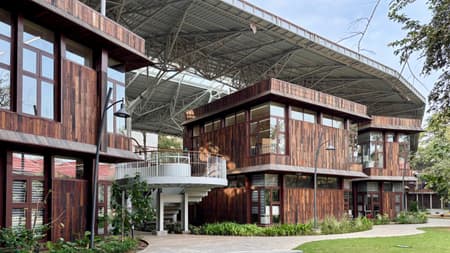
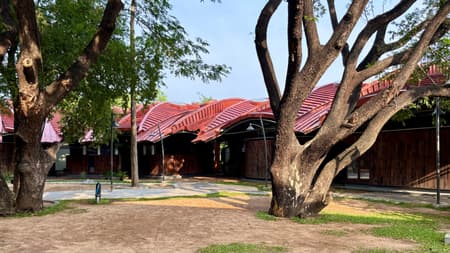
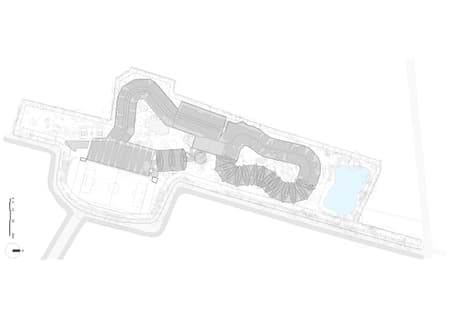
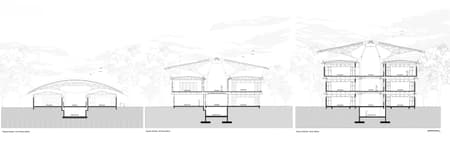
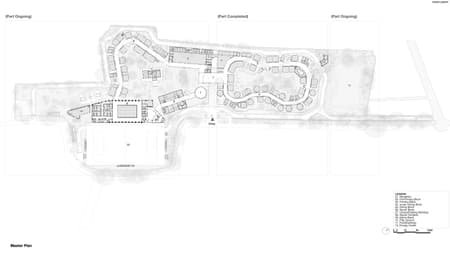
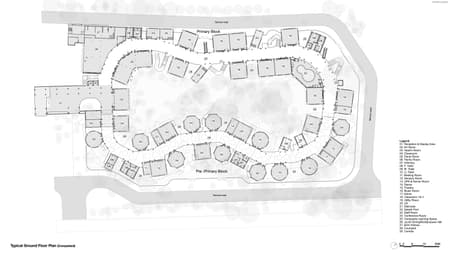
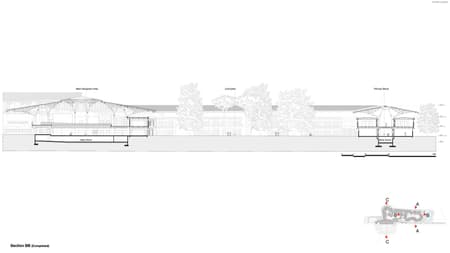
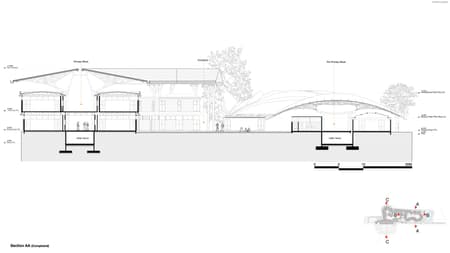
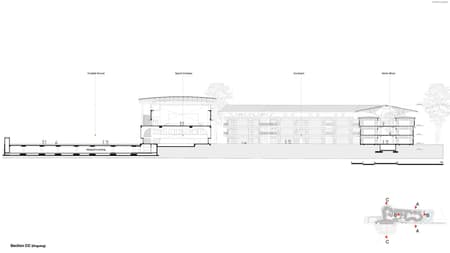
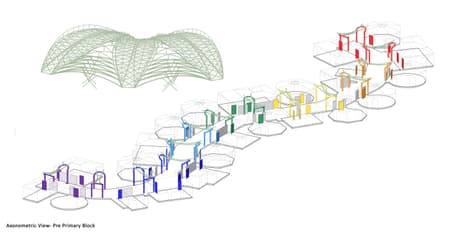
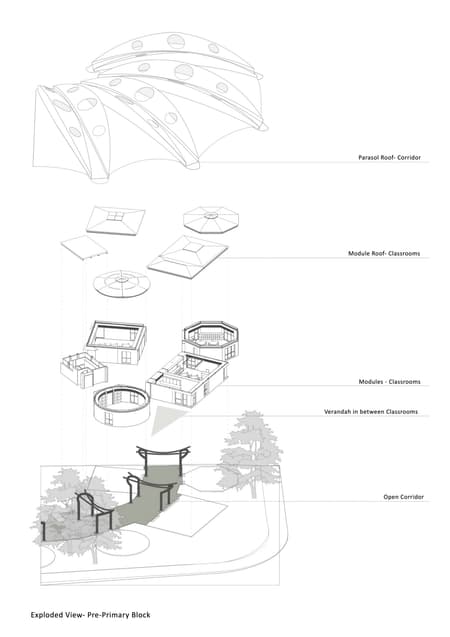
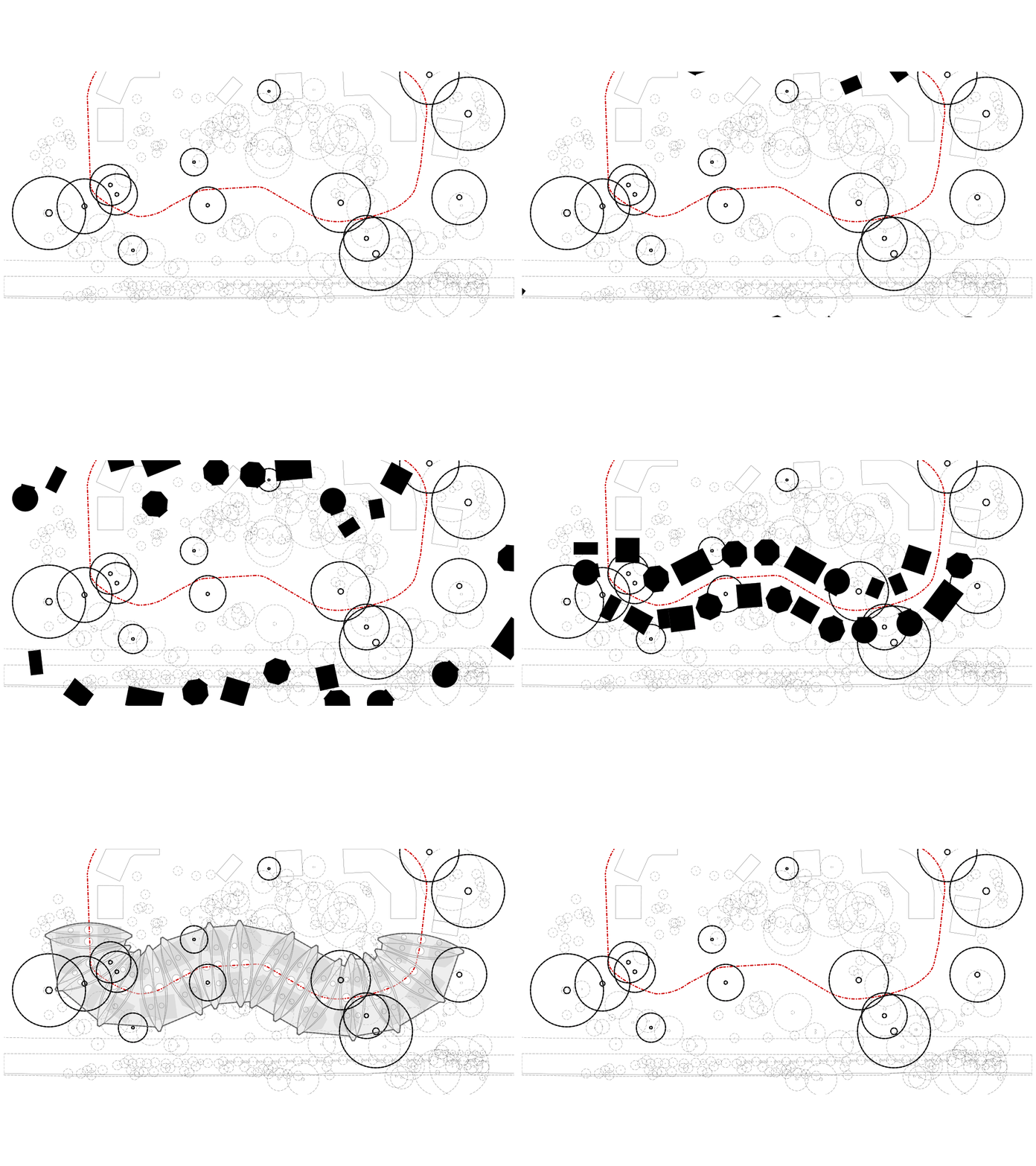
Set within the dense urban fabric of Chennai, the Shiv Nader School reconceives the educational campus as a porous landscape shaped by ecology, climate, and cultural memory. Rather than clearing the site, the project is organized around one of its most defining features : the abundance of existing trees. The architecture is fragmented into small, modular buildings. The plan hence draws inspiration from the local cuisine, or the local Chettinad thali, where diverse elements are unified on a single banana leaf. Similarly the campus is composed of multiple buildings brought together under sweeping, roofs that respond to both climate and culture.
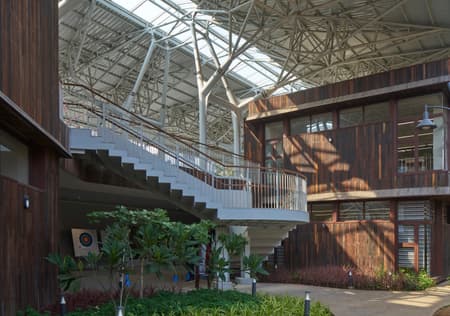
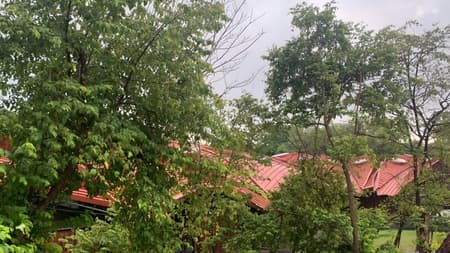
The low-rise campus is structured along a looping circulation system that threads between the existing trees identified for preservation based on age, nativity, medicinal value, and ecological relevance. This porous organization maintains natural movement corridors for the breeze, birds, insects, and small animals, allowing the campus to function as part of the city’s ecological reserve. Construction methodologies were calibrated to minimize disturbance, with prefabricated structural elements assembled on site. Services are integrated within combined foundation and trench systems, ensuring adaptability while safeguarding tree root zones.
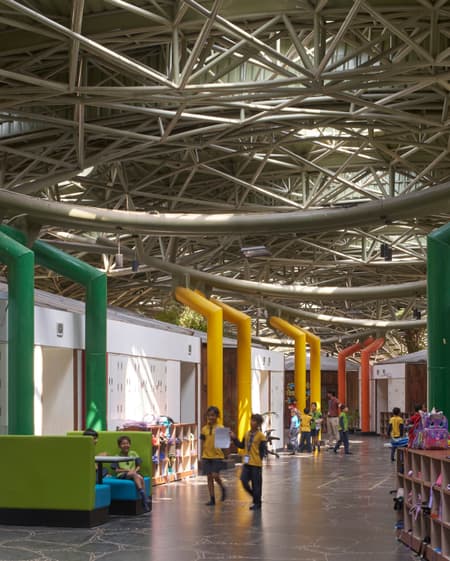
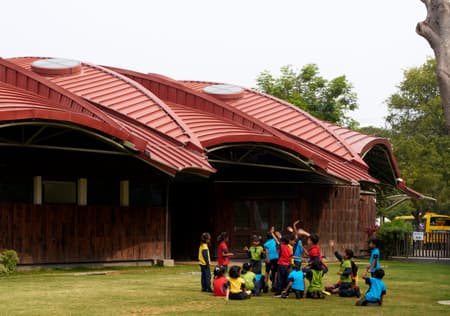
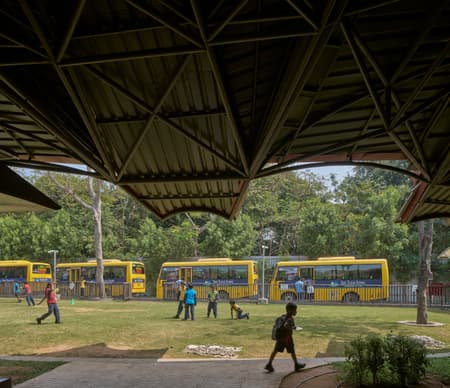
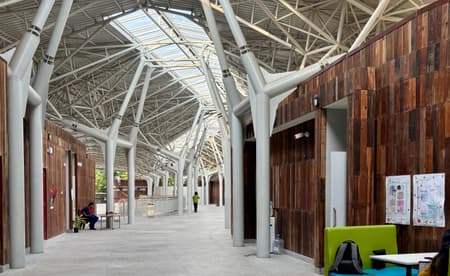
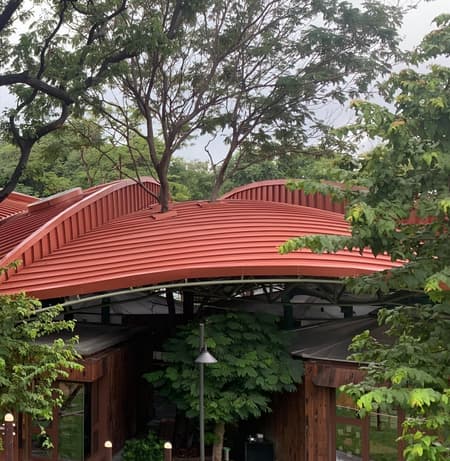
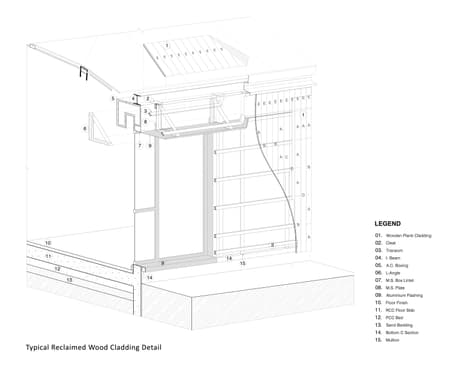
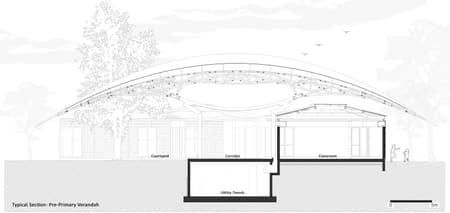
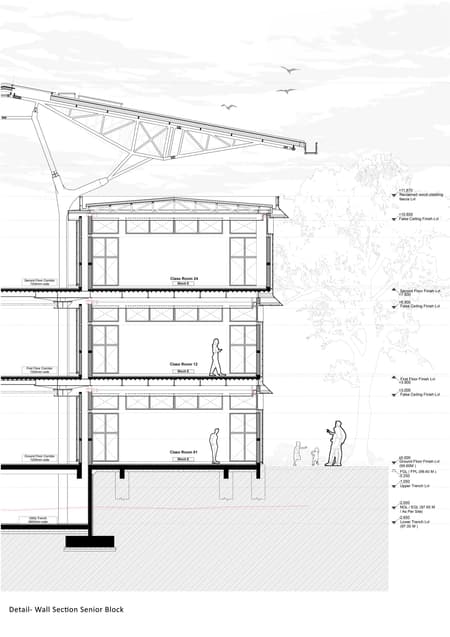
Climate-responsive design strategies underpin the campus’ environmental performance. Deep overhangs, use of reclaimed wood on the exterior, and natural ventilation reduce heat gain, while a series of parasol roofs reinterpret the regional verandah as a contemporary architectural device. Historically spaces of gathering and learning - verandahs here become semi-outdoor classrooms and circulation zones that act as thermal buffers and infection-safe environments, blurring the boundary between indoors and outdoors.
Material choices emphasize circularity and local economies. Locally sourced grey granite reduces embodied energy while drawing on regional craftsmanship. A secondary timber skin made from reclaimed decking wood sourced from dismantled ships, adds insulation and texture. Solar panels integrated into the roof structure generate approximately one-third of the campus’ energy demand, while a hybrid ventilation system combines mechanical cooling with natural airflow to optimize indoor air quality.
An existing on-site lake, absent from revenue maps but critical to local hydrology is being restored as a reservoir and learning landscape. Roof water and surface runoff are harvested into the lake, enabling the campus to meet a majority of its domestic water needs.
Developed in phases to ensure ecological and financial sustainability, the project positions architecture as an active pedagogical tool, one that reiterates the importance of porosity in our lives.