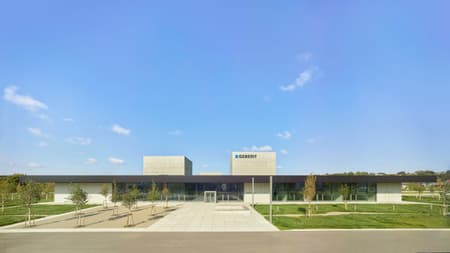
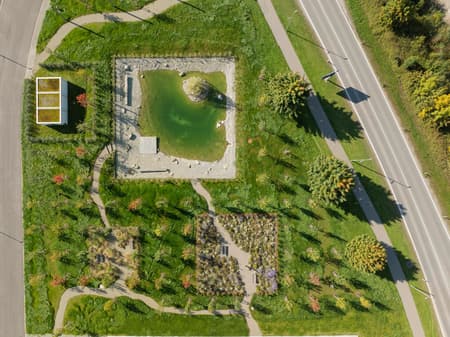
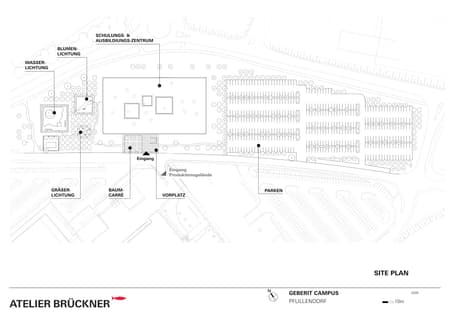
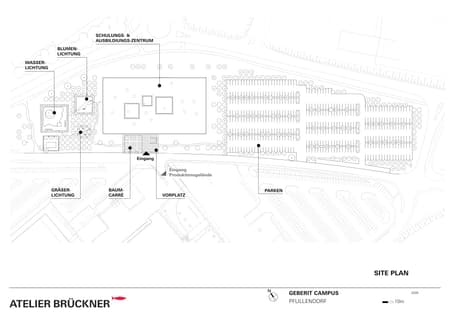
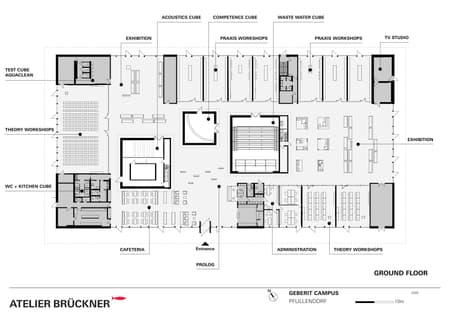
The Geberit Campus in Pfullendorf functions simultaneously as a training center, exhibition venue, and brand space. ATELIER BRÜCKNER was responsible for the overall planning of the building, exhibition, and landscape design. The new campus follows a clear objective: to communicate expertise and functionality in an understandable and tangible way.
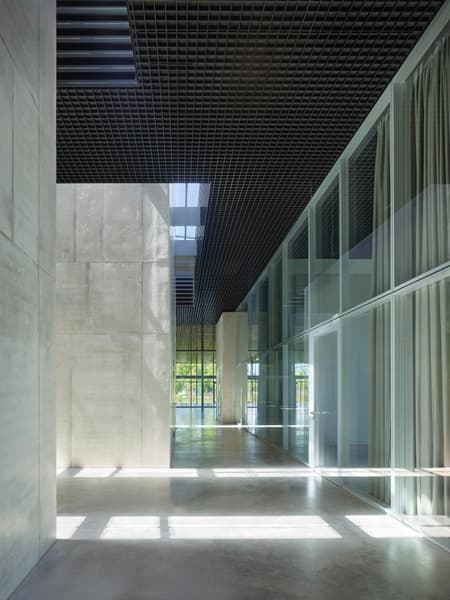
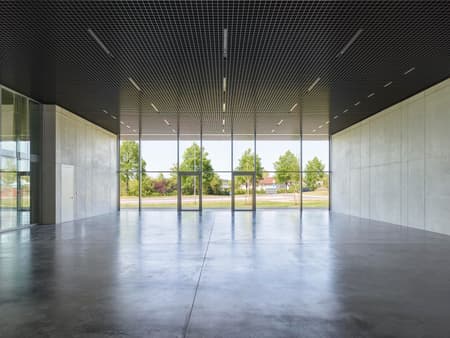
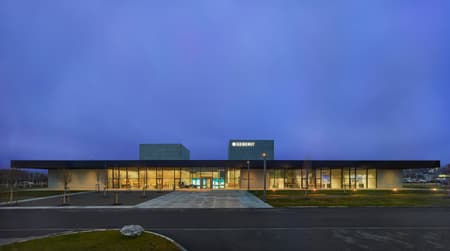
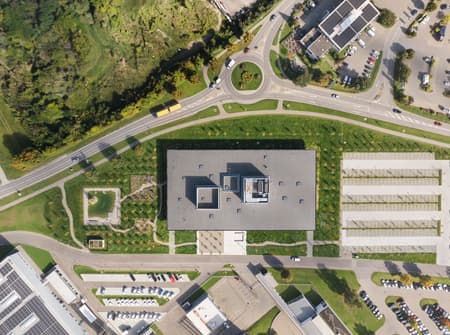
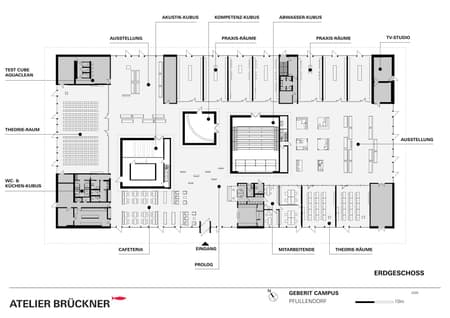
The architecture is based on a single, consistently applied fundamental principle: the square, which continues spatially in the form of the cube. Derived from the Geberit logo, the square defines the grid, floor plan, and volume. The campus is conceived as a pavilion, reduced to ground plane, cubes, and a generously cantilevered roof. Three large central cubes penetrate the roof surface and mark the company’s core areas of expertise. Visible from afar, they structure the interior space. Between them unfolds an open spatial framework that creates a continuous circulation: paths intersect, encounters are encouraged, and orientation is intuitive.
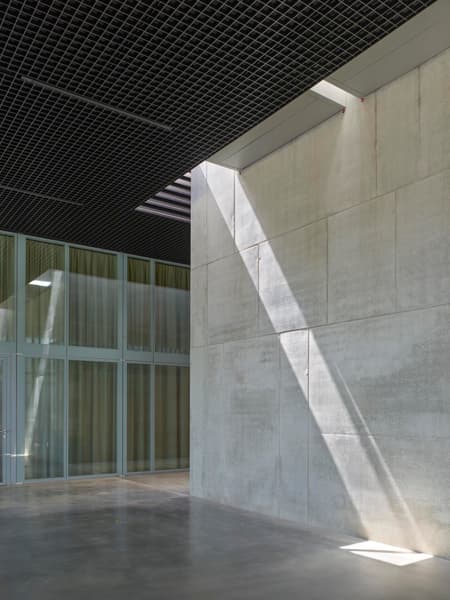
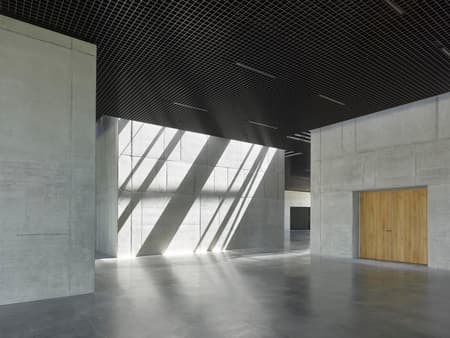
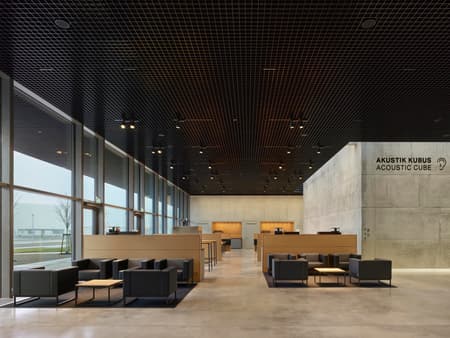
Materiality and detailing follow the same logic of reduction. Exposed concrete, glass, and a few precisely placed oak elements create an atmosphere of calm and focus. Light and dark zones alternate, and daylight is carefully controlled. The roof’s wide overhang protects against overheating and lends the columnfree building its floating character. The new campus of Europe’s market leader for sanitary products is designed sustainably: it operates CO₂-neutral, uses solar energy, heat pumps, and rainwater infiltration, and has achieved the DGNB Gold certification by the German Sustainable Building Council. Architecture is understood not only as a statement, but also as a functional, long-lasting infrastructure for learning and exchange.
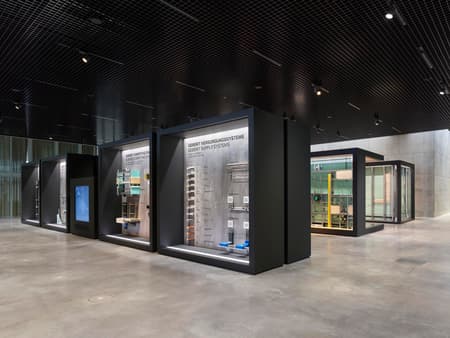
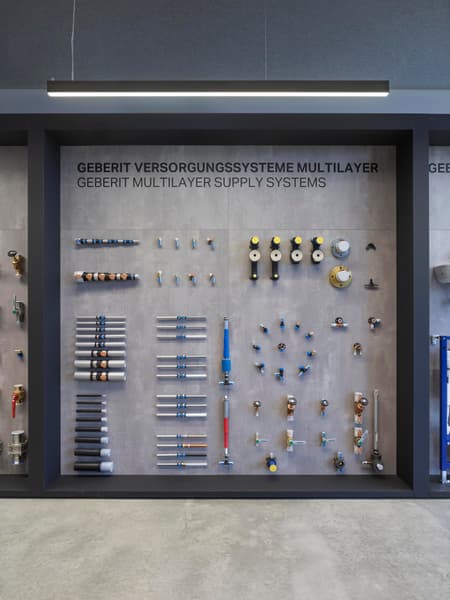
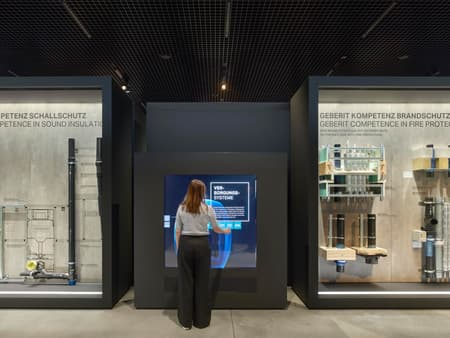
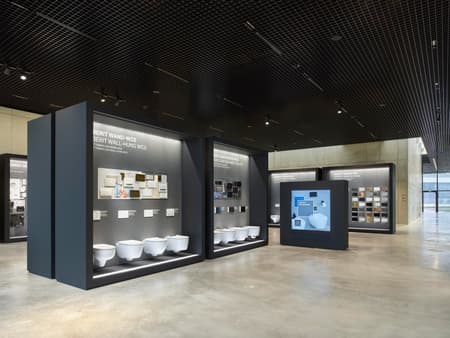
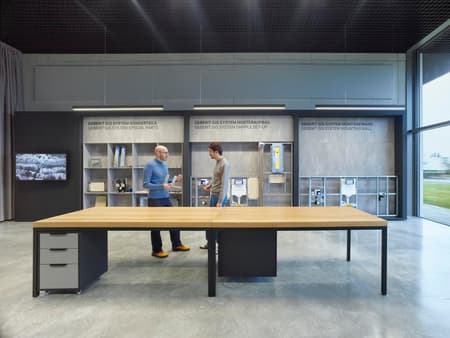
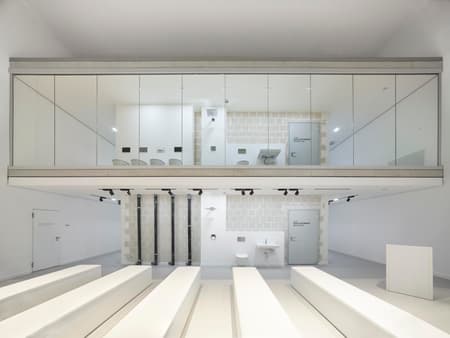
The Geberit product exhibition is fully integrated into the architecture and forms part of the spatial system. In terms of content, the showroom is divided into two main areas: “Know-how Installed”, focusing on expertise behind the wall, and “Design Meets Function”, showcasing sanitary solutions in front of the wall. This conceptual dualism is reflected in the design: raw exposed concrete contrasts with precisely articulated, smooth surfaces. Products are presented in modular units based on the square grid. Product exhibits, digital information surfaces, and hands-on tables can be flexibly combined and expanded.
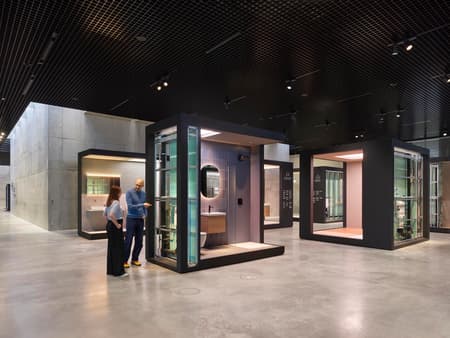
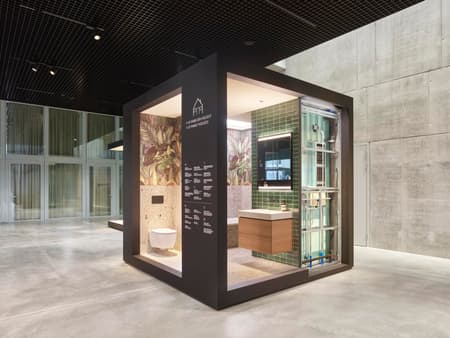
A central component of the exhibition is the application-oriented construction tasks. Walk-in spatial installations present real bathroom scenarios – from residential construction and hotels to barrier-free use. On the inside, the finished bathroom is shown; on the outside, the installation. Technology is explained and made visible
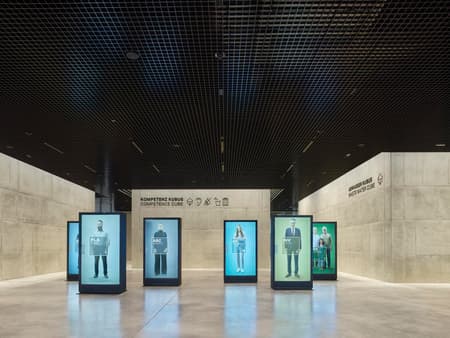
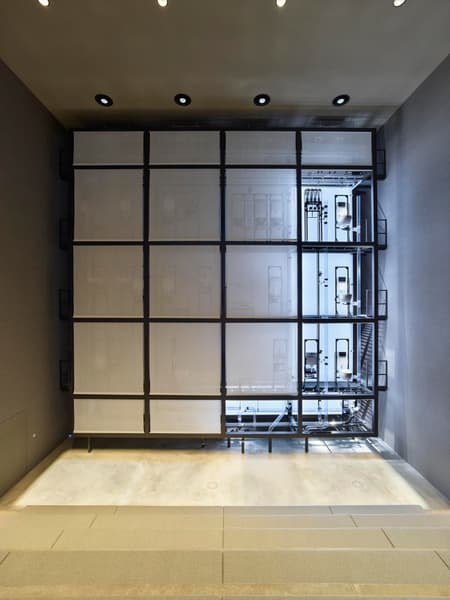
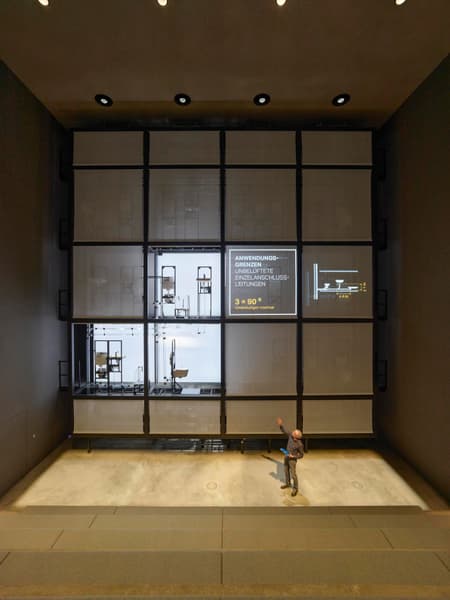
This is complemented by three large-scale demonstration installations. In the wastewater cube, more than 25 different scenarios illustrate wastewater hydraulics, made visible through a transparent installation measuring 11 by 11 meters. Flow processes, errors, and correct planning in wastewater engineering are experienced in a multimedia setting, staged through light, projection, and sound. The competence cube serves as the virtual knowledge space of the Geberit Campus. Within a walk-in 3D environment, it visualizes complex relationships in sanitary planning, from drinking water hygiene and wastewater hydraulics to digital planning with BIM. In the acoustics cube, featuring a fully equipped acoustics laboratory, a two-storey residential building is simulated to make sound measurable and audible. At the new Geberit Campus, learning takes place through observation, comparison, and hands-on experience.
The Geberit Campus is a carefully conceived system comprising architecture, landscape design, exhibition, didactics, and administration. Building and content are equal in value, precisely coordinated, and consistently developed from the brand. The campus demonstrates how knowledge can be spatially organized – clearly, functionally, and sustainably.