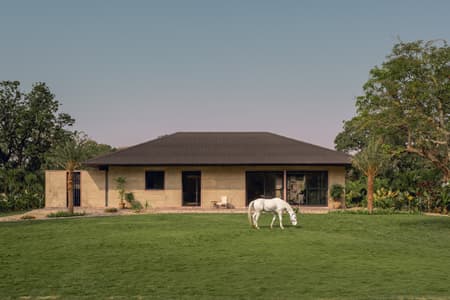
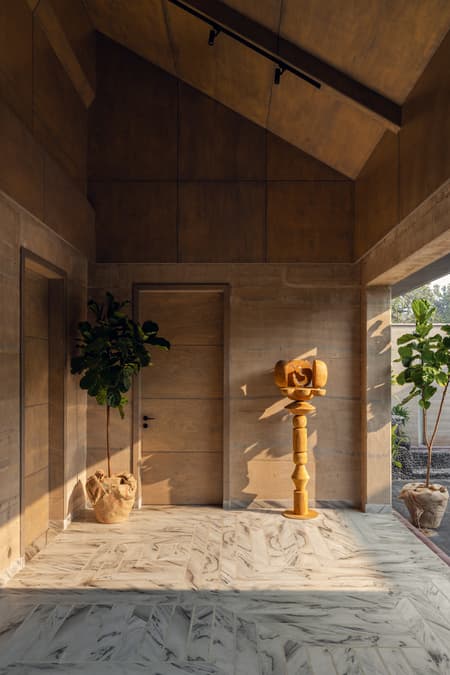
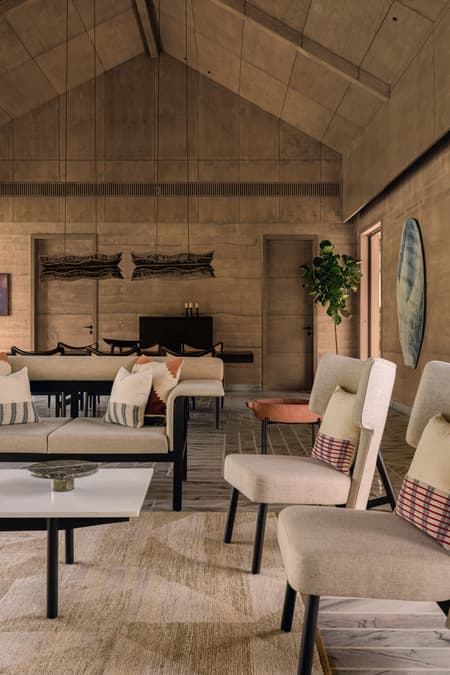
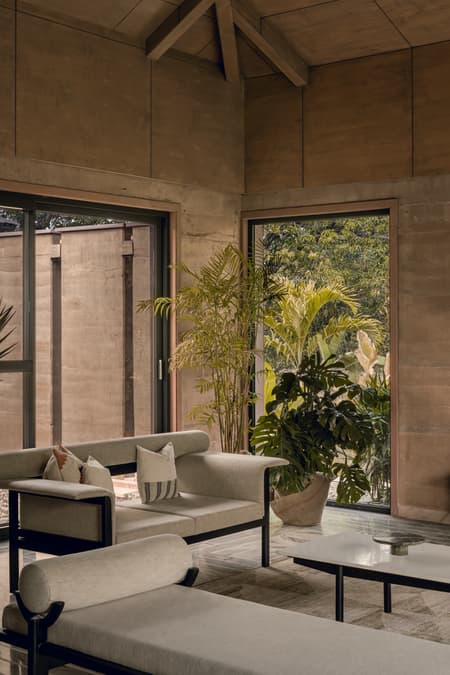
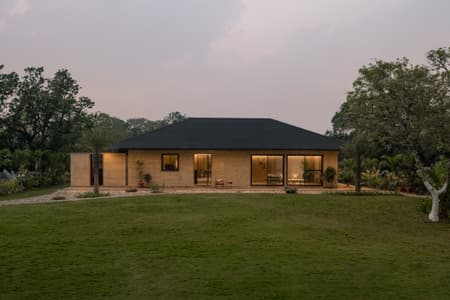
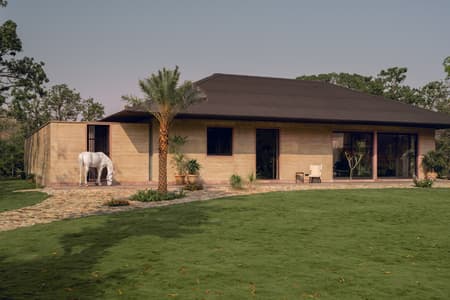
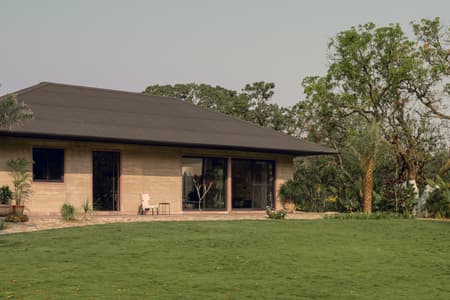
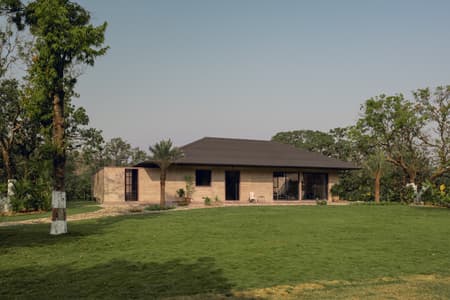
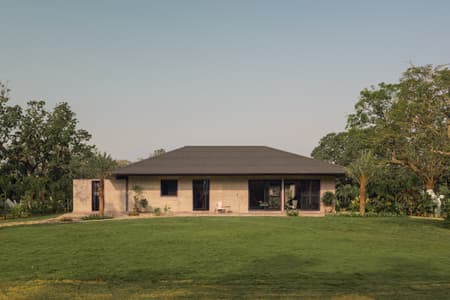
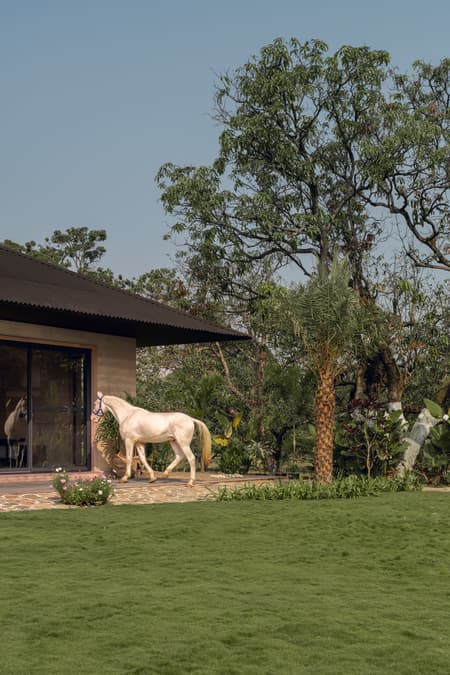
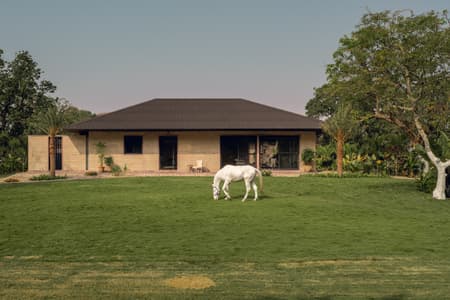
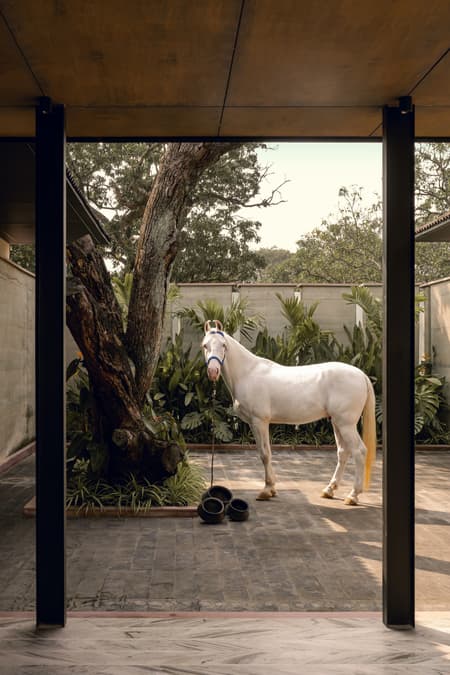
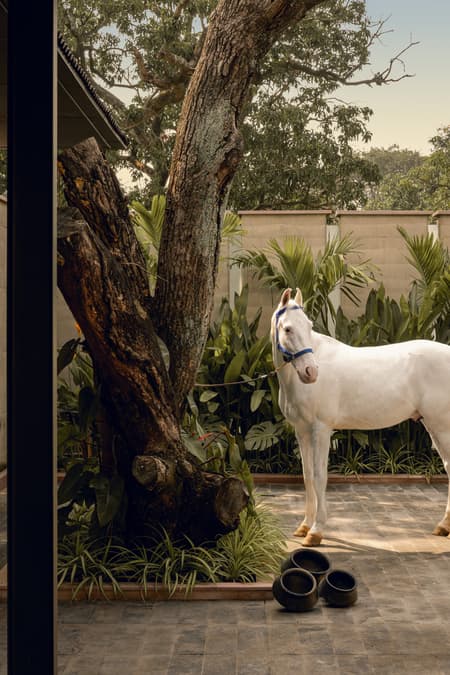
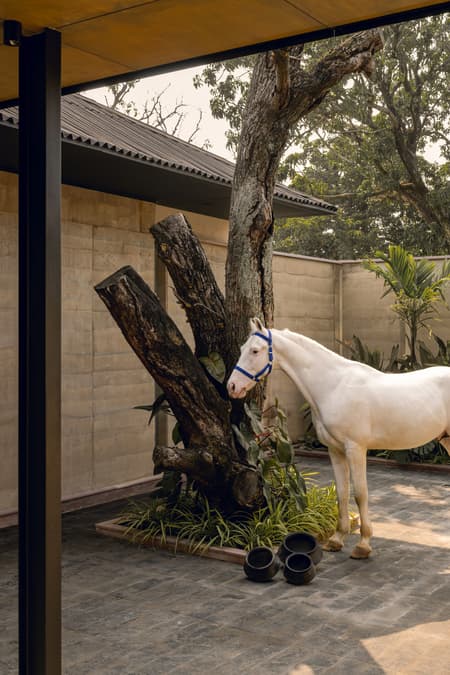
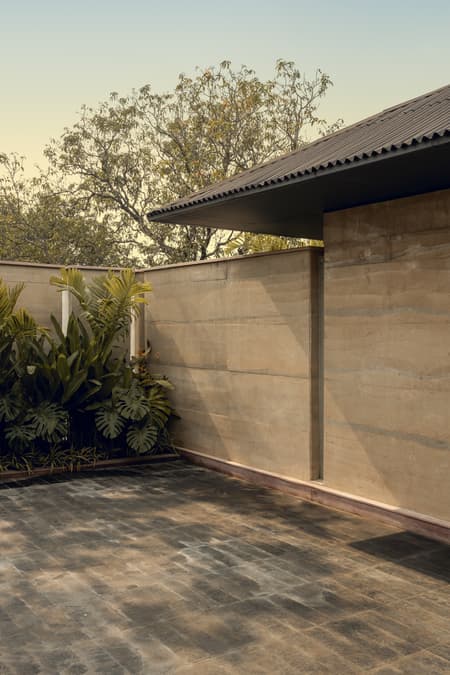
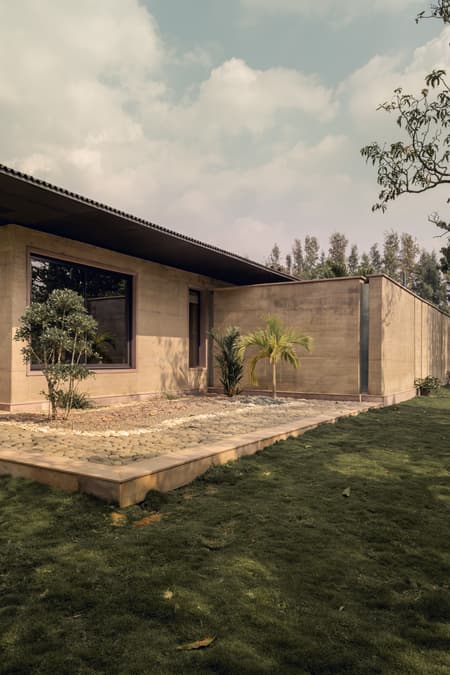
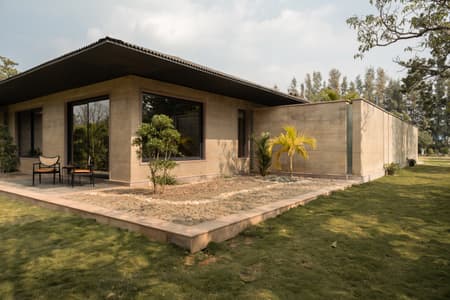
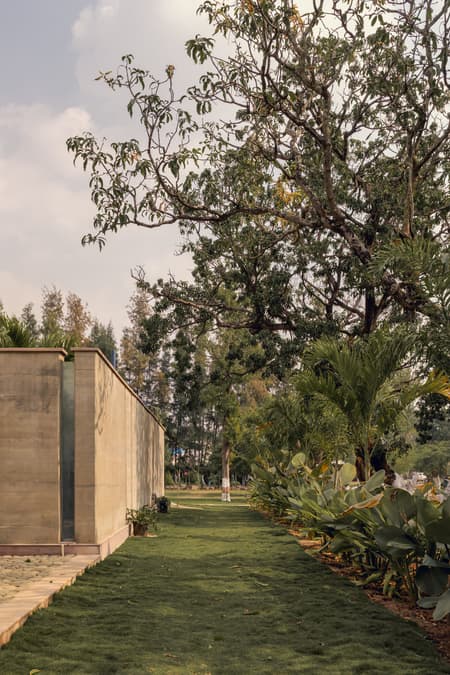
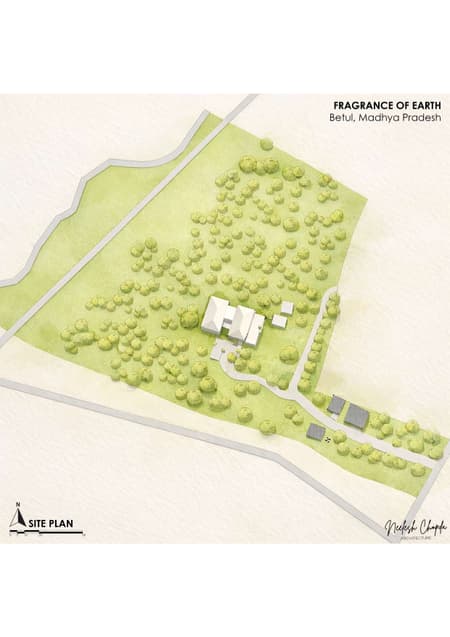
Fragrance of Earth is a 1,800 sq. ft. bungalow gently elevated on a natural mound, set within a 12-acre mango orchard and enveloped by an abundance of fruit-bearing trees. Conceived as an extension of the landscape itself, the home emerges from its surroundings with quiet restraint. Its name echoes the project’s guiding ethos—a tactile relationship with the land, expressed through the use of natural textures, locally sourced materials, and a design language rooted in earth, climate, and context.
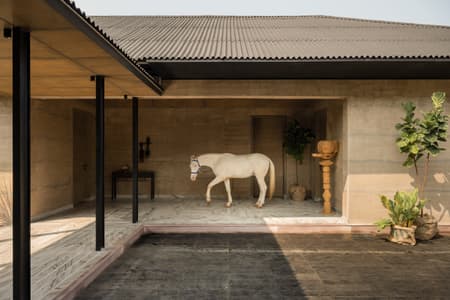
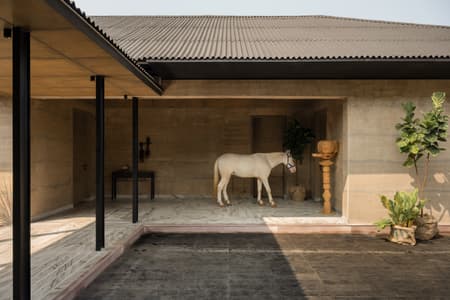
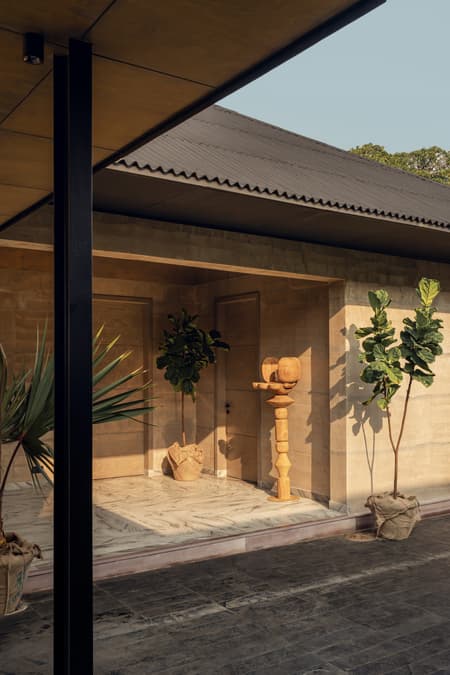
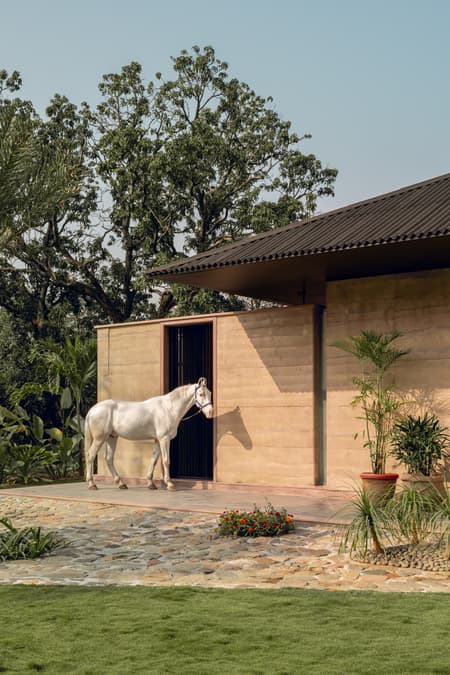
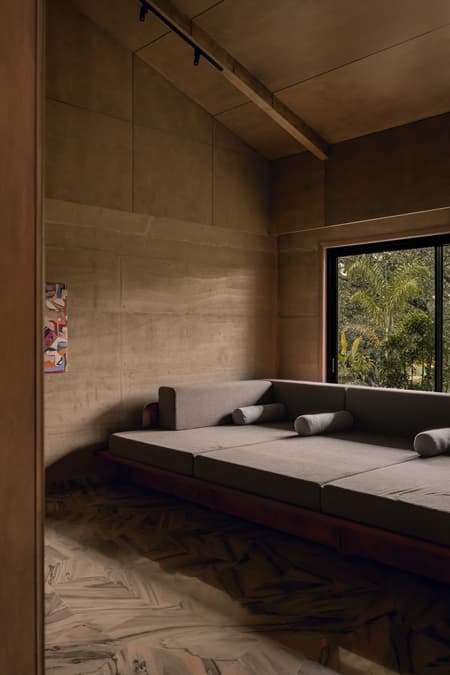
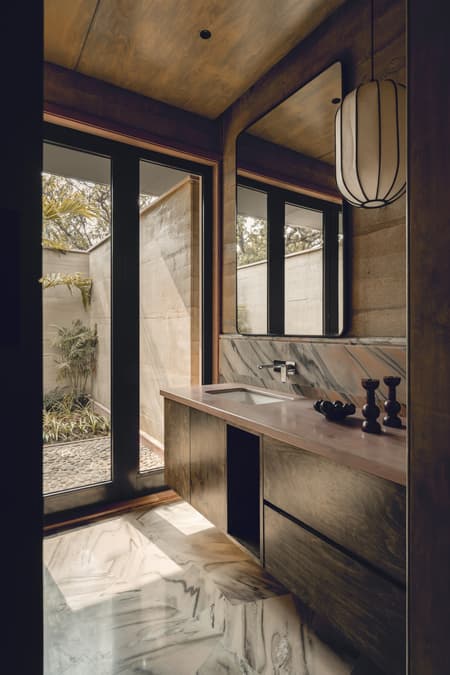
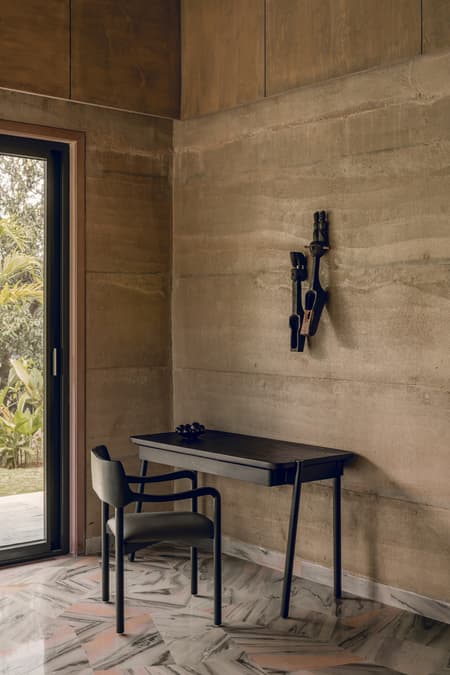
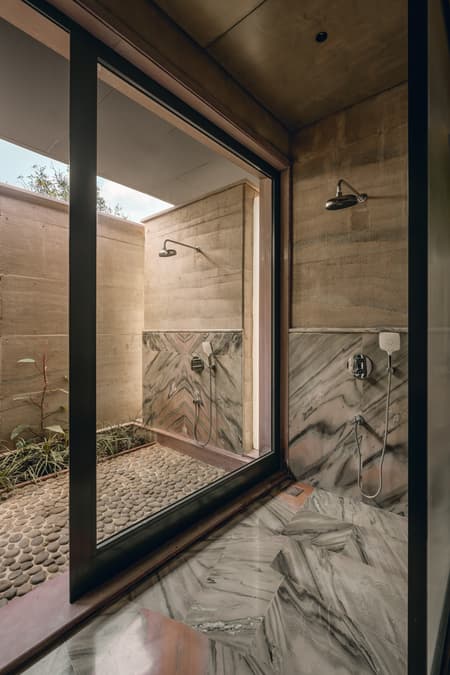
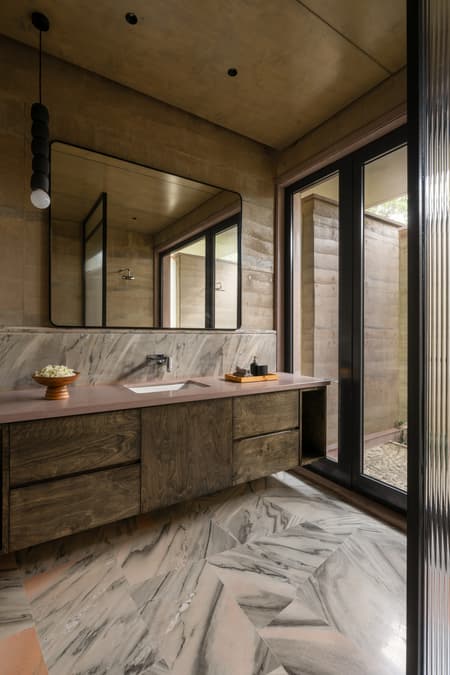
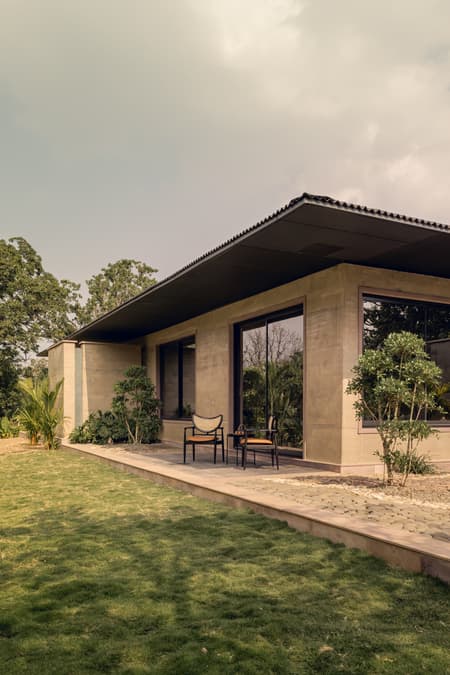
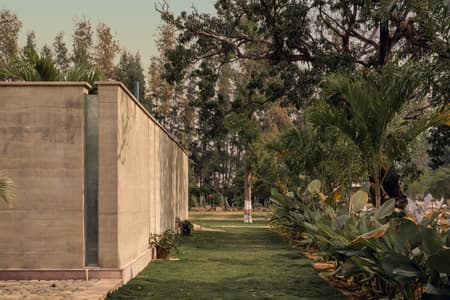
At the heart of the bungalow lies rammed earth—a time-honoured construction technique, once intrinsic to the region yet gradually forgotten. From the outset, the ambition was clear: to allow the entire structure to rise from this material, chosen for its low environmental impact and its innate ability to dissolve the boundary between built form and landscape. In keeping with this ethos, even the interior elements were crafted from discarded wood—weathered remnants reclaimed as quiet acknowledgements of nature’s generosity
While engaging external specialists proved financially unviable, the project instead turned inward—to the land and its people. Local craftsmen were trained in the nuances of rammed earth construction, from soil composition to compaction and long-term care. What emerged was more than a building process; it became a shared exchange of knowledge. Before the house reached completion, several workers had carried these skills back to their own villages, constructing homes that were affordable, sustainable, and deeply personal. This unintended ripple effect affirmed the project’s larger purpose.
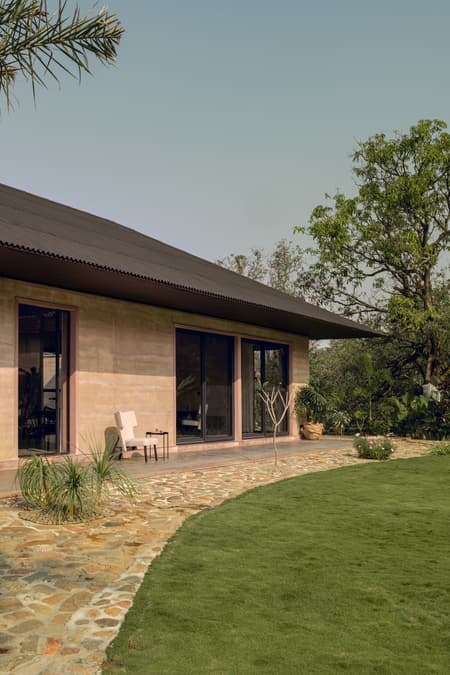
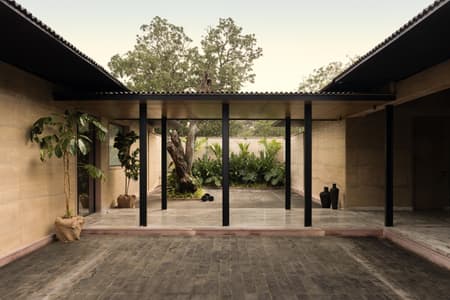
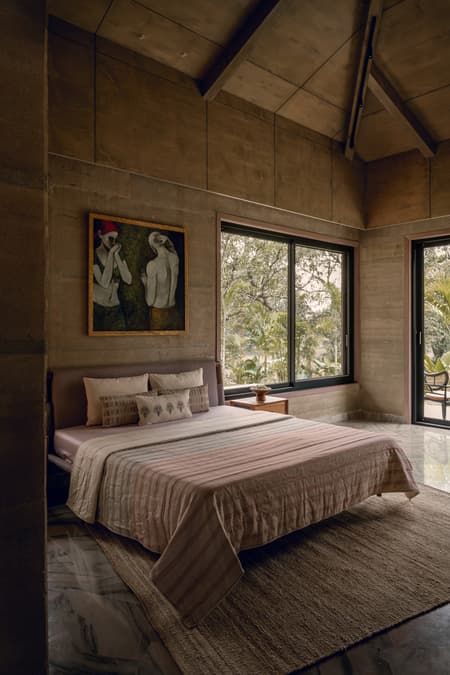
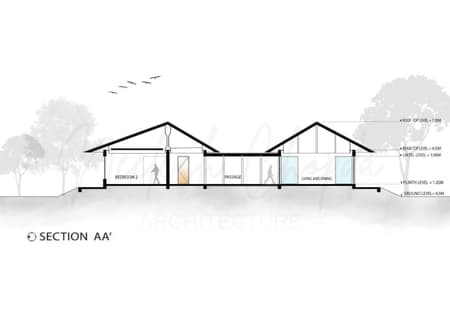
The completed structure is defined by solid rammed earth walls, anchored visually by a sloping roof finished in black. The choice of colour is intentional—allowing the form to recede gently into the skyline while reducing visual glare. Rather than asserting itself, the dark roof behaves like a shaded canopy, lending the house a calm, grounded presence within the orchard.
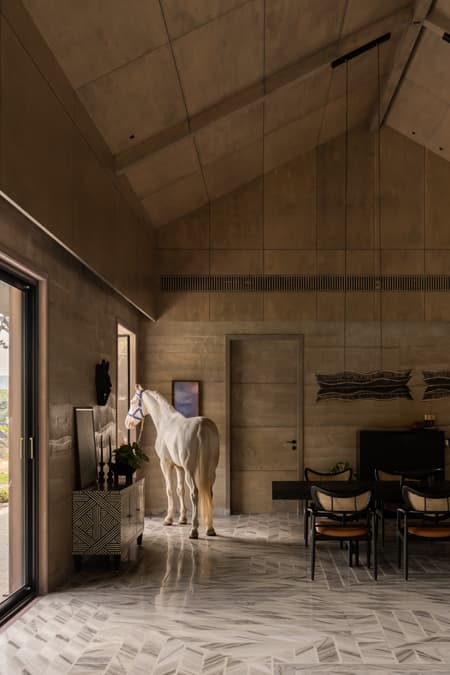
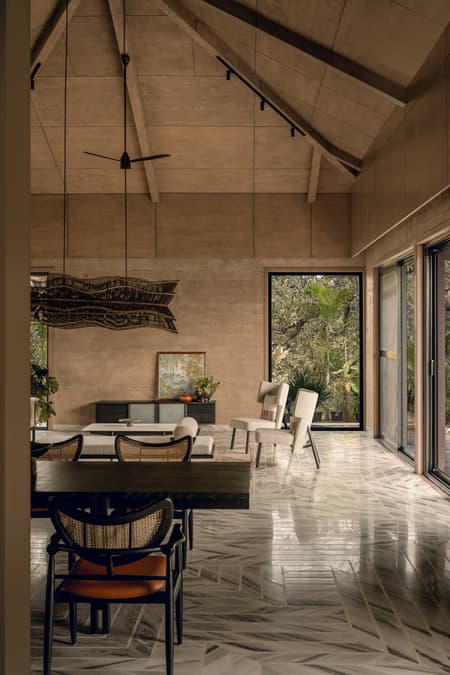
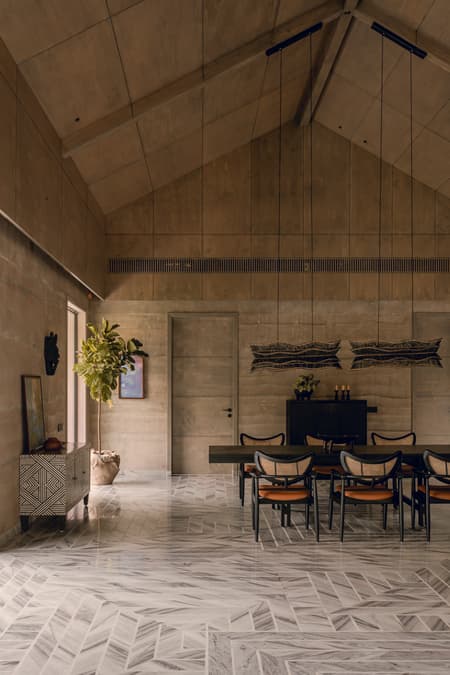
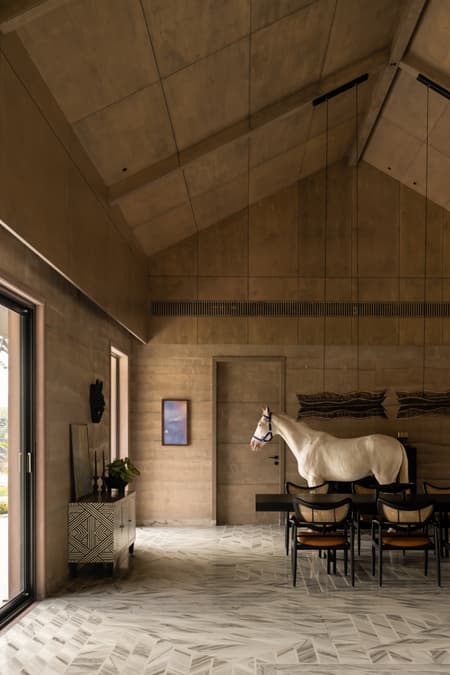
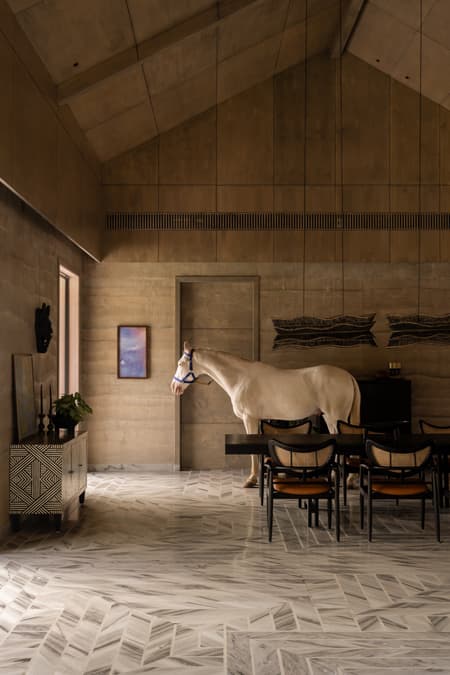
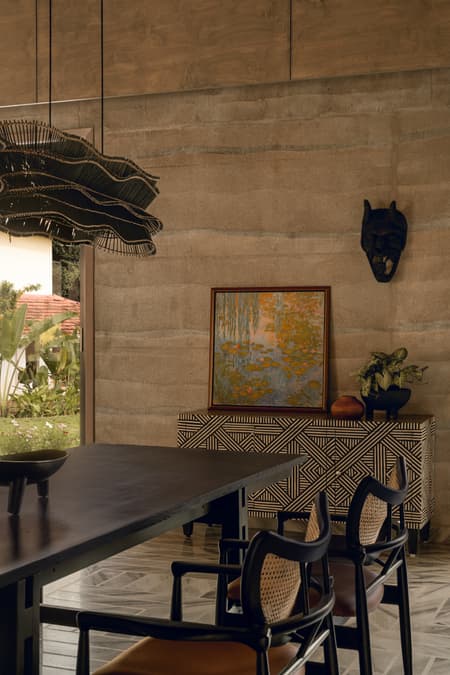
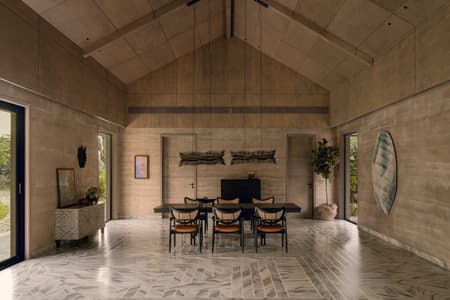
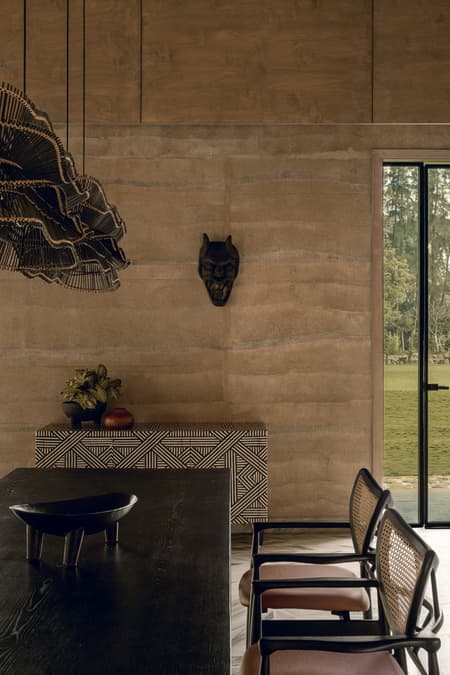
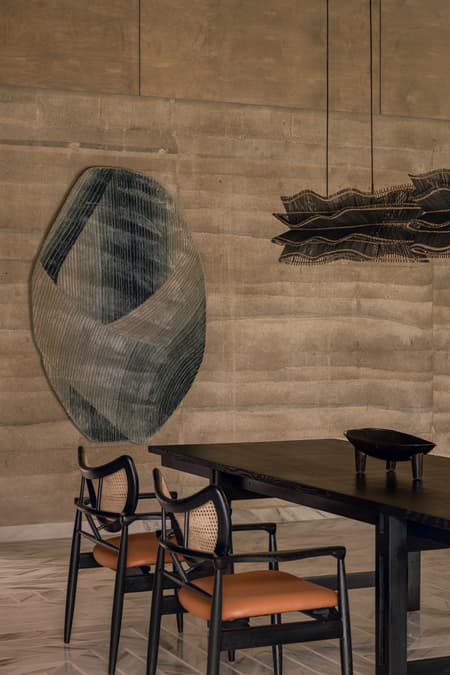
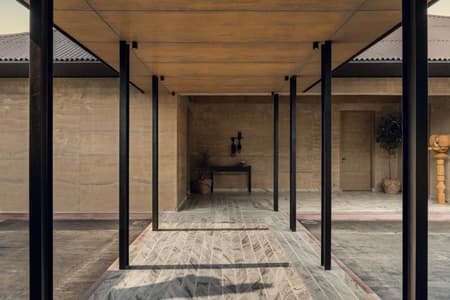
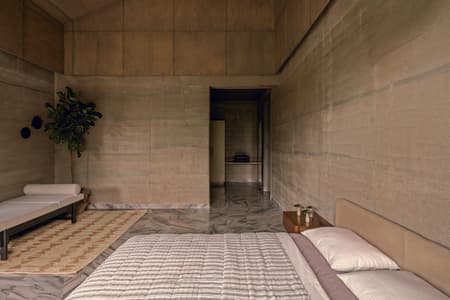
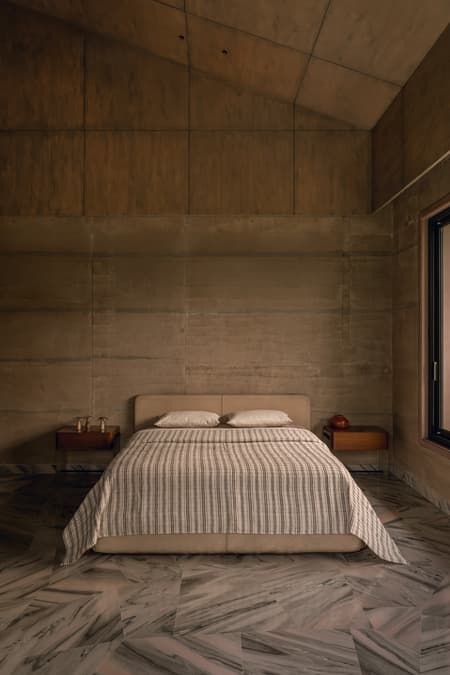
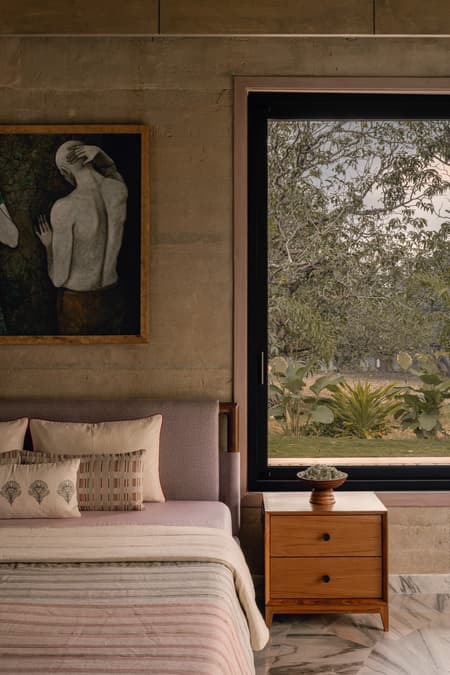
Inside, the rammed earth walls shape a tactile, immersive atmosphere. Their layered textures and mineral tones respond subtly to changing daylight, shifting in depth and warmth as the hours pass. At times, they even carry a faint, earthy fragrance—an almost imperceptible reminder of the soil from which the house was formed
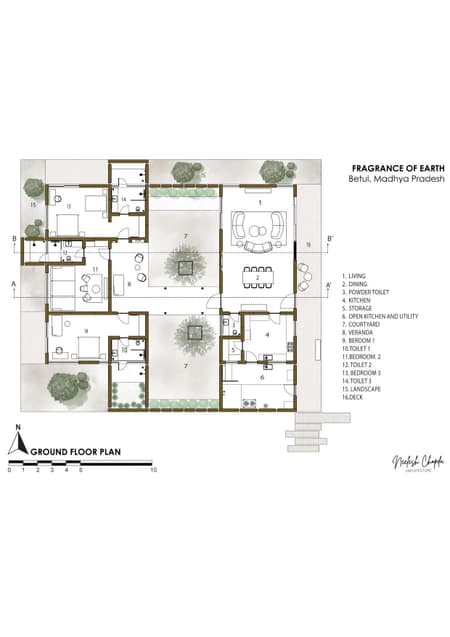
Spatially, the home is carefully composed. Positioned along the elevated rear edge of the site, the plan accommodates three bedrooms, connected by a courtyard passage that mediates between private and shared zones. Living, dining, and kitchen spaces are gathered together yet remain gently distanced from the bedrooms, allowing social life to unfold without disturbing moments of rest. This choreography of movement and pause brings balance to daily living.
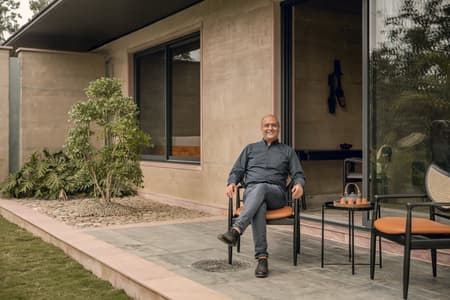
Now based in Mumbai, the homeowners return to this retreat as a place of quiet restoration. Here, amid earth walls and orchard winds, the house offers more than shelter—it restores a rhythm of life that is slower, rooted, and deeply connected to the land.