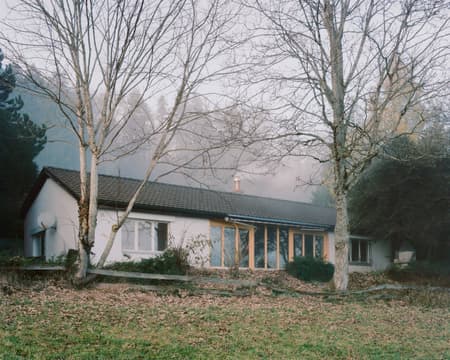
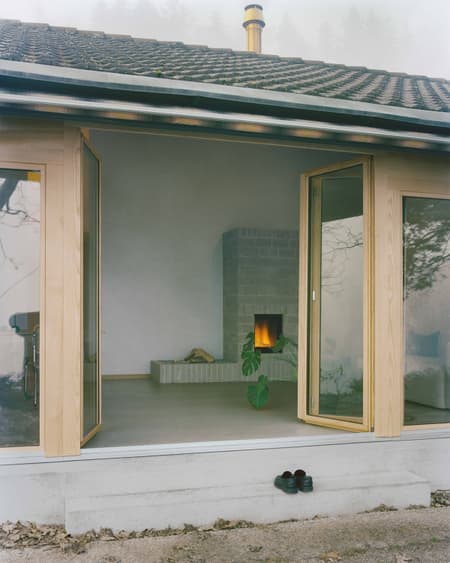
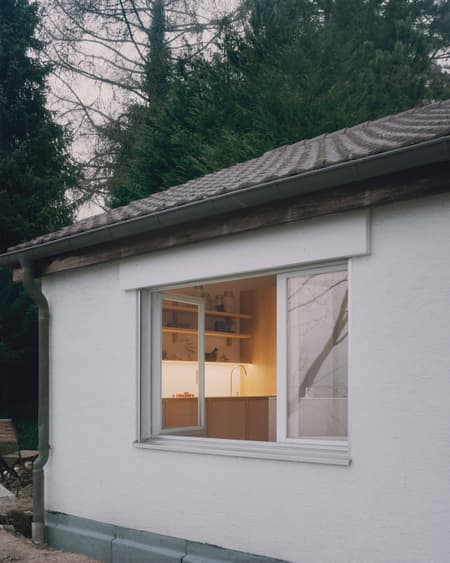
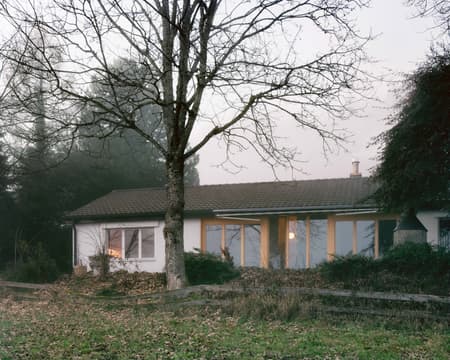
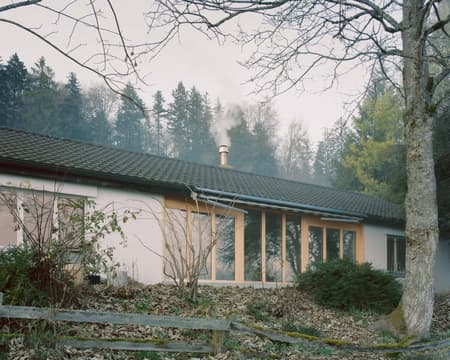
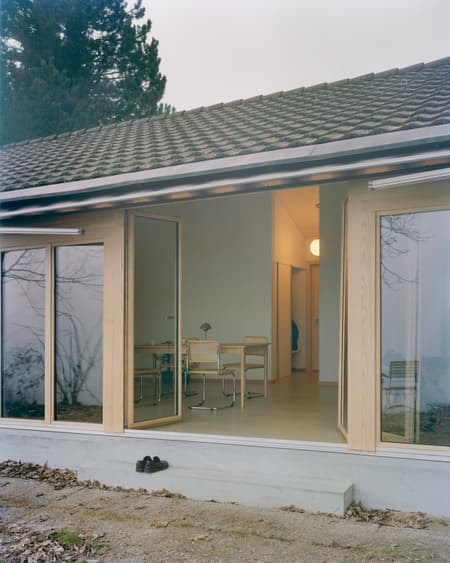
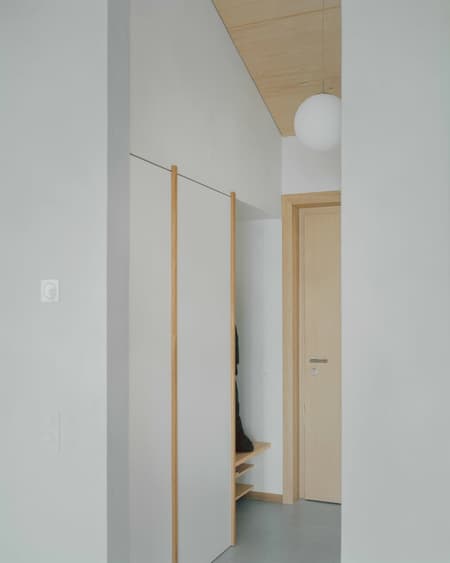
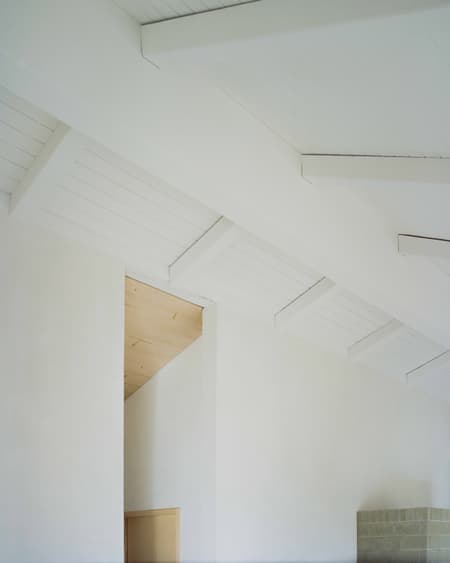
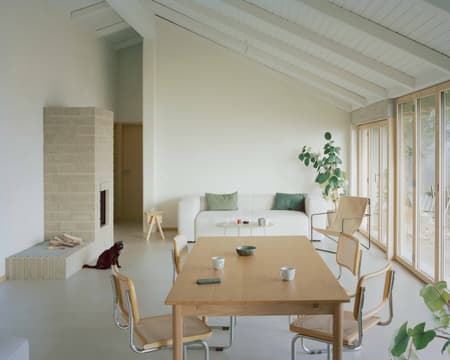
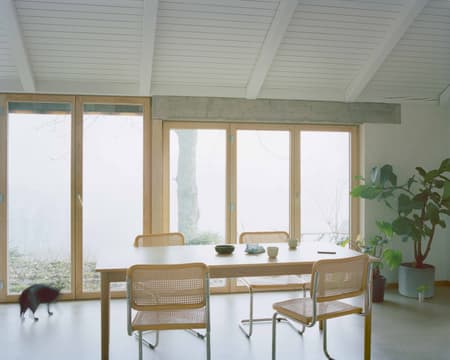
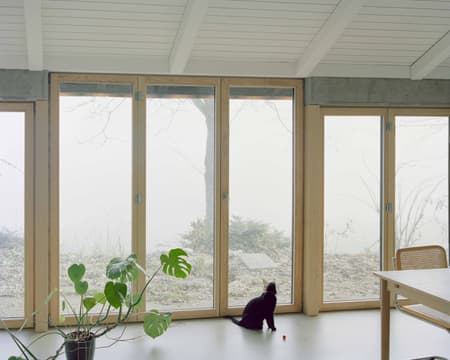
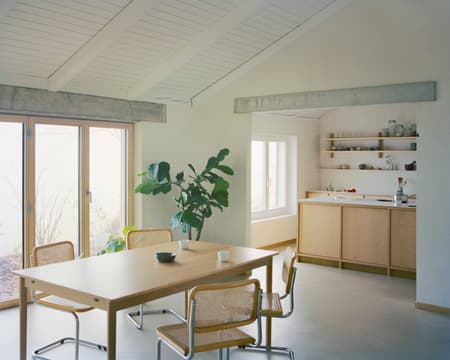
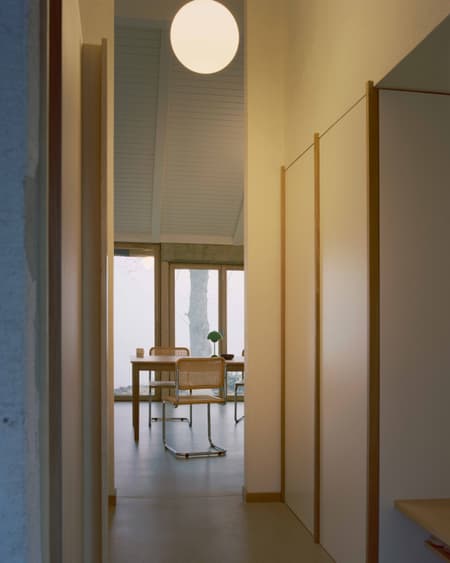
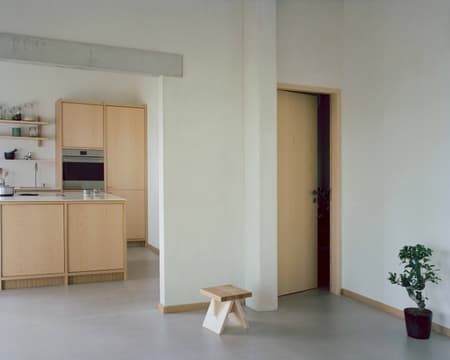
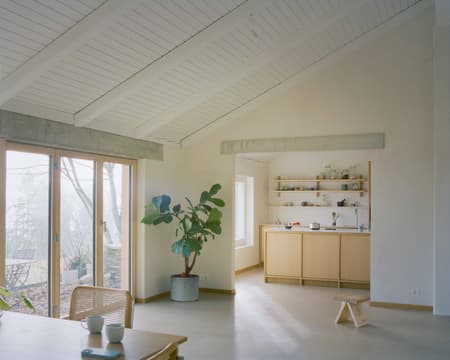
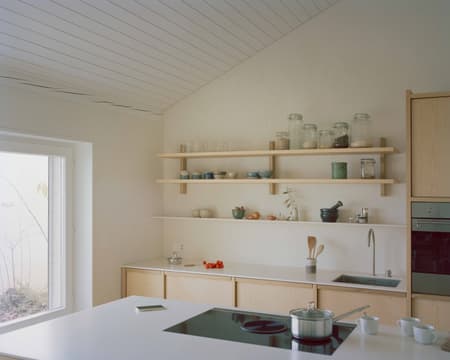
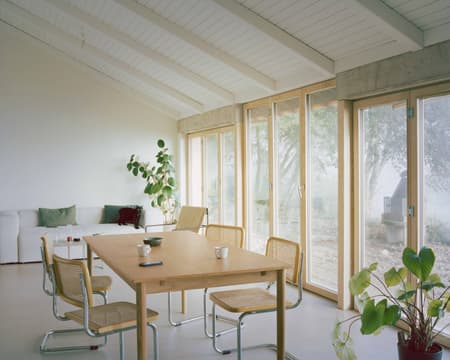
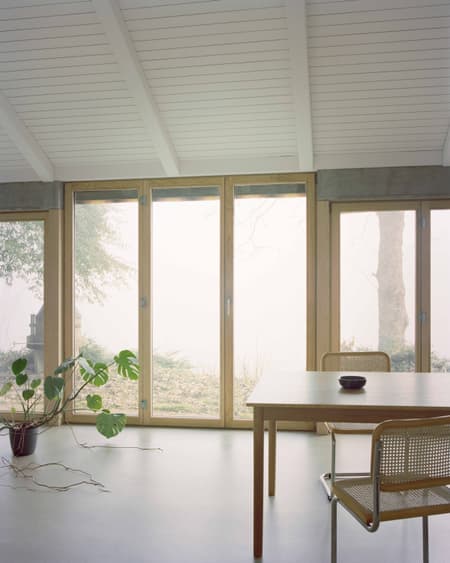
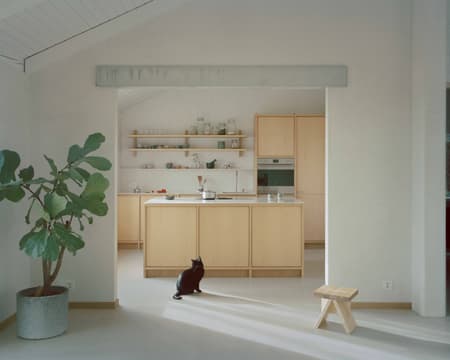
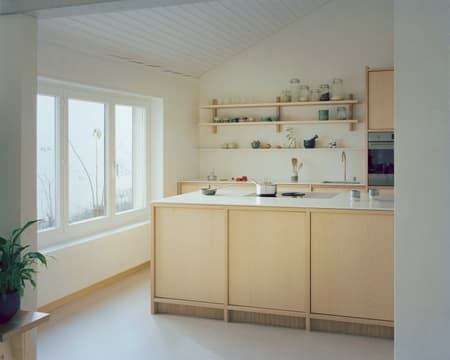
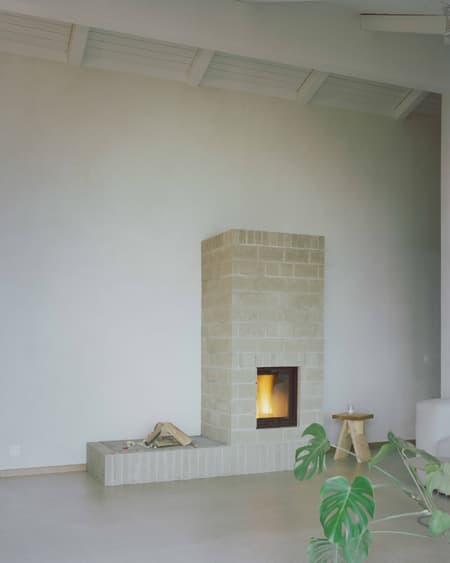
The project adopts a transformation-based approach, where the existing structure forms the starting point for every intervention. It proposes a measured and respectful interior transformation of the 1983 building, aiming to clarify the spatial organization and improve the fluidity of use. In this process, the kitchen and bedroom are swapped. From the entrance, a new opening guides the eye and gradually reveals a perspective across the volumes of the living space. Opening onto the living room, the kitchen contributes to the creation of a shared space that supports collective uses and everyday interactions. The enlargement of the living room openings reinforces a sense of spatial continuity between the interior living area and the exterior, making light and landscape active components of the project. The bathroom layout is conceived through a gradation of privacy, responding to the diversity of uses and moments throughout the day. The material palette relies on natural and durable materials. The existing wooden ceilings are preserved and repainted, entering into dialogue with solid ash and oak joinery that highlight the new interventions within the house. The walls are finished with lime plaster, while the fireplace, redesigned in raw earth brick, regains a structuring role at the heart of the living space. Each intervention seeks to reveal the quality of the existing volumes and to reinforce the identity of the place.