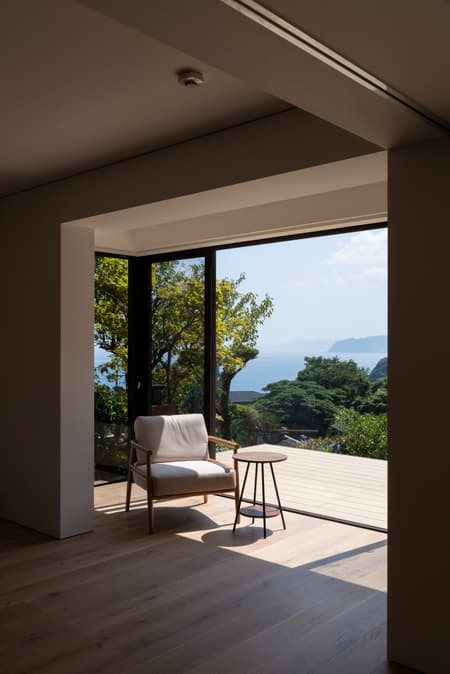
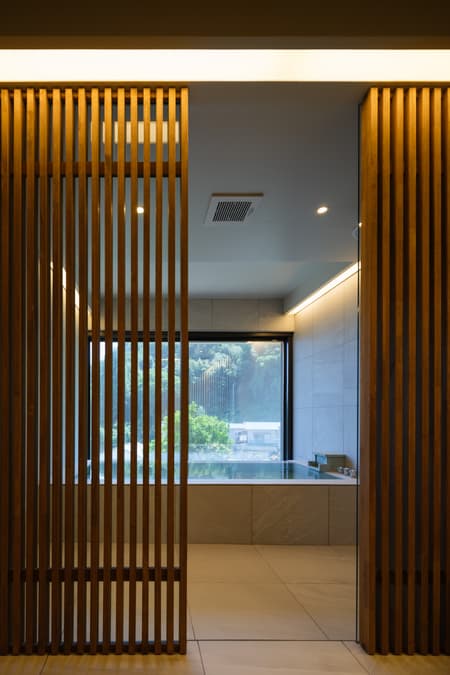
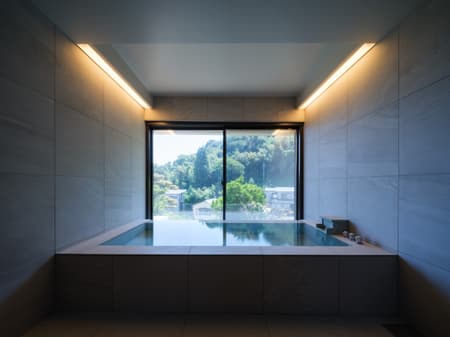
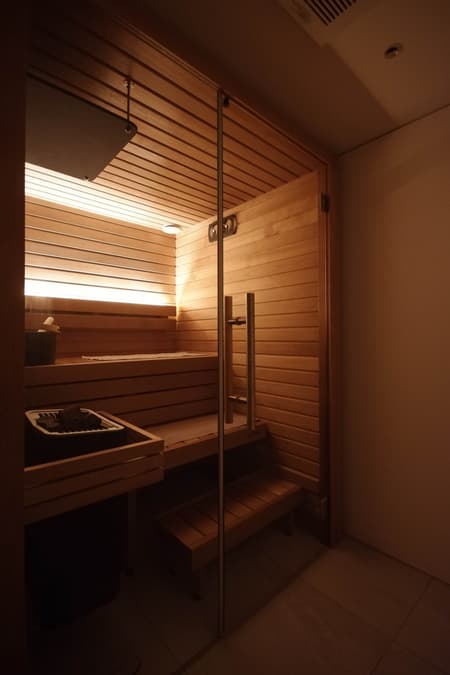
The client approached us with a renovation request for an old Japanese home located in the coastal town of Atami.
The brief left space for exploration, yet had specific requirements as a holiday home.
Of importance was a large entertaining space taking advantage of the sea view in the distance, a traditional bathing area, and at least two bedrooms, a sauna, and an exterior deck.
Rare in old houses was the connection to spring water, or onsen; therefore, it was paramount to ensure a luxurious bathing space within the constraints of existing pipes, drainage, and space.
We immediately recognized this would be an exercise in tempering tradition with modernity. The traditional Japanese house, with its structural design in harmony with an outdated and also alienated lifestyle for our foreign client, had to be fitted into a narrative of modern living and specific spatial expectations.
“Our responsibility reached beyond the client’s brief, extending to the building itself— an old structure bearing the weight of history, tradition, and craftsmanship, reverberating with traces of something forgotten, yet never lost. To us, it was a presence we felt deserved to be carried forward, carefully, into the next phase of its life.”
Renovation projects can be far more challenging than new construction, as they impose a stricter framework to work within and, particularly in the case of traditional buildings, require a careful respect for the existing structure.
The house had a very traditional Japanese layout on the second floor, composed of many small rooms connected by sliding shoji doors, with tatami mats and low ceilings.
One step below this level, a narrow corridor offered framed views toward the ocean.
On the ground floor, the house contained a large open area, the traditional bath, a machine room, and storage spaces.
Following a site visit, the owner agreed to preserve several elements of the house, as well as the original design intentions, including the sweeping ocean view and the traditional bathing area.
However, the element that would ultimately become the catalyst for the overall design narrative was discovered almost by chance—and entirely unexpectedly.
Many traditional Japanese houses, especially the typologies that differ from the “farmhouse” or Kominka, often have a false ceiling under the roof.
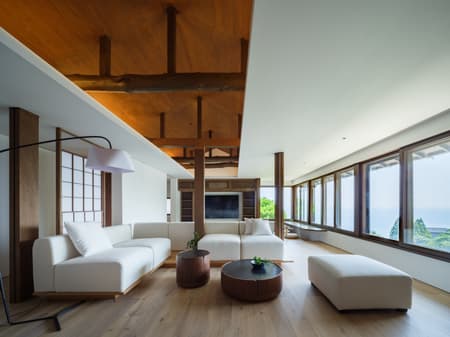
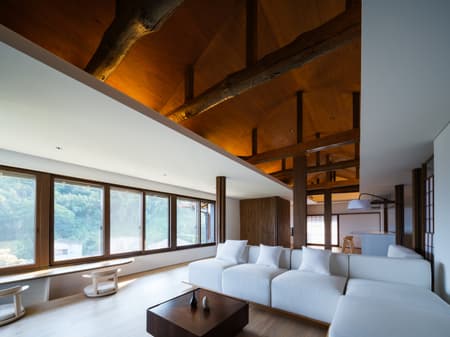
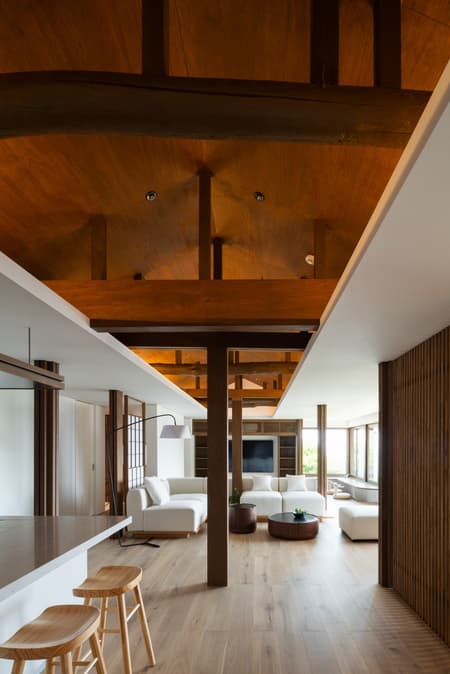
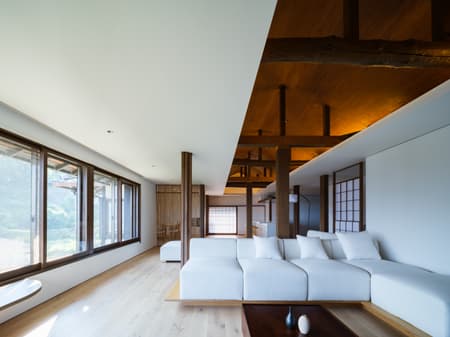
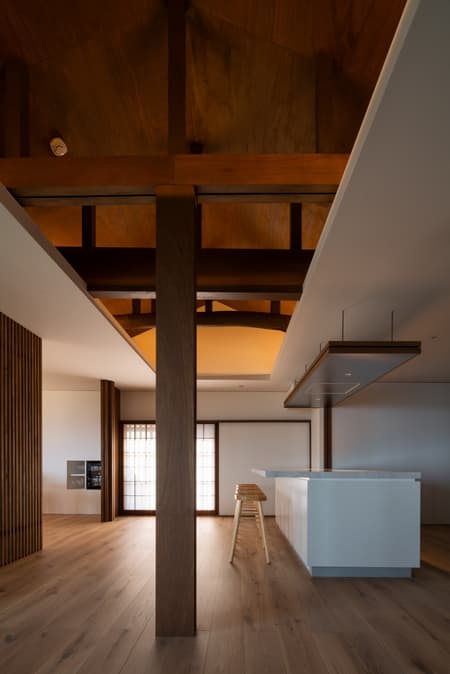
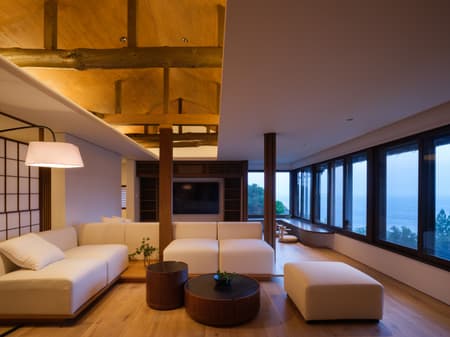
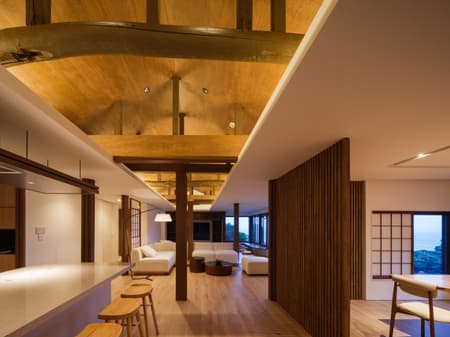
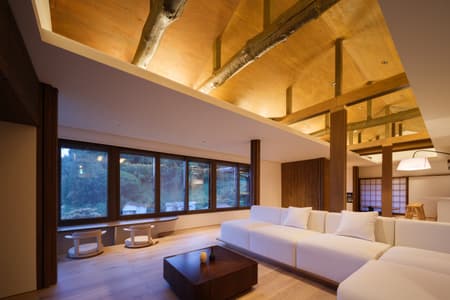
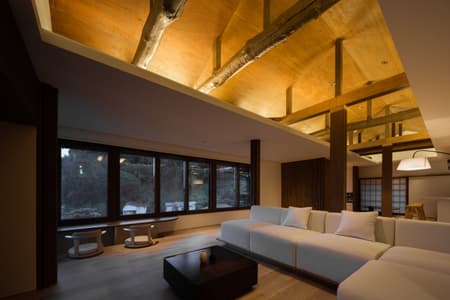
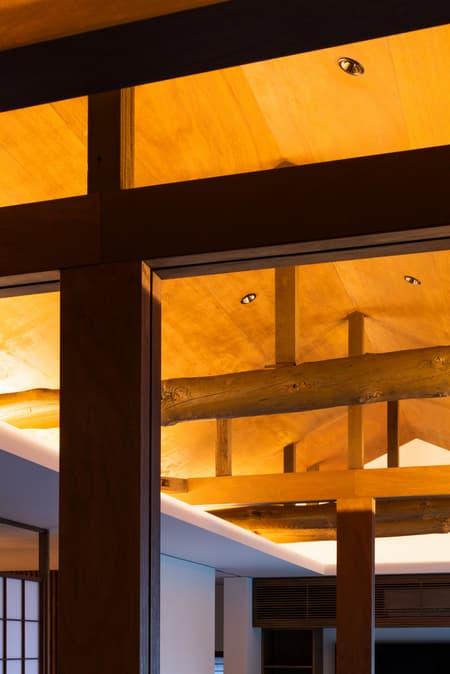
This provides minimum insulation and hides the roof structure. While assessing any potential leakage as well checking the underlying structure, we discovered what we understood to be the “Forgotten Soul” of the house: beautifully aged, natural timber beams. These elements became the catalyst for a fast evolution of both the design concept as well as the aesthetic. We now had the missing piece of the puzzle, a physical element to utilize as the bridge between past and present, something uniquely embedded in the narrative of the building that had to become the protagonist in its new phase.
The concept of the house became even more defined with the discovery of the existing t imber beams. From the outset, however, our intention was to offer the client a deeper understanding of traditional Japanese living philosophy and its profound respect for craftsmanship. The spaces were designed to be flexible and defined by the activities that take place within them rather than by fixed functions
. This approach is rooted in the concept of Ma, where space gains meaning through use and occupation and are never static.
In parallel, we placed strong emphasis on tactility and on the culture of making— Monozukuri—which directly translates to “making things.
” Working closely with local craftsmen, we developed elements that are both traditional and contemporary, unified by the shared value of handcraft.
In doing so, we deliberately rejected the widespread reliance on ready-made products that characterizes much of the modern Japanese household.
The final result is a constellation of key spaces, each designed to invite occupants to appreciate the beauty the site offers—whether the frequent fireworks festivals or the expansive views of the ocean—while also providing flexibility.
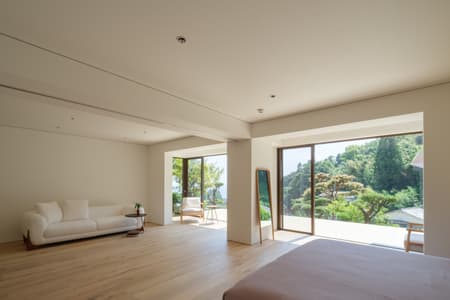
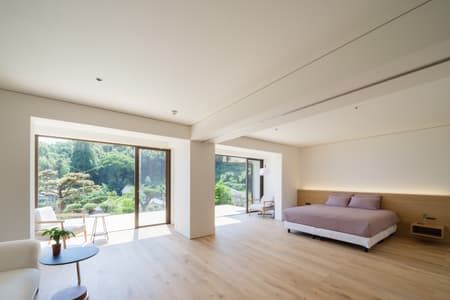
Spaces such as the large bedroom can be fully enclosed with sliding partitions concealed within the walls, allowing the interior to transform and accommodate different uses as needed.
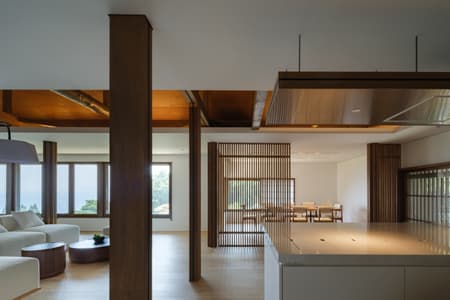
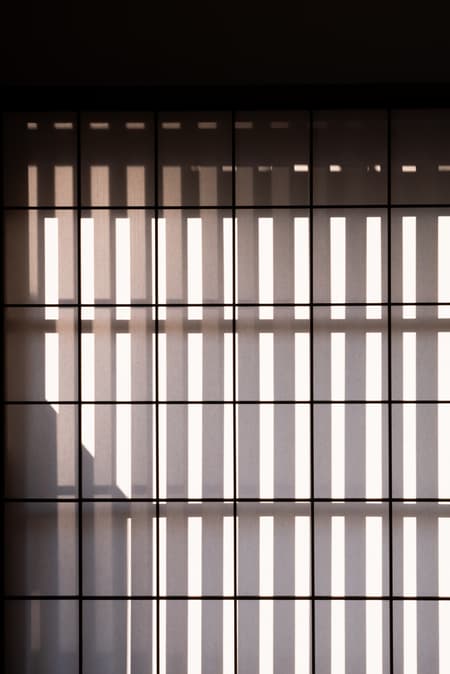
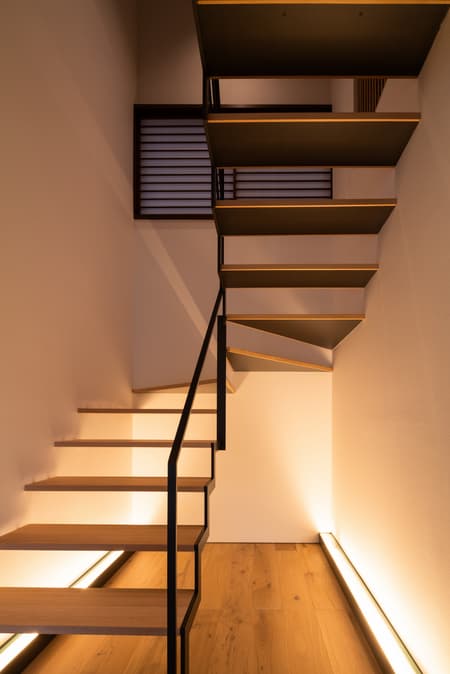
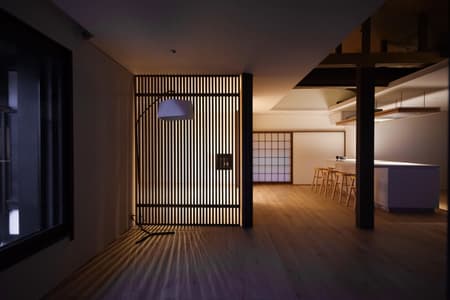
The spirit of “monozukuri” permeates throughout with handmade elements such as traditional Shoji, louvers partition and hand-crafted furniture.
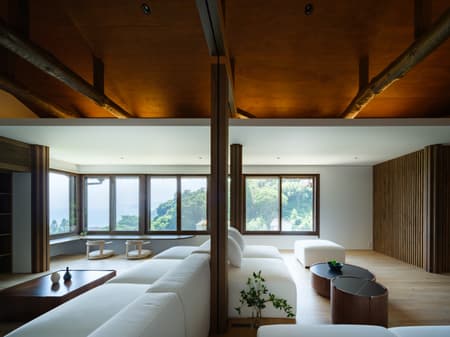
“The final thread of the conceptual narrative are the original timber beams, hovering above a constellation of crafted elements. They are the true soul of the house—a quiet, enduring presence that anchors the space in tradition.”
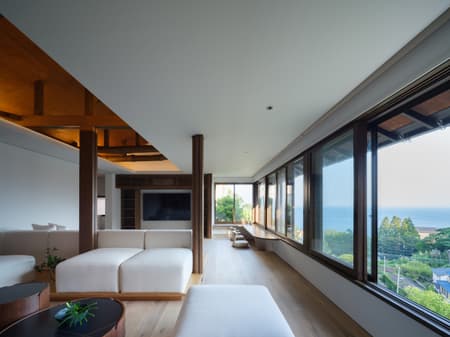
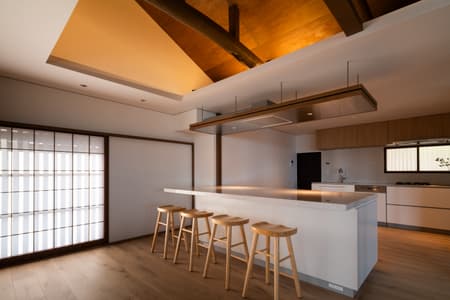
The living, dining, and kitchen area unfold as a contemporary open plan, populated by a constellation of handcrafted elements: the sunken hori-kotatsu table, the original preserved shōji doors, and a generous sofa base made from local Japanese ash.
Located just 40 minutes by bullet train from Tokyo Station, Atami has long served as a favored retreat for Tokyoites.
Historically part of the Tōkaidō—the great route connecting Edo and Kyoto—the town retains the charm of a traditional coastal settlement, where history and craft are felt at every turn.
Dramatic mountains plunge into the ocean, creating a landscape defined by mild climate, clean air, and a rich culinary culture.
For these reasons, the client chose to purchase a property in Atami: a place to disconnect from the intensity of the city and reconnect with nature.
Given the area’s strong tourist appeal, the house is also designed to be rented when not in use by the owner.
The many views of Atami influenced us deeply.We did not want to create an alienated piece of architecture, but on the contrary something that would feel “at home” with its surroundings as much as with the town itself.
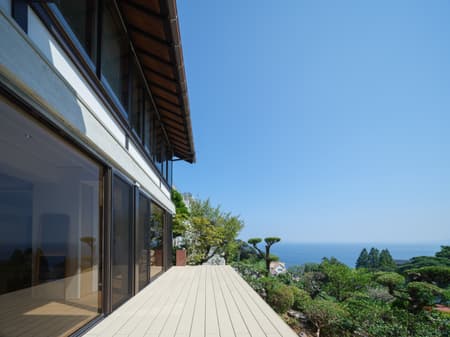
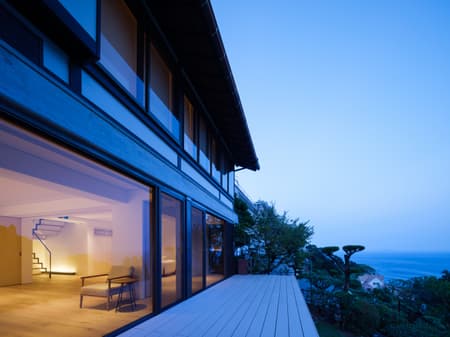
The deck became the primary element of exposure to both surrounding nature and views.
The long, transparent ground floor function as an Engawa space, neither inside nor outside, yet both.
The property is located just a few minutes’ drive from Atami Station, in a quiet residential area perched on the hillside.
Originally planned to take advantage of southern exposure and ocean views, the house already possessed strong spatial potential—an aspect that the design further enhances.
To maintain control over both timeline and budget, the project was carefully planned to avoid major approval processes.
Aside from the lodging license, which required coordination with the fire department and local health and safety authorities, no additional regulatory routes were necessary.
As a result, the exterior was left largely untouched, with only a few carefully positioned window openings introduced.
Central to the identity of the property is its connection to onsen (hot spring) water, for which Atami is famously known.
The name Atami itself means “Hot Ocean,” a reference to the abundant thermal water that naturally emerges from the seabed.
This connection was of critical importance—not only for the owner’s experience, but also from a hospitality and retail perspective.
Accordingly, special attention was given to the design of the bathing space, treating it as a defining element of the project.
Working within the constraints of the existing structure, the plan remains true to its core concept: an interpretation of Ma re-imagined through contemporary living.
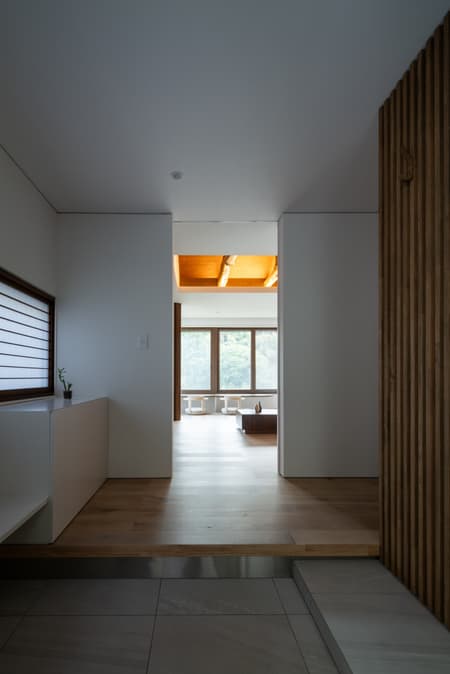
Arrival occurs on the second floor, where entry is planned to immediately reveal key spaces and framed views, establishing a strong visual connection from the outset.
The LDK unfolds as an open yet layered environment.
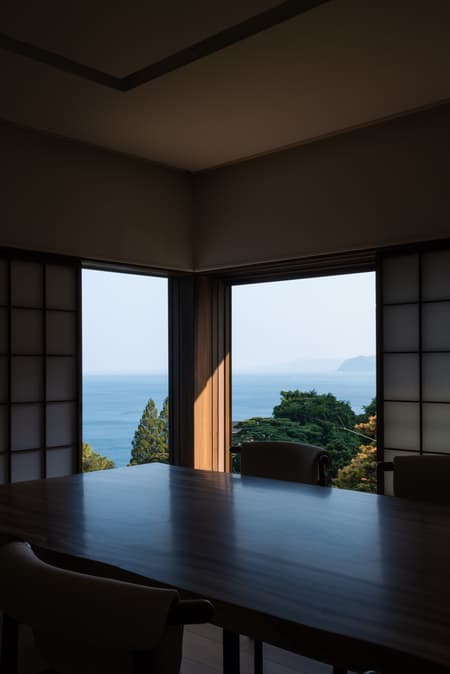
A corner-positioned hori-kotatsu anchors the space, maximizing exposure to the surrounding landscape while forming an intimate retreat.
Sliding partitions and permeable louvers allow the interior to transform fluidly, accommodating both social gatherings and quieter moments.
The kitchen island, dining area, and living space remain in constant visual dialogue as the core of daily life.
The ground floor is conceived as a private sanctuary.
The master bedroom can be subdivided into two en-suite bedrooms for guests or opened into a generous, flexible space suited for exercise, movie nights, or quiet reading and work.
Behind it, the en-suite sequence includes a hinoki sauna adjacent to the bathroom and onsen.
Both bedrooms open directly onto the garden through a deck, reinforcing a seamless connection to nature.
“Tradition, to us, is the preservation of what endures, where the patina of time refines the object as profoundly as the craftsman who formed it; our role is to keep it alive.”
“Modernity becomes the offspring of tradition, where the act of making carries forward a style and reverence for what came before.”
Searching and crafting the dining table was a long process of exploration.
Working with local craftsmen we researched and tested many different types of wood as we did not want to apply any stain or color coating and keep the original hues as a testament to the local, natural beauty of it.