Dabbagh Architects is an internationally recognised architectural design firm led by Saudi architect Sumaya Dabbagh. Renowned for its contemporary and culturally relevant projects across the Gulf, the firm has been commissioned in 2018 by the Department of Culture and Tourism Abu Dhabi to lead the redevelopment of UAE’s first museum in Al Ain. The project honours over 8,000 years of the region’s history, preserving its archaeological remains, historic structures, and cultural heritage while introducing a contemporary architectural narrative that bridges the past with the present.
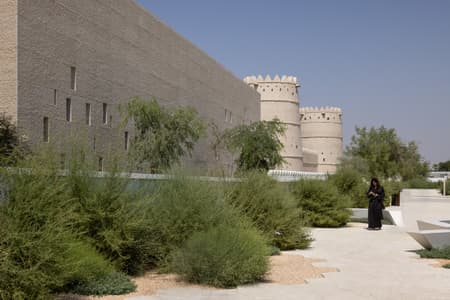
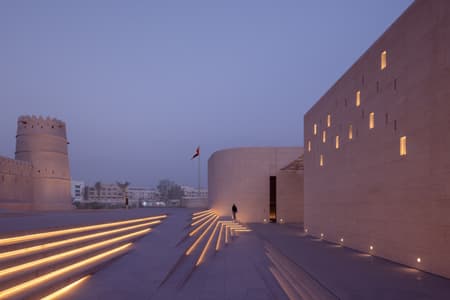
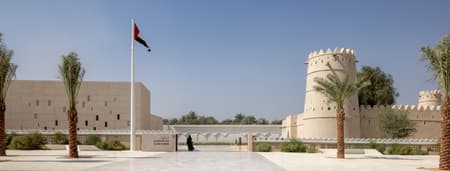
Located in Al Ain, a city within the Emirate of Abu Dhabi, the museum is adjacent to the Al Ain Oasis, and lies within the buffer zone of the UNESCO World Heritage Site. With a gross floor area of approximately 8,000 square metres, the redevelopment incorporates two historically significant structures: the mud-brick Sultan Fort, built in 1910 by Sheikh Sultan bin Zayed the First and the Al Ain National Museum, the first museum in the UAE, founded in 1969 by Sheikh Zayed bin Sultan Al Nahyan.
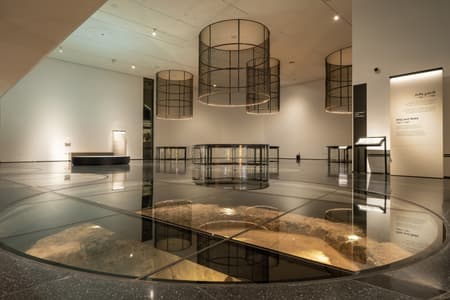
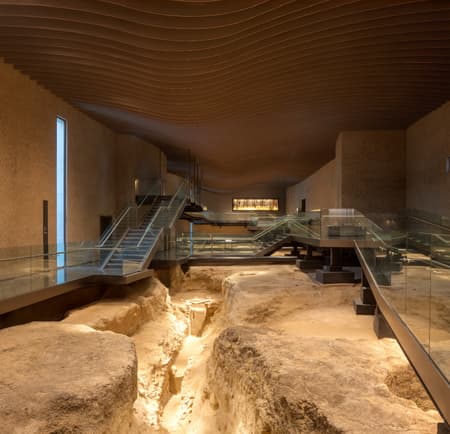
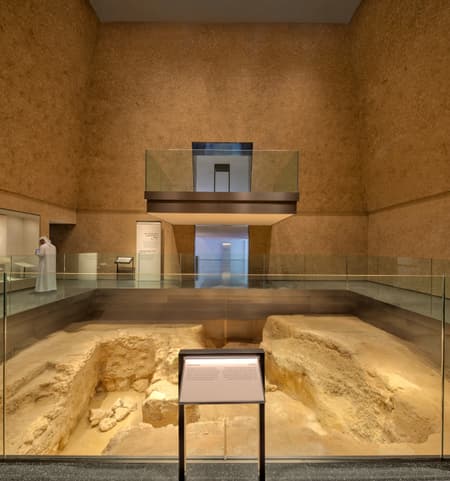
In 2019, during the construction of the Museum’s initial design, a series of significant archaeological discoveries were uncovered on the site. Excavations revealed a sophisticated network of aflaj, wells, and a tomb, shedding new light on the historical and cultural context of the area. In response, construction was suspended, and a dedicated team of archaeologists conducted an extensive survey to systematically excavate, document, and assess the findings. Theirwork provided detailed records and analysis, which aided in ensuring the preservation of these invaluable cultural assets and informing subsequent phases of the Museum’s development.
In 2020, these discoveries prompted the development of a revised project brief, undertaken in close collaboration between the Client and Dabbagh Architects. The findings necessitated a comprehensive redesign of the Museum, expanding the site and programme to accommodate and showcase the archaeological discoveries, repositioning the architecture as a vessel for the preservation of heritage. The resulting Museum is a carefully orchestrated composition that integrates the site’s historical fabric, archaeological landscape, and contemporary architectural form into a cohesive whole. Dabbagh Architects approached the project with a commitment to preserving the spirit of the place and honouring the site’s memory.
“The new building is woven around the archaeology and the existing structures, creating connections at multiple levels; between old and new; between the refurbished 1969 Museum, the restored Fort, and the new extension; between built form and archaeology. A continuity of legacy is articulated through a contemporary design language that honours both the site’s rich past and its promising future, while simultaneously elevating the museum to contemporary international standards,” explains Sumaya Dabbagh, founder of Dabbagh Architects.
The Museum’s form emerges from thoughtful consideration of the context, and as a direct response to its rich historic fabric. The design honors the site’s layered past by foregrounding the archaeological vestiges, while establishing a state-of-the-art museum that meets Al Ain’s contemporary cultural needs. Each feature is housed within its own dedicated gallery, expressed through an architecture that echoes its historic character. This strategy preserves the identity of each element while reinterpreting it through a contemporary architectural language, resulting in a sequence of distinctive gallery spaces.
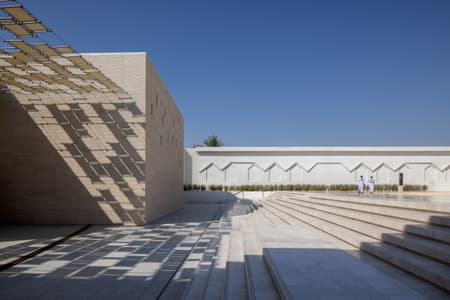
The architecture of the Museum is articulated through two complementary design languages, each defined by distinct form and materiality. The first relates to the archaeology galleries described above; the second encompasses the extended galleries and broader programme. Drawing from the materiality of the existing site, the new Museum establishes a seamless visual continuity between the historic and the contemporary. Regionally sourced materials, such as chiseled limestone, create a direct connection to the Sultan Fort and distinguish the archaeological galleries as contextually rooted elements. The stone cladding defines these galleries, distinguishing them from the museum’s more contemporary finishes. In contrast, the remaining museum buildings are rendered in a crisp, modern white f inish that echoes the character of the 1969 museum.
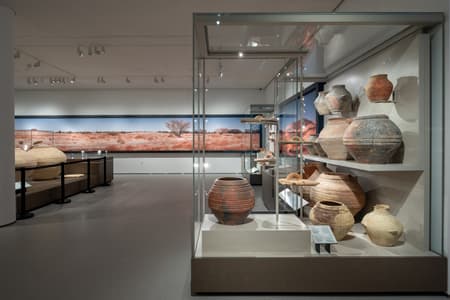
The Permanent Gallery of the new museum extends from the original 1969 galleries, forging a connection between the old and the new. The remaining programme, including the new Museum Entry and support spaces, the Café and shop, Research Library, Collection Storage, Conservation Laboratories, and Administrative spaces, are strategically distributed across the site to wrap around and interconnect with the archaeology galleries. The considered programmatic placement establishes a purposeful hierarchy between the featured galleries and the wider museum functions, ensuring clarity, coherence, and an intuitive visitor experience.
The mission for the Al Ain Museum is to serve as a Centre for collecting, researching, conserving, and interpreting the material culture of Abu Dhabi and the wider UAE, while fostering national culture, identity, and social inclusion.
Beyond its exhibition and archaeological galleries, the Museum incorporates Conservation Laboratories, secure Collections Storage, as well as a Research Library. Together, these components embody and advance the client’s vision for the institution.
For the visitor, the journey is conceived as a layered and immersive unfolding across two distinct levels: the lower “Archaeological Park Experience” and the upper “Museum Experience.” This dual circulation allows visitors to engage with the site’s heritage from complementary perspectives. At the lower level, visitors encounter the archaeological features at close range, moving through spaces that immerse them in the textures and spatial qualities of the vestiges themselves. On the upper level, a raised walkway offers a broader, more contemplative vantage point from which the full extent of the archaeological elements can be appreciated. Together, these journeys weave a comprehensive understanding of the project, one intimate and tactile, the other panoramic and interpretive, deepening visitors’ appreciation of both the historic landscape and the museum architecture that frames it.
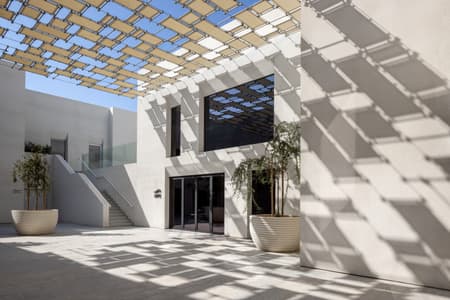
On the exterior, a series of courtyards are sculpted into the form, connecting the museum’s lower ground and ground levels, while introducing soft, diffused light into the lower spaces, and creating terraces and elevated vantage points throughout the project.
These architectural strategies of form, materiality and experience, weave the site’s multiple narratives and histories into a cohesive and contemporary Museum complex, one that is deeply rooted in its context. The renewed Al Ain Museum presents a forward-looking cultural landmark that preserves Al Ain’s heritage while offering a renewed architectural identity for its future generations.
Dabbagh Architects is a RIBA Chartered architectural practice based in Dubai, UAE. Founded in 2008 by Sumaya Dabbagh, one of the leading female architects in the region, the practice is dedicated to creating contemporary architecture that is deeply rooted in cultural and environmental sensitivity. Their work explores themes of place, memory, and belonging, shaping built environments that are meaningful, enduring, and responsive to their context.
The Mleiha Archaeological Centre (2016) and Gargash Mosque (2021) exemplify a new architectural language in the Gulf, blending tradition with contemporary expression. Both projects were nominated for the Aga Khan Award for Architecture and have won multiple international accolades, including the Architecture MasterPrize. The recently completed Al Ain Museum (2025) is another example of their contextually driven architecture.
Beyond built projects, Dabbagh Architects’ exploration of materials and meaning is showcased in their “Earth to Earth” installation, presented at the Sharjah Architecture Triennial (2023-24). Under Sumaya Dabbagh’s leadership, the practice has become a pioneering force in Gulf architecture. Besides her architectural contributions, she is dedicated to breaking stereotypes and challenging limitations for women in the profession. By demonstrating the influence and impact women can have in shaping the built environment, she has become an inspiring role model for future generations of architects.
Through its thoughtful, innovative, and deeply contextual approach, Dabbagh Architects continues to redefine the architectural landscape, creating spaces that resonate with people, culture, and place.
.jpg?w=450&q=75&dpl=dpl_EMk2xYEuFpBx5FJ4NinA72u1QpeJ)