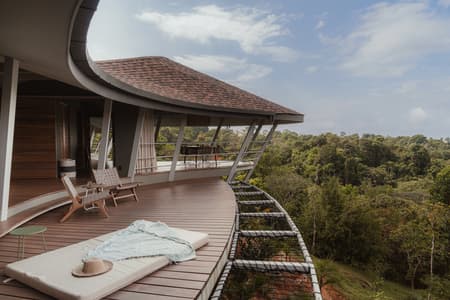
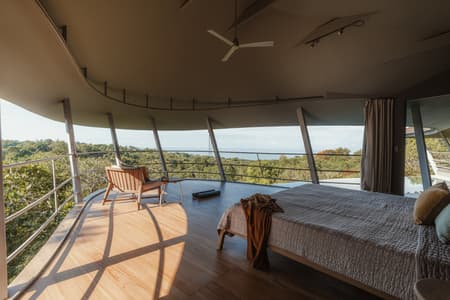
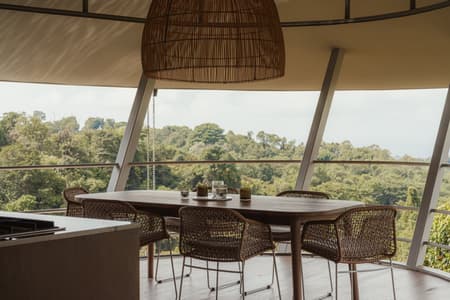
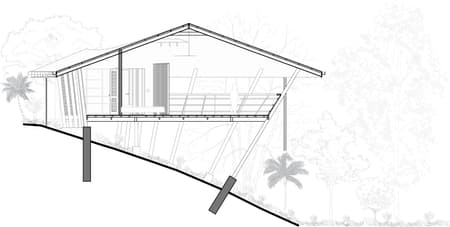
Ojo de Nila is a home shaped by the rhythms of the landscape in BahíOjo de Nila is defined by a clear bioclimatic strategy that replaces mechanical systems with natural airflow. The architecture remains open on the ocean side, allowing sea breezes during the day and mountain breezes at night to cool the home. The roof provides shade and directs ventilation throughout the structure. Elevating the building preserves natural water flows and vegetation beneath, while the use of teak and other long-lasting materials supports durability in a coastal climate. Every aspect of the design reduces impact and supports a lifestyle rooted in the environment.a Ballena. Designed for a Swiss couple seeking a deeper connection to the environment, the house invites a lifestyle centered on living outdoors in comfort without air conditioning. Set on a secluded mountain with expansive ocean views and surrounded by abundant biodiversity, the home is completely open toward the Pacific so its inhabitants remain in constant dialogue with light, air, and the forest canopy.
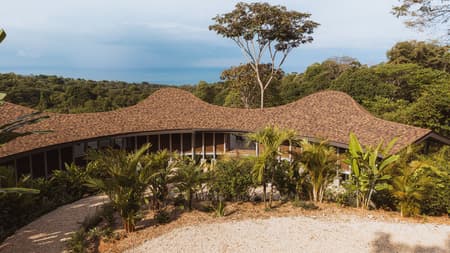
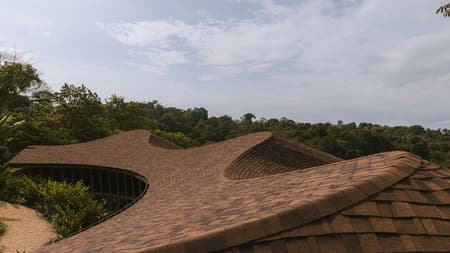
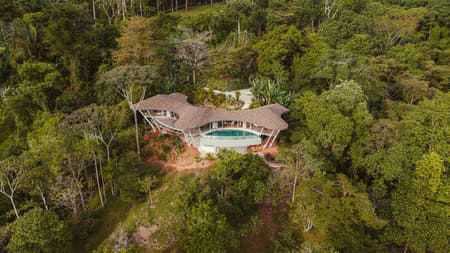
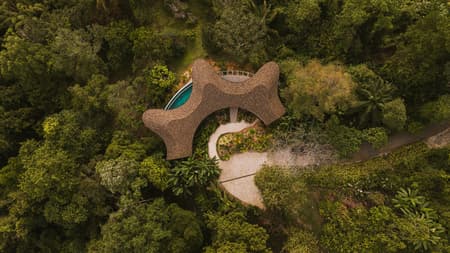
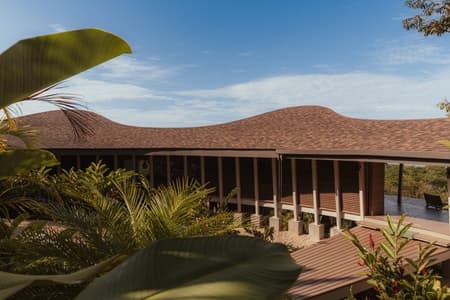
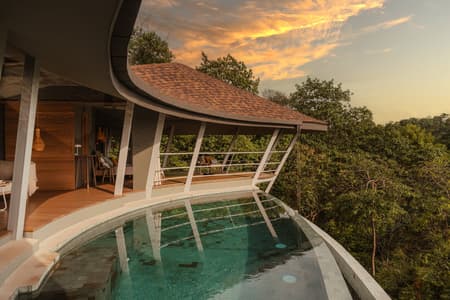
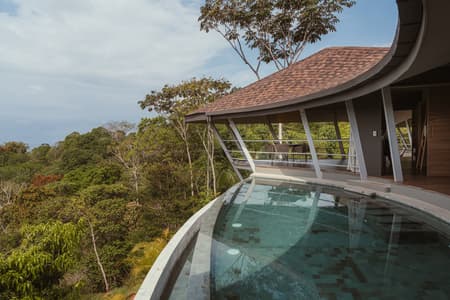
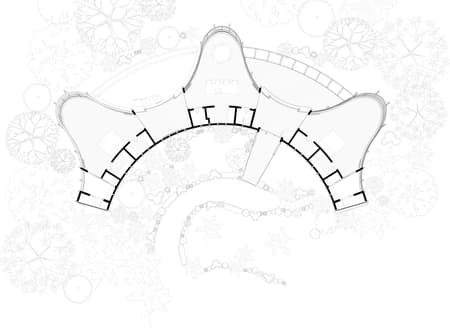
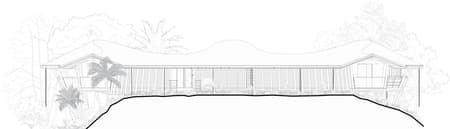
Above it all, an organic roof moves in soft waves that echo the surrounding topography. The pool stretches toward the horizon and blends with the sky to form a circular reflection that resembles an eye when seen from above. This gesture inspired the name Ojo de Nila, a home that observes and engages with the landscape.
Benjamin Saxe shaped the concept through a desire to strengthen the bond between architecture and nature. By introducing a gentle and sinuous form into a powerful natural setting, the design established a language that resonates with the geometries of the landscape. The roofline becomes a fluid gesture that encourages the inhabitants to feel fully connected to the outdoors while framing uninterrupted views of the ocean. The architecture supports a lifestyle where people reconnect with their surroundings, themselves, and one another through the act of living in the open air.
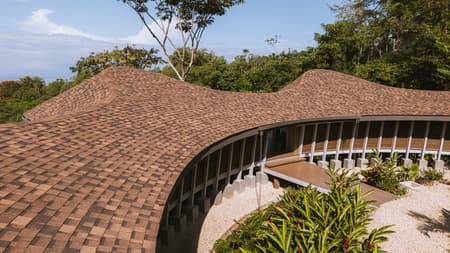
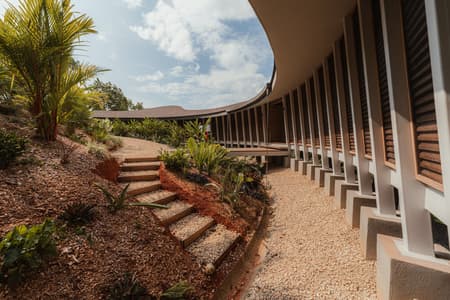
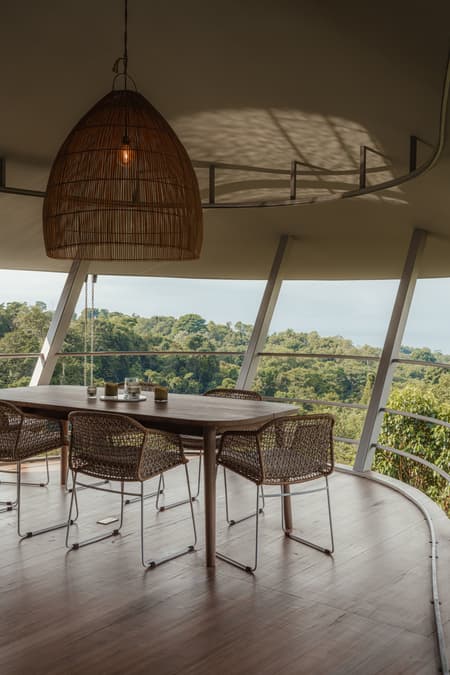
The home sits lightly on the hillside through a repetitive structural module placed along the natural contours of the terrain. This allows the building to float above the canopy while creating the sensation that it flows with the land rather than resting on top of it. Every space opens toward the Pacific Ocean so daily life becomes intertwined with changing light and cooling breezes. By removing windows and doors on the ocean-facing side, the boundary between indoors and outdoors disappears, allowing the inhabitants to feel immersed in the climate and ecology of Bahía Ballena.
The construction system is based on a modular and lightweight structure that could accommodate the curves required by the site. The metal structures were welded together on-site to form a roofscape that behaves like a new landform, composed of brown shingles that blend harmoniously with the terrain. This methodology allowed the team to build efficiently while maintaining precision, reducing on-site impact, and protecting the delicate environment of Osa.