CONCEPT NOTE
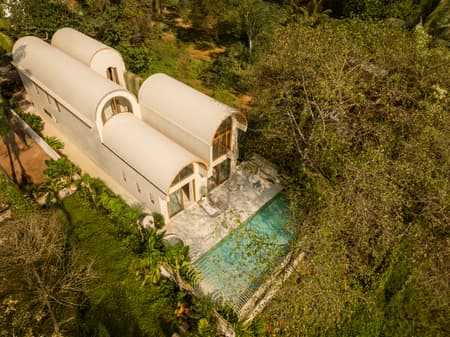
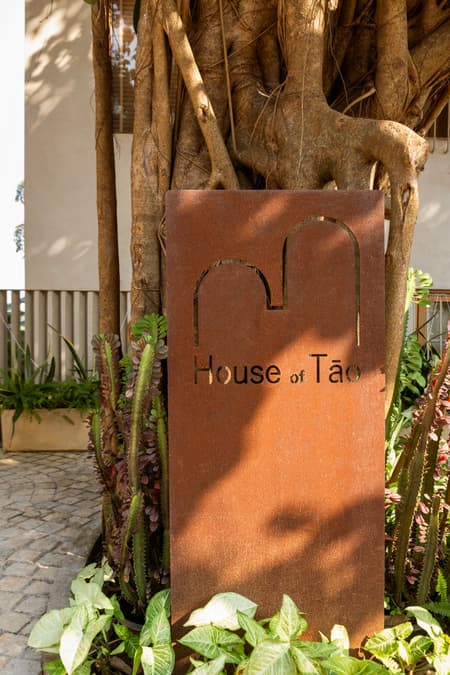
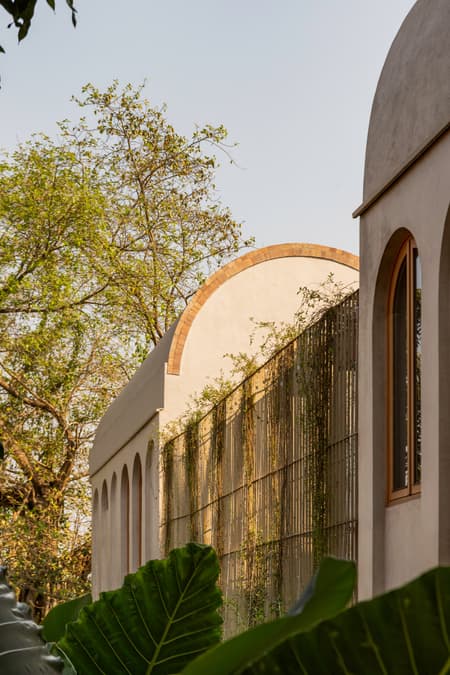
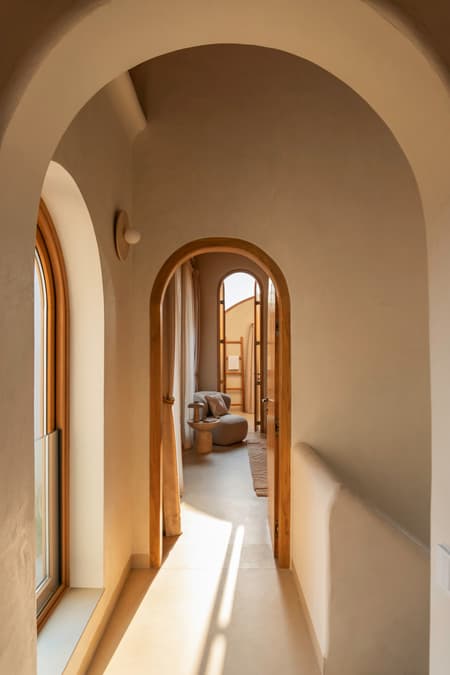
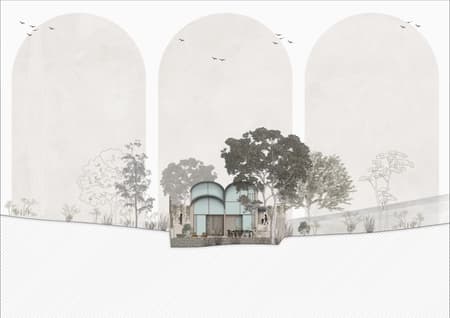
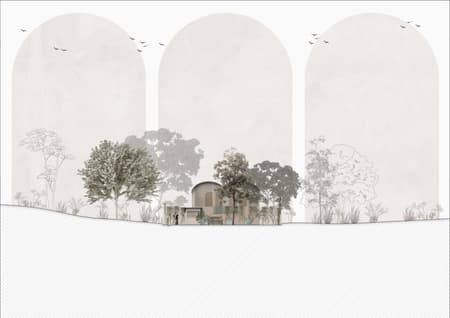
Can a house feel as if it has always been there? At the end of the open fields, between the trees, under the blue skies, built out of the earth. Can a house be like a verse, a philosophy, a way of life— of lyrical moments, poetic narratives, sensory experiences? The House of Verses is designed as a flow of arches, arcs, and vaults, imagined as a single monochromatic experience. It unravels through a sequence of spaces and moods, like a book unfolding its words slowly to the curious and inquisitive—creating a world of fiction, poetry, and dreamy, distant memories. When the disciples of Osho and their community approached us to design a hotel-home that would be more about experience and life, we were inspired by monasteries and the idea of intentional living in today’s fast and digital world. Intended to be the colour of human skin, all the colours and textures of the architecture and interiors draw upon warm beige-brown tones, enveloping the project in a single monochromatic mood.
Entrance and Courtyard
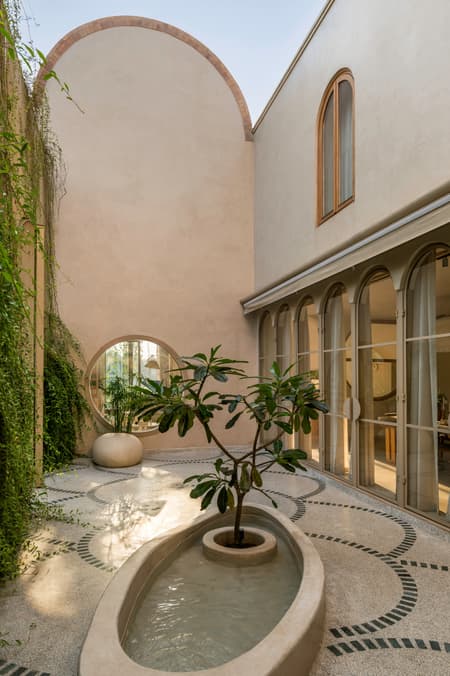
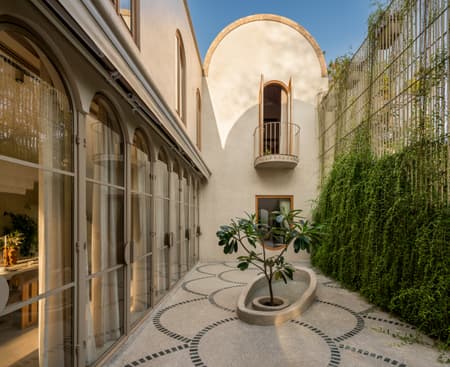
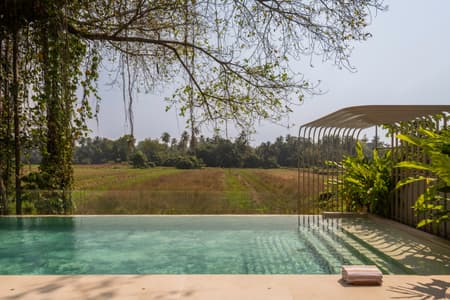
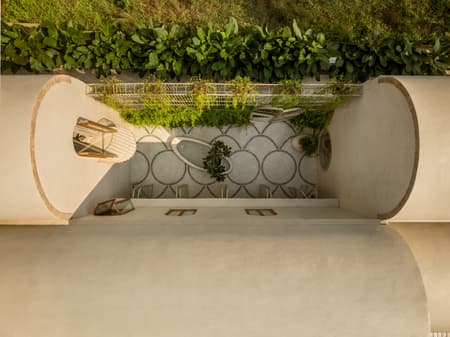
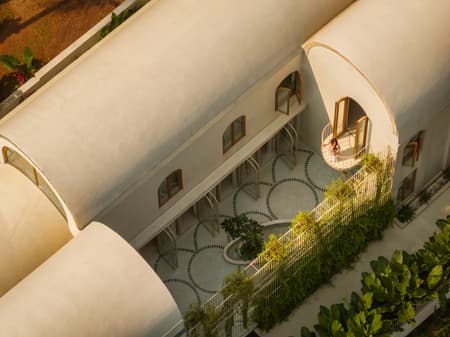
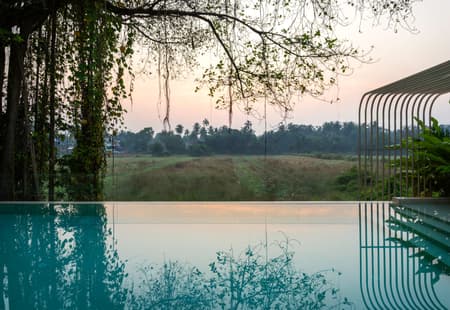
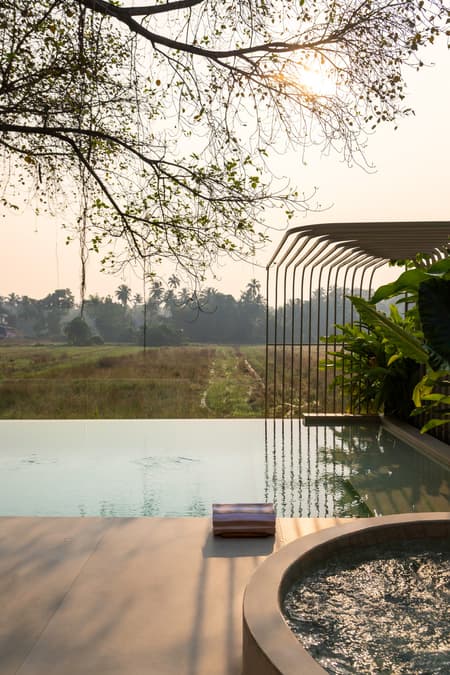
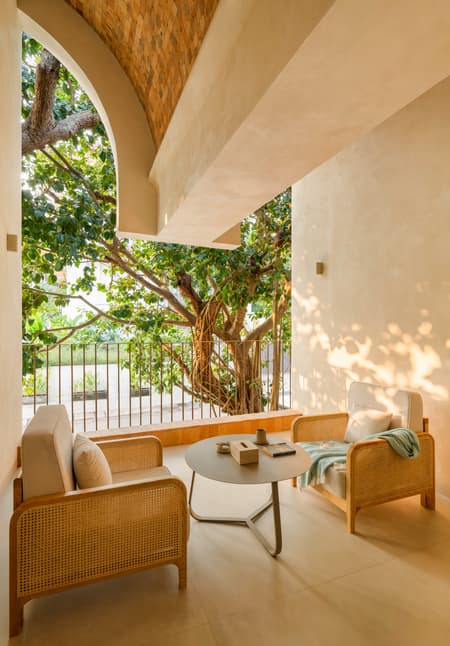
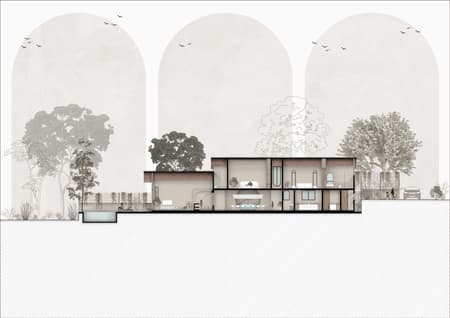
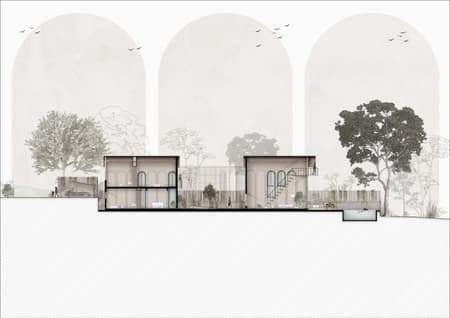
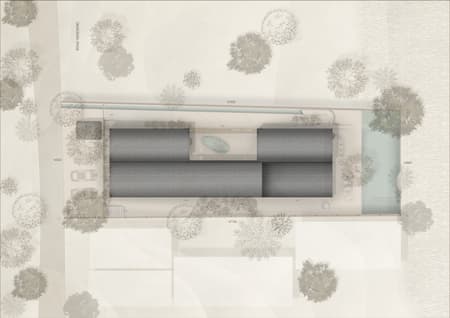
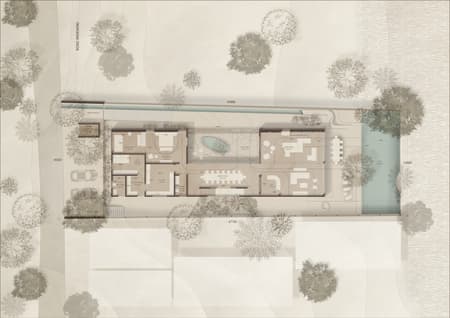
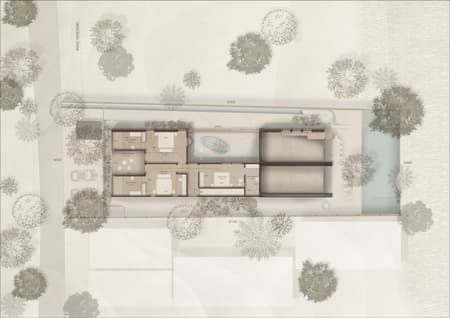
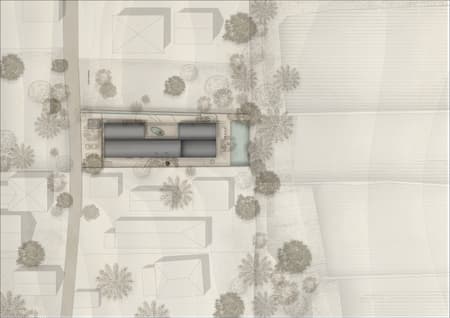
The house begins with a flow of water from the entrance, running as a long stepped channel to the end of the site, where it forms a reflective pool with an infinite view of the landscape and fields. Entry is through a large gate of framed metal doors enveloped with green planters, evoking a sense of stepping into another time.The open courtyard, imagined at the heart of the house, is like a central piazza. Its green marble terrazzo floor—patterned like fish scales—draws from native Goan elements. The central courtyard creates an elliptical sit-out, an interpretation of the Goan balcão seating, encircling a tree and offering a place to pause and reflect. Here, one can imagine the shade of this tree in a distant future—its leaves filtering sunlight through arched openings, casting shadows on the patterned floor, and framing blue skies overhead.
Dining
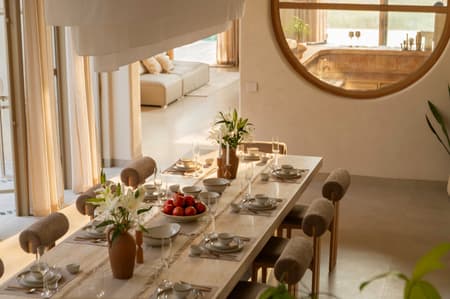
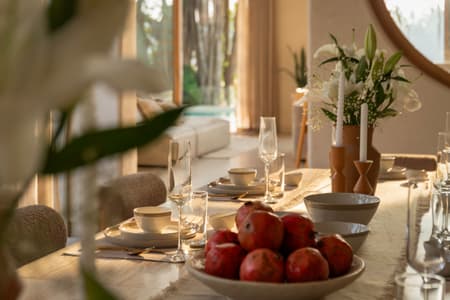
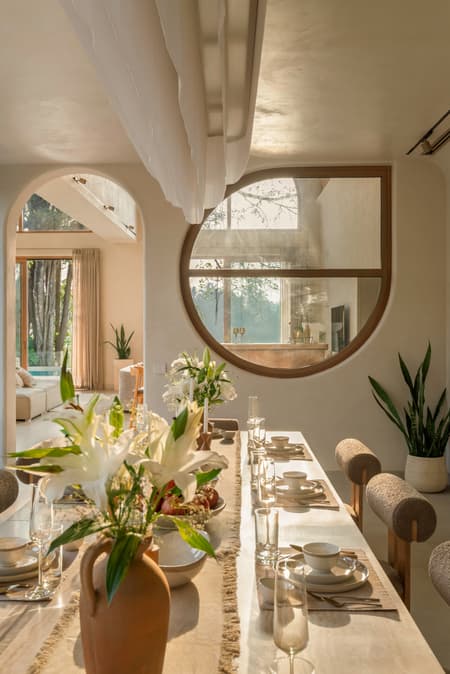
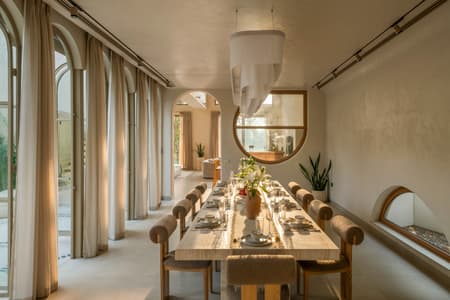
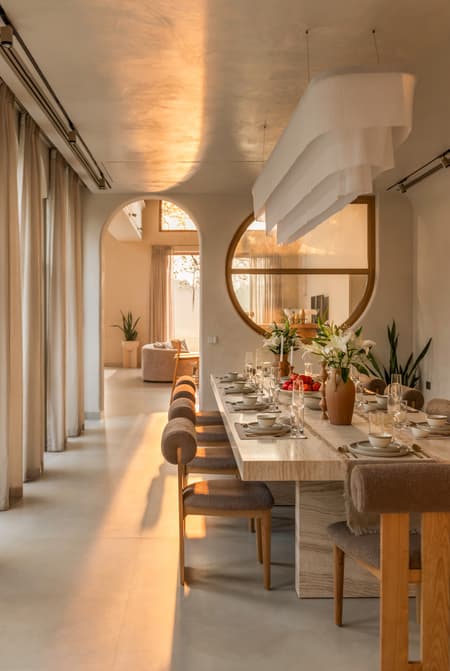
The dining space is conceived as a ceremonial experience. The long, twenty-seater table faces the courtyard and connects the private bedrooms with the public living areas. It acts as a transitional space—sometimes shared, sometimes intimate—between the open courtyard and the house, at times meditative, at others collective.
Living and Pool
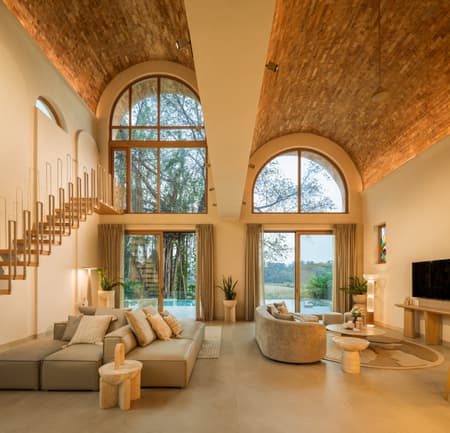
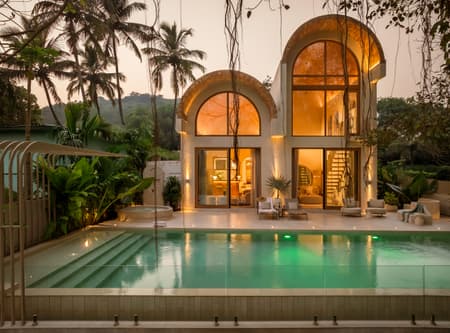
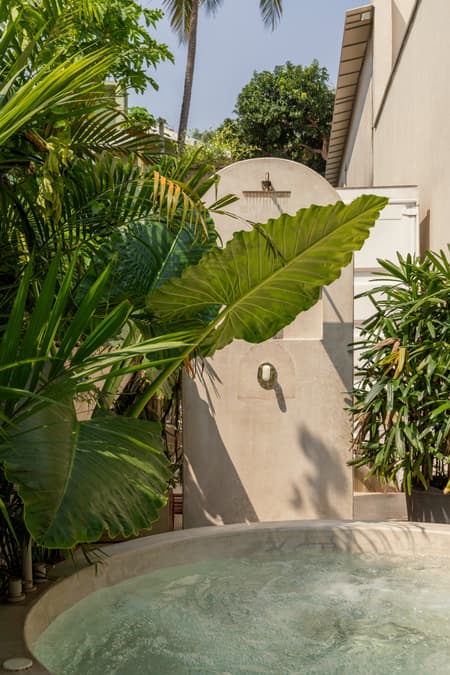
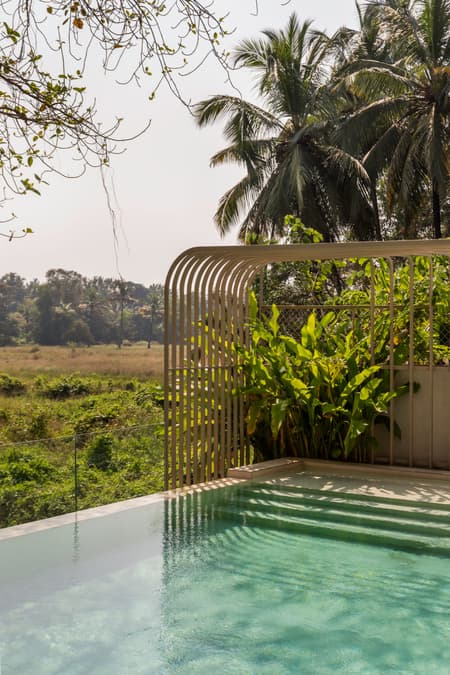
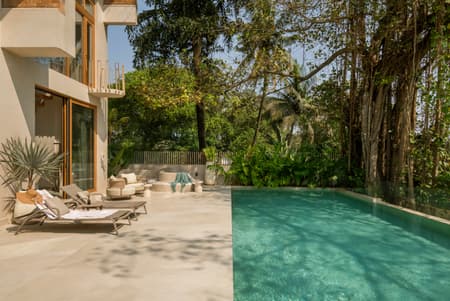
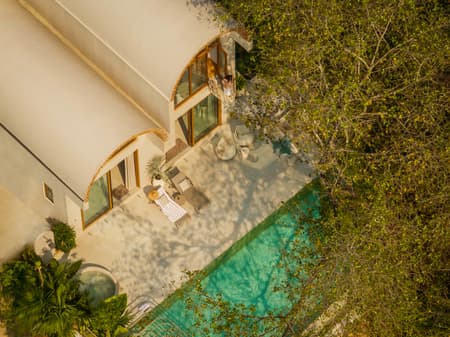
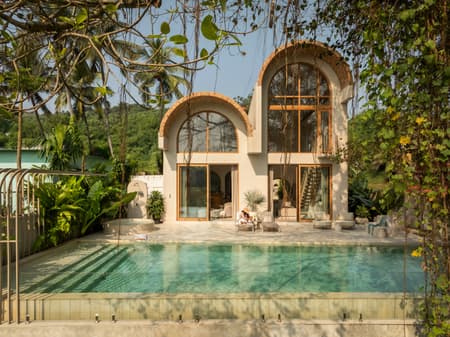
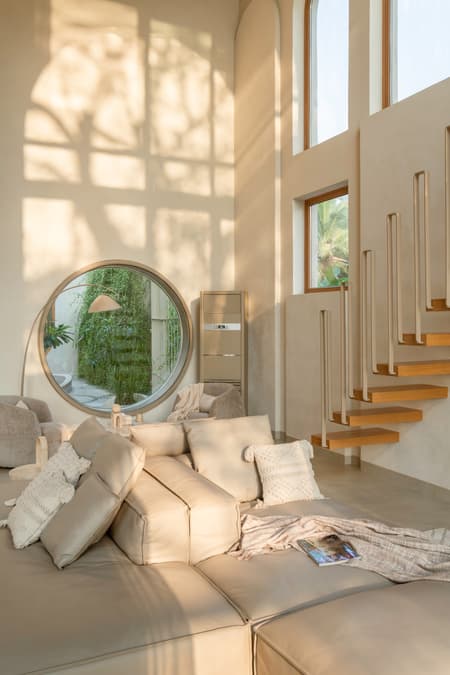
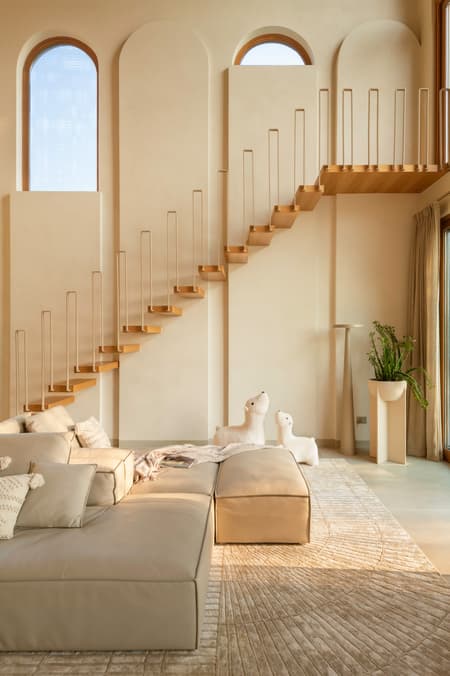
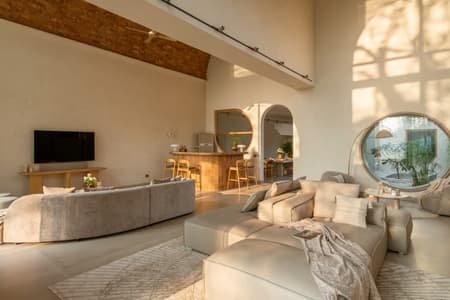
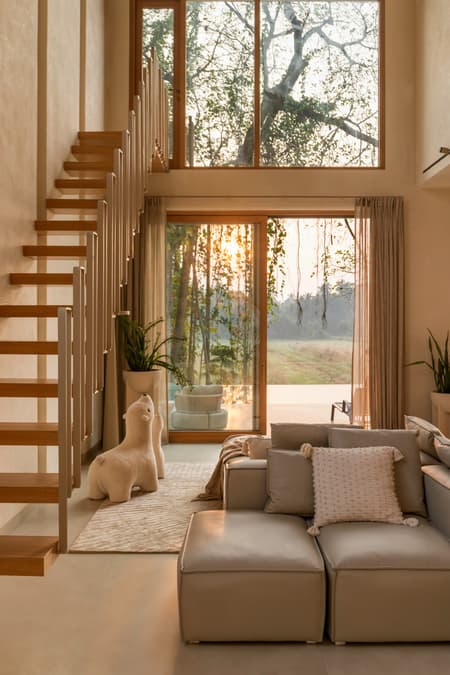
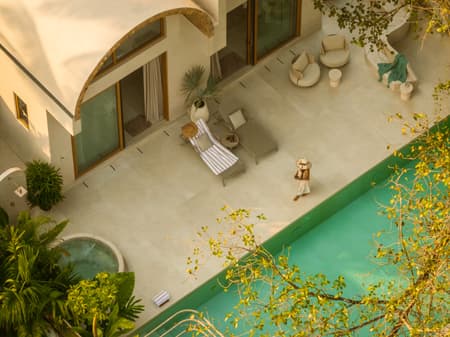
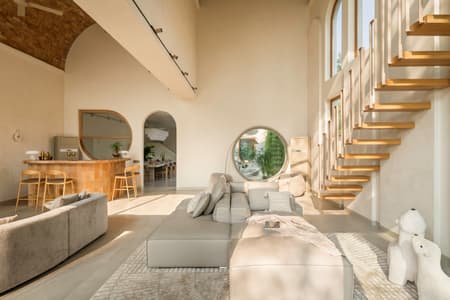
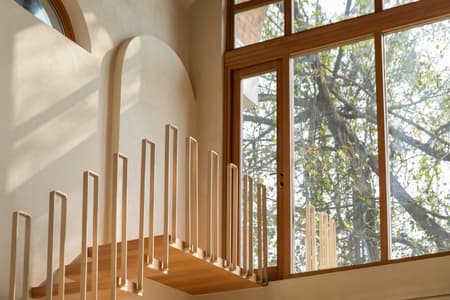
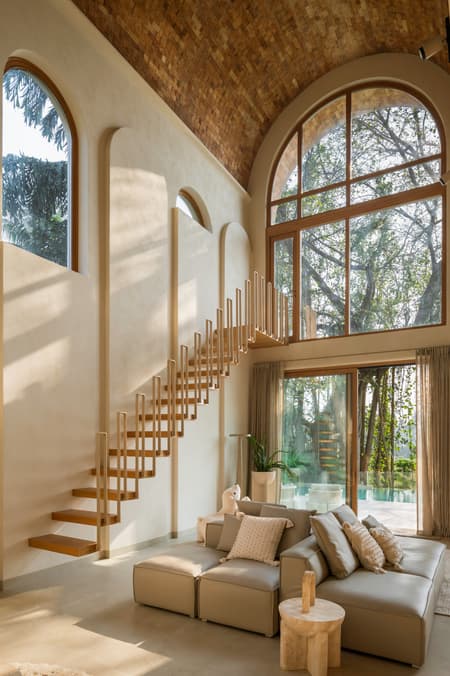
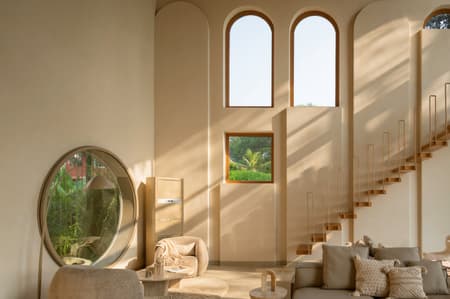
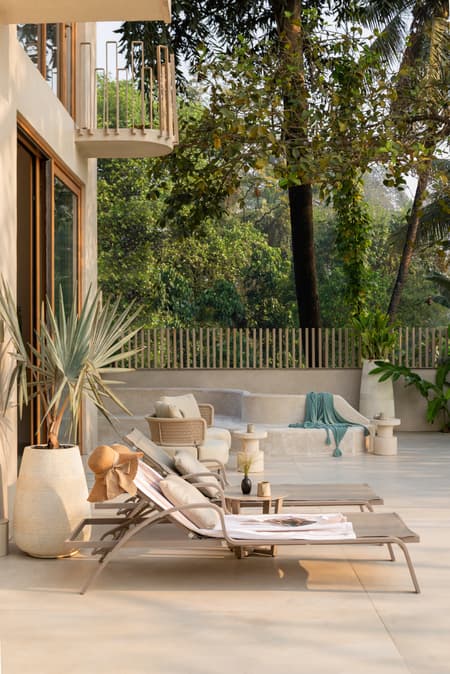
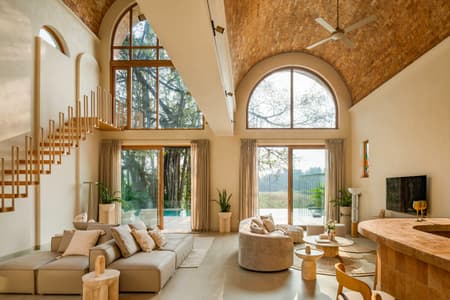
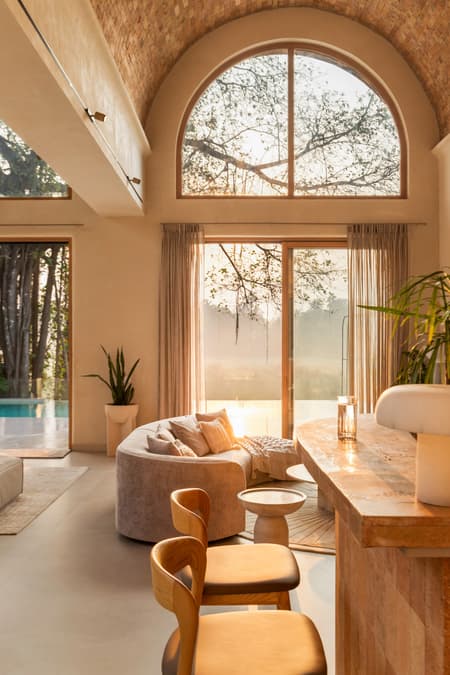
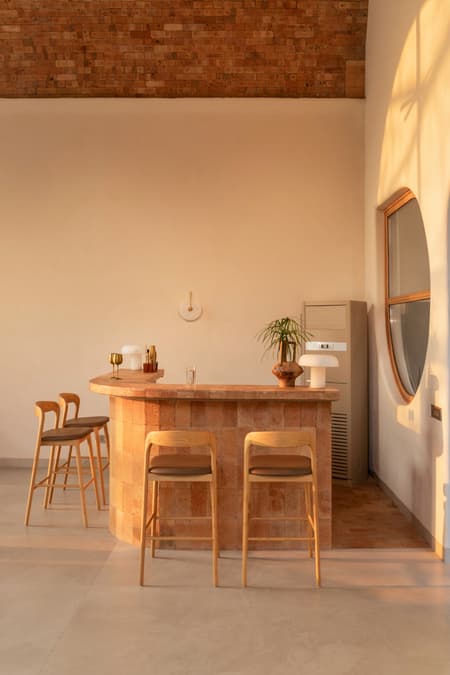
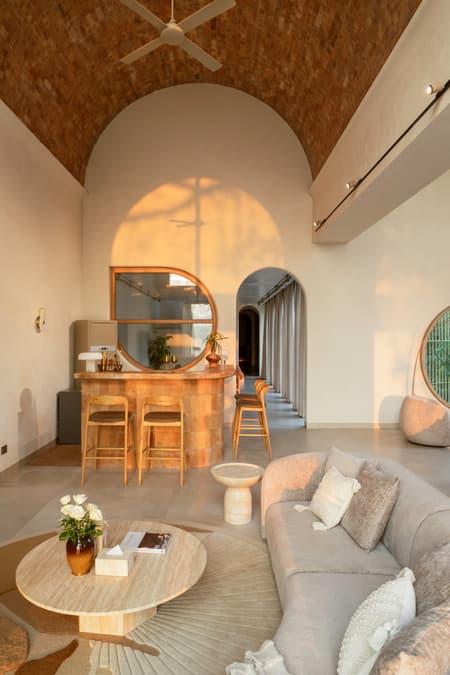
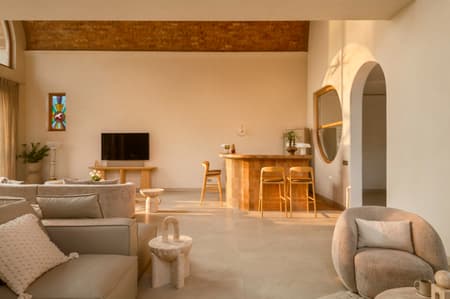
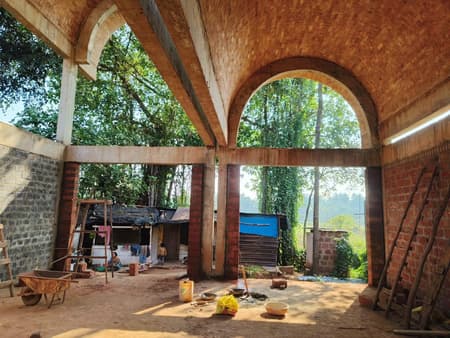
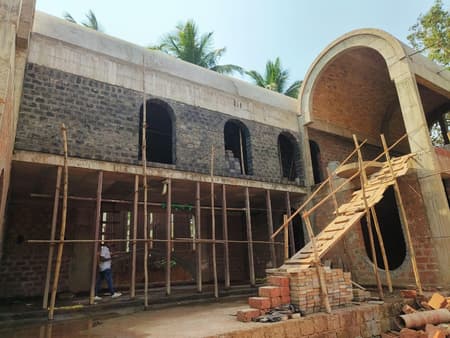
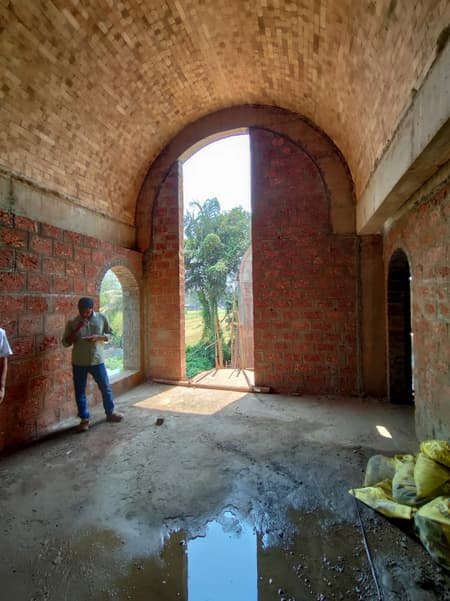
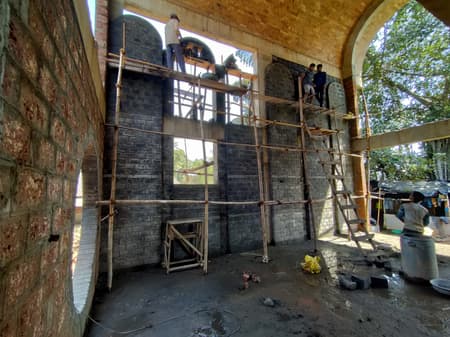
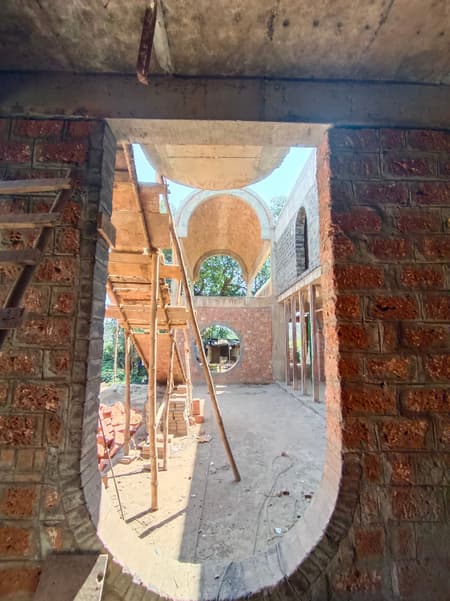
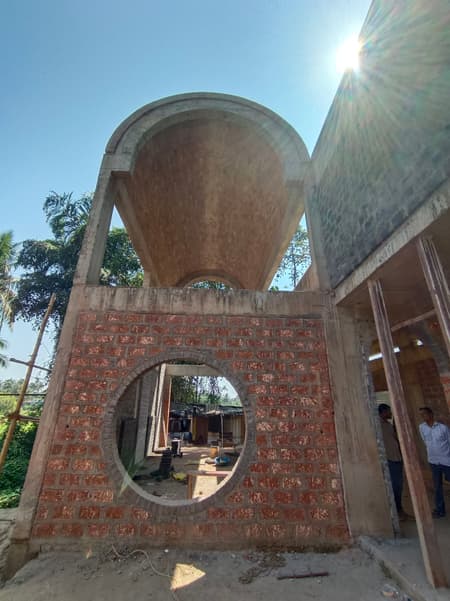
We imagined the living area, with its brick barrel vaults, wooden arches, and large glazing, as a place where warm interiors meet open exterior views of the blue skies and beyond. Within this space, a small staircase leads playfully to a tiny balcony—just large enough for one person to step out and witness the expanse of fields and sky. An intimate moment of solitude within the collective. On the south side, a stained glass window—designed to be the only coloured element in the space—draws inspiration from the Osho logo of two flying birds. It catches the sun and casts gentle washes of colour across the otherwise monochromatic room, creating a quiet moment of symbolism and light. The living space opens onto the pool decks, where seamless floors inside and outside, along with the pool in matching materiality, create a continuous sense of calm and reflection.At one corner, an installation of curved lines frames the outward views. The floors merge into an in-situ concrete jacuzzi—an open-air place to soak under the stars. A circular window, like the lunar cycle, complements a bar made of the same bricks as the vaults. Minimal, monochromatic, and softly textured lounge furniture allows the interior elements to merge with the architectural mood in one continuous flow.
Bedrooms
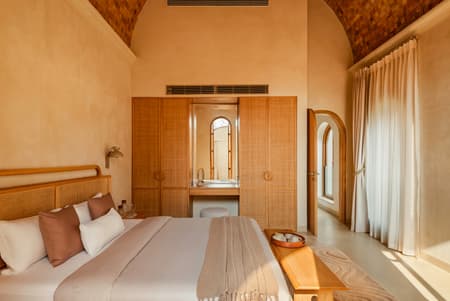
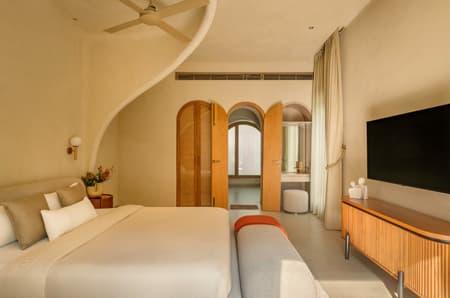
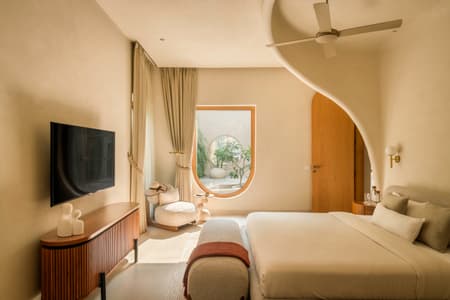
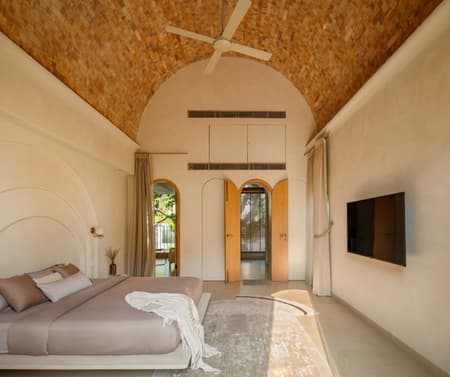
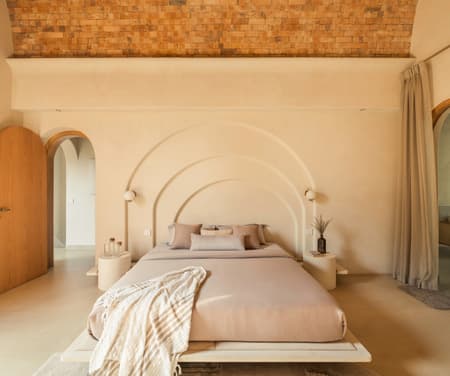
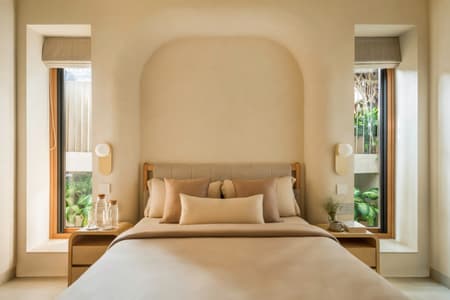
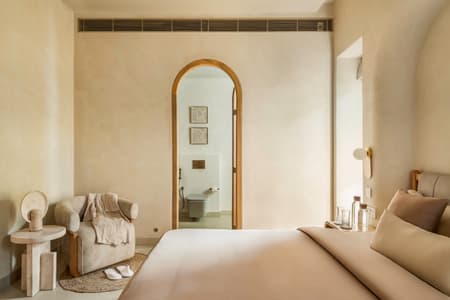
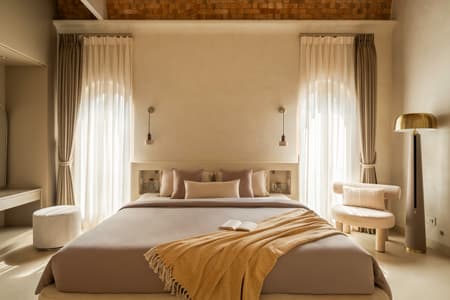
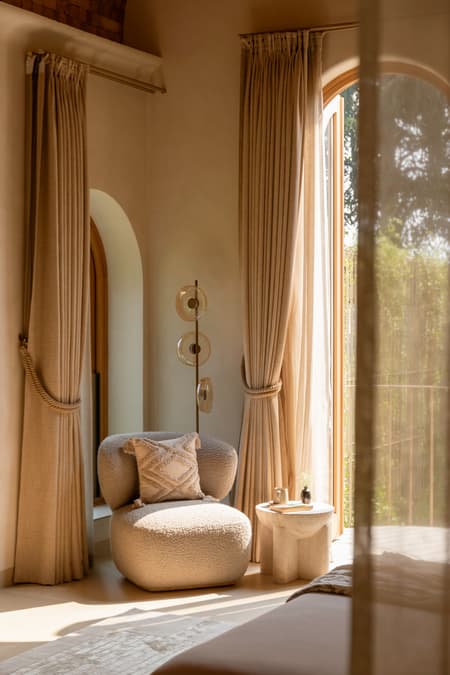
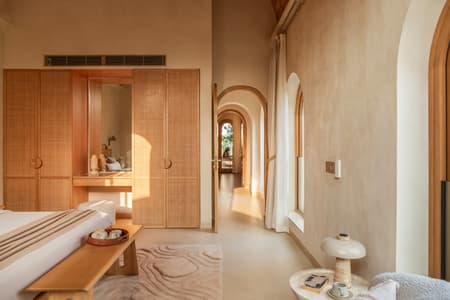
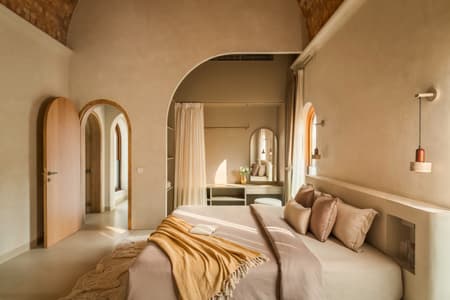
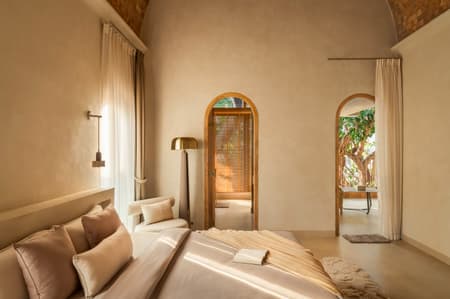
Designed as a home-hotel, each bedroom is shaped around human experience—grounded, floating, solid, and centred. While all bedrooms share the monochromatic palette, each has unique interiors: cool, monastic, cave-like spaces crafted with traditional artisan plasters and warm, natural textures such as cane, wood, and linen.
Bath spaces
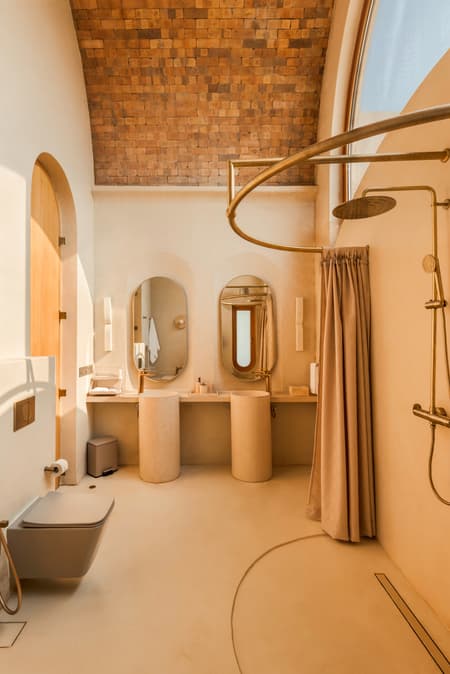
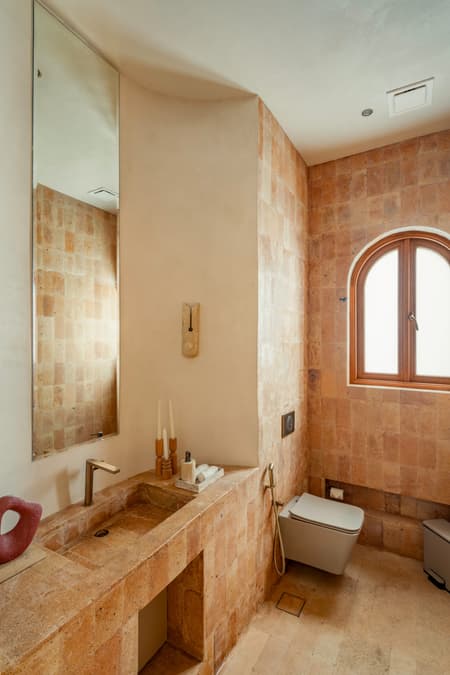
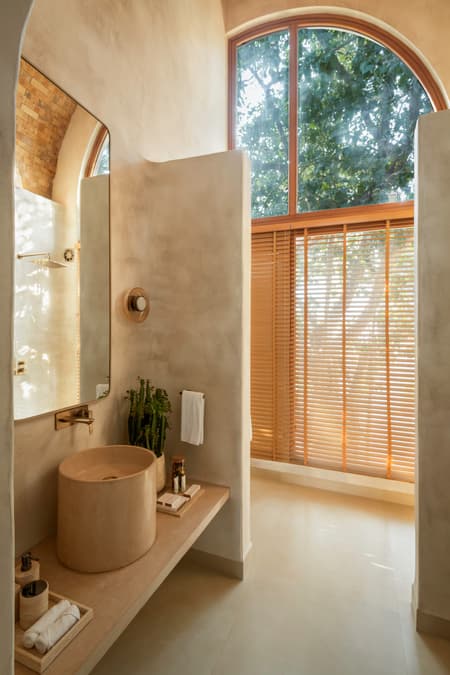
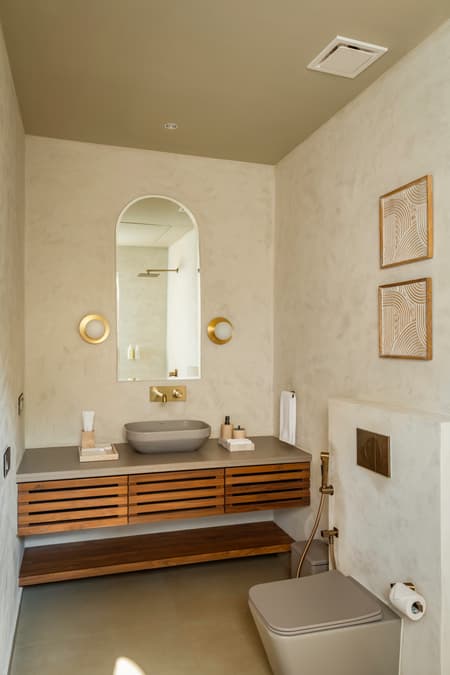
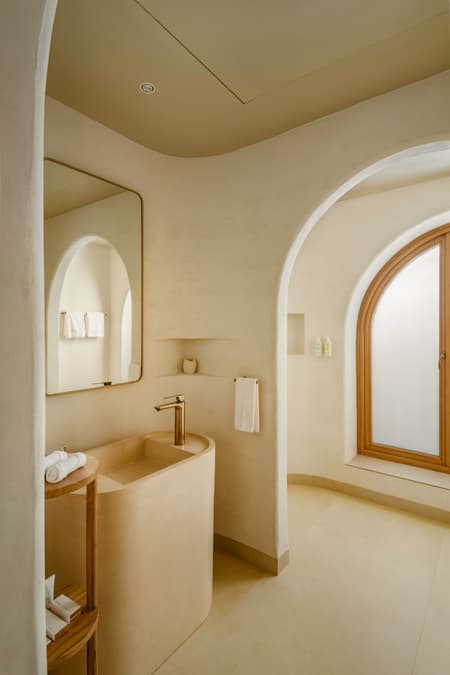
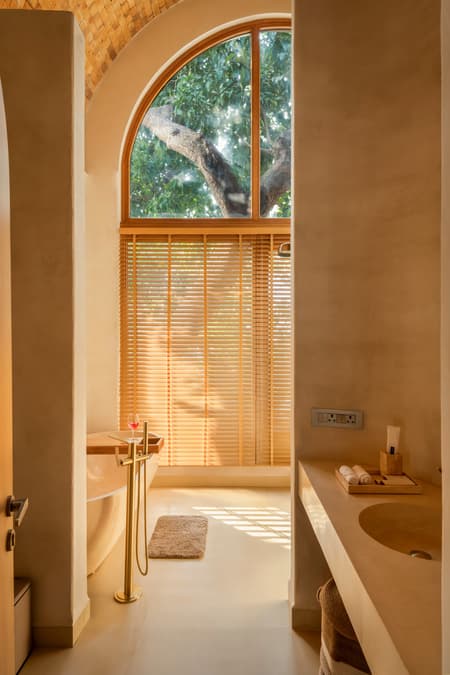
The bathrooms are designed as cocoons—spaces of seamless curves in cool concrete and plaster finishes, with soft recesses and alcoves. Reduced to the basics—brick, lime plaster, wooden screens—each bathroom becomes a sanctuary for the meditative ritual of cleansing, with an emphasis on tactile softness and natural light.
Creating Sustainable Hospitality
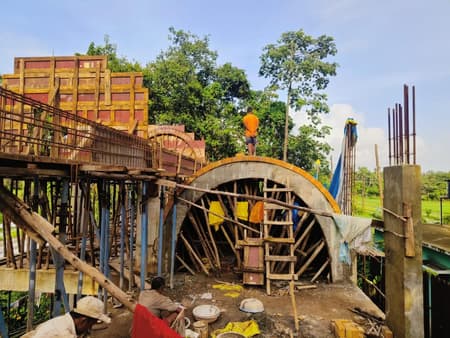
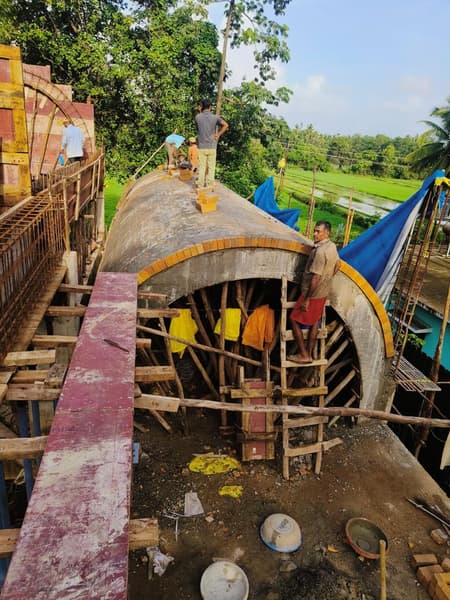
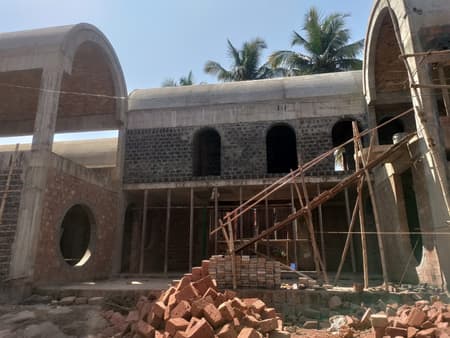
Alongside the poetic narrative, the brief emphasised architecture in harmony with the local climate and context.Using traditional brick vault construction, we created a cooler microclimate while reviving artisanal masonry techniques at risk of being lost in today’s concrete-driven building practices.
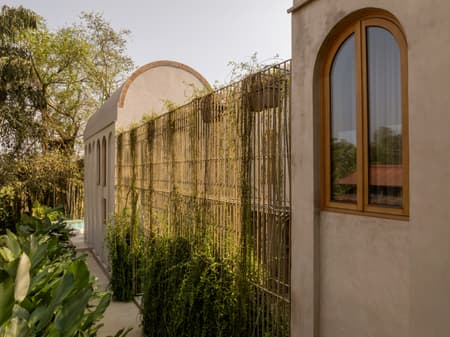
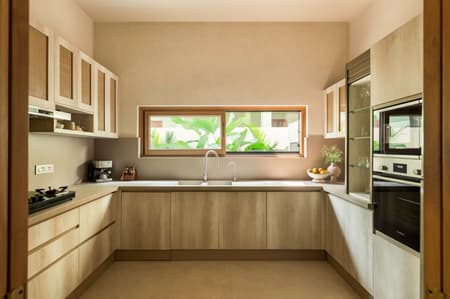
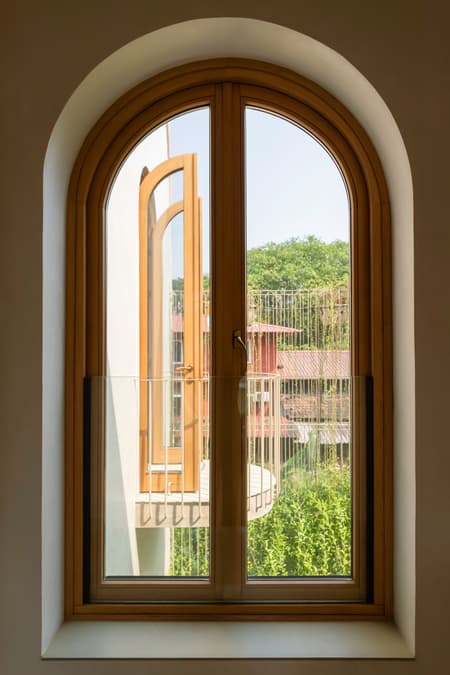
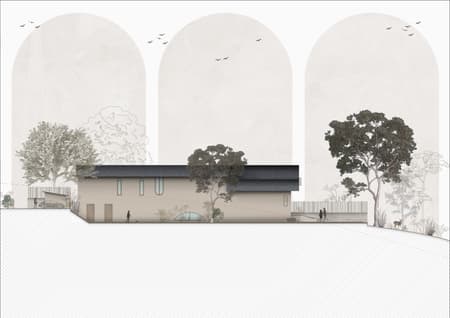
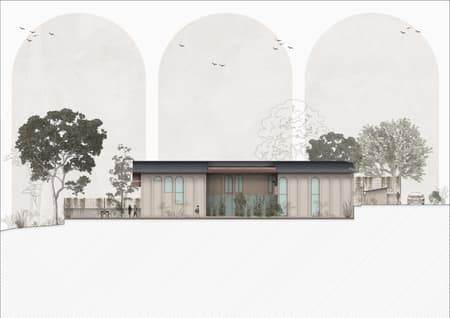
The living areas, with their large field-facing glazing, are shaded by deep overhangs to reduce direct sun. For the arched and circular openings, we selected Glulam timber doors and windows from Artius—sustainable, thermally efficient, and acoustically sound.Internal doors and wardrobes are crafted from locally sourced recycled teak, complemented by natural materials like cane and timber louvres.
The entire façade is finished in lime plaster—non-toxic, breathable, moisture-regulating, and fungus-resistant, crucial for Goa’s tropical climate. It also reduces heat gain and adds a warm, hand-crafted texture.
The central courtyard, with its water feature and custom terrazzo floors in green Indian marble, functions as a passive cooling system for the house.
Flooring throughout the house, pool, and decks uses locally sourced large-format vitrified tiles by Simpolo, chosen for sustainable manufacturing practices, reduced water use, recycled materials, and ethical labour standards.
Interior walls are painted with eco-friendly, low-VOC paints from Oikos, creating a softer textured look. Bathrooms continue the lime plaster and micro-concrete finishes, reducing dampness and adding a cooling feel. Basins and baths are in-situ marble chip terrazzo, offering a sculptural, hand-crafted quality.
All fabrics—curtains, bed linens—were sourced locally, focusing on breathable Indian textiles like linen and cotton. Rugs came from Loops, an Indian brand committed to handcrafted and responsibly sourced products.
Operationally, the clients sought to eliminate single-use plastics, prioritise water and energy conservation, and use fixtures with low water consumption. Permeable cobblestone and gravel paving was used for the driveway. The pool filtration and STP systems were chosen for maximum water recycling and low energy use. Landscape planting is entirely native to Goa, requiring minimal irrigation.
All lighting is LED-based, with Lutron automation for energy-efficient control. Fixed furniture was made in local workshops from locally sourced timber, with only a few loose pieces imported— carefully selected for their eco-conscious production.
End note
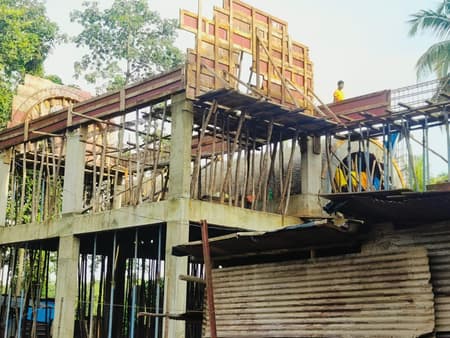
The house has been a labour of love and spirit. Every minimal detail was uniquely crafted on-site so that the house feels as if it has always been there—absorbing the slowness and stillness of the landscape and fields that have surrounded it for centuries.