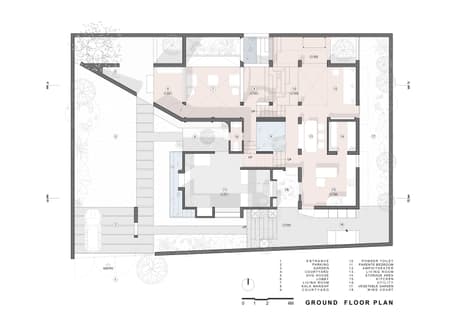
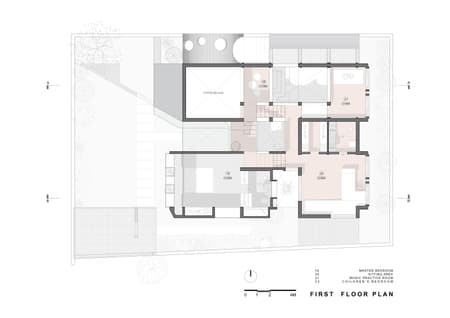
Located in Solapur city on a 355 sqm plot, this house is designed for a small multigenerational family- a couple, their two children, and aging parents. The program reflects the family’s belief in vastu and includes three bedrooms along with essential facilities. An important influence on the design came from the children’s deep interest in classical music, leading to a dedicated space for practice and performance.
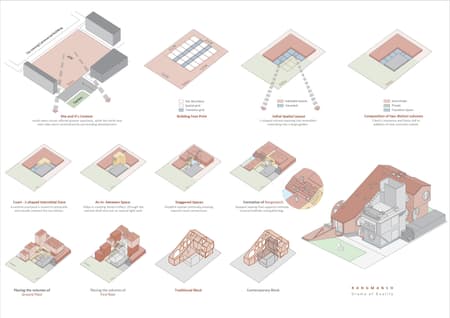
The final layout emerged from a careful balance between the client’s expectations and the site’s contextual constraints. The south-west corner offered greater openness, while the north and east sides were constrained by surrounding development. The house was first imagined as an L-shaped volume enclosing the north-east side for privacy and opening toward the south-west through verandahs extending into a large garden. However, the client’s strong insistence on placing the bedroom in the south-west corner, as per vastu, led to the addition of a cuboidal block in the south-west, creating a composition of two distinct volumes: the initially planned L-shaped block and the newly added concrete cuboid.
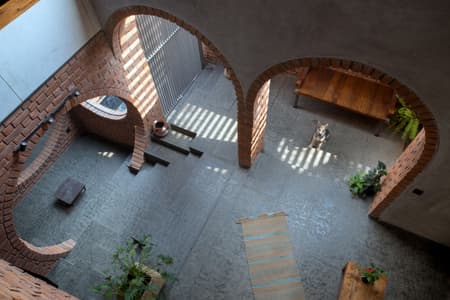
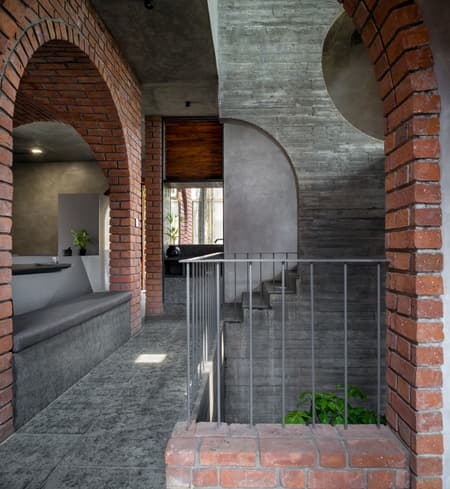
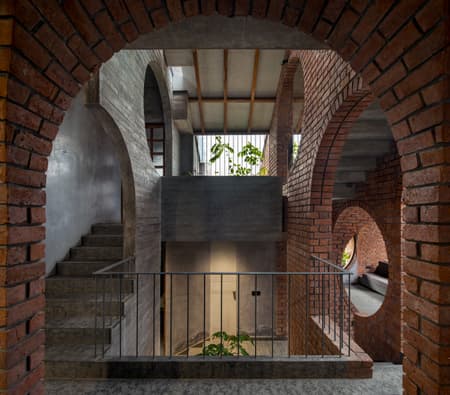
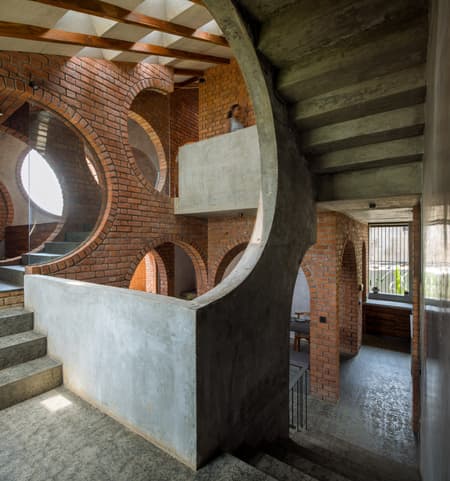
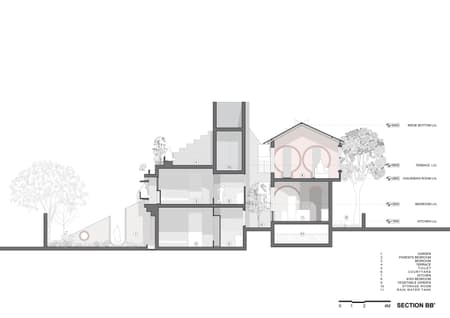
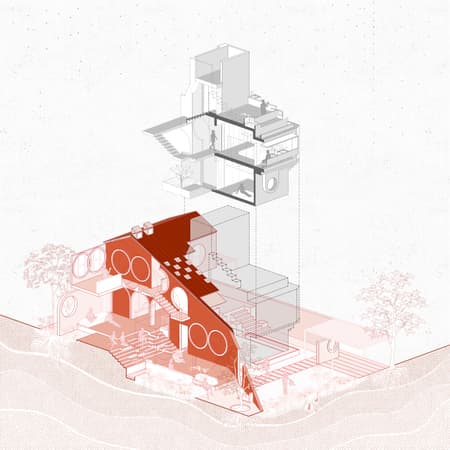
Placing this cuboidal block in front of the L-shaped volume creates an open-to-sky, L-shaped interstitial zone between them. Within this in-between space, a central courtyard is carved to physically and visually connect the two blocks. The courtyard incorporates a staircase that links various levels while allowing natural light to filter through its vertical shaft.Other portions of the interstitial zone, particularly toward the south and west remain open to the sky. The open southern side acts as a wind-catcher, directing air into the courtyard, where a waterbody cools it before it spreads through the house. Upper openings release warm air, and together the south court, central courtyard, skylights, and wall openings support natural light and passive ventilation throughout the day.
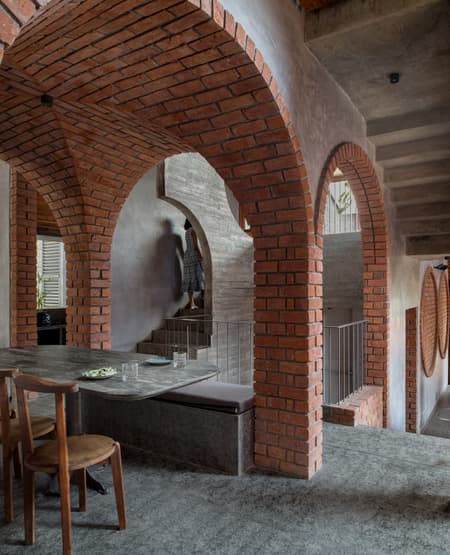
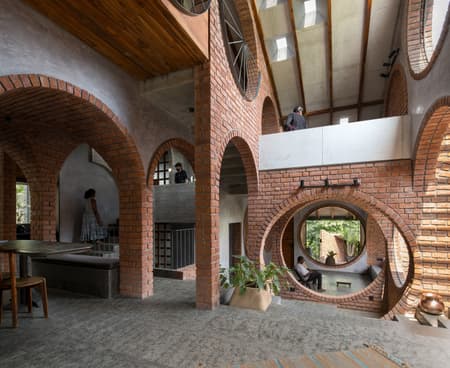
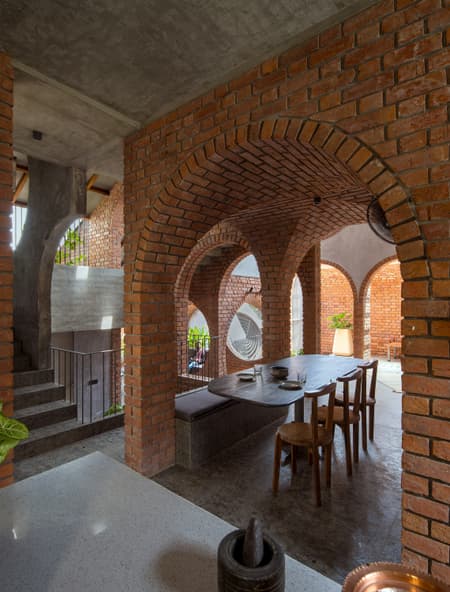
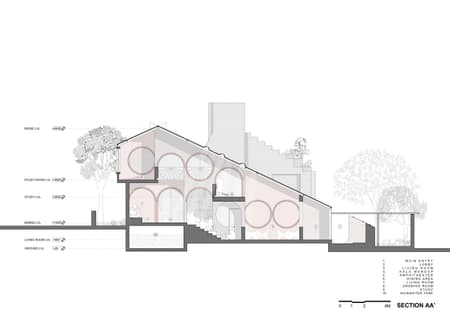
To establish spatial continuity and a cohesive identity, key functions such as the living room, kitchen-dining, family space, and study are placed across staggered levels. These spaces are oriented inward, creating layered visual connections along the central stair.
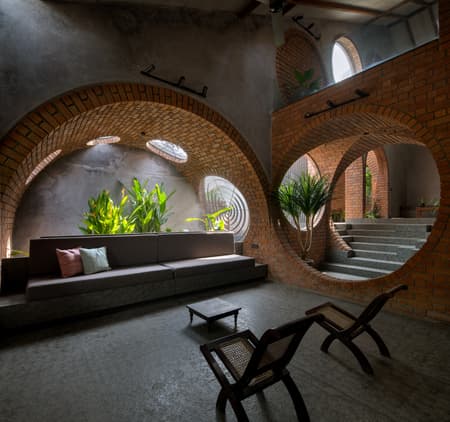
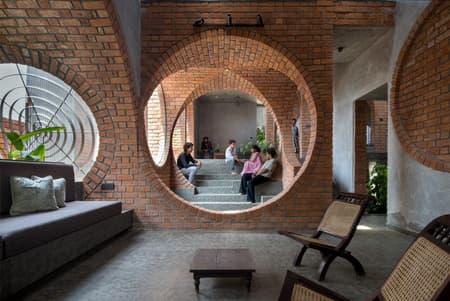
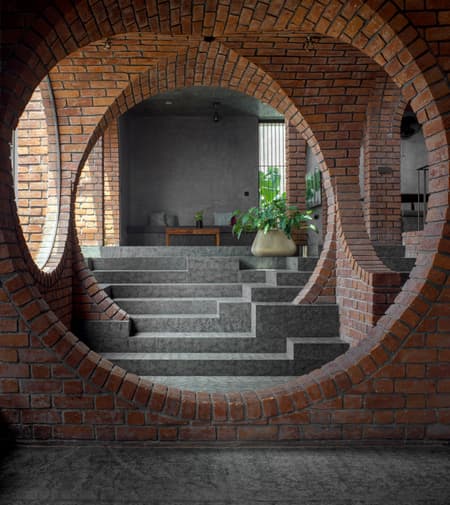
On the ground floor, the formal and informal living areas extend into a shared courtyard that transforms into a performance space “Rangmanch” with stepped seating that supports intimate musical baithaks and gatherings.
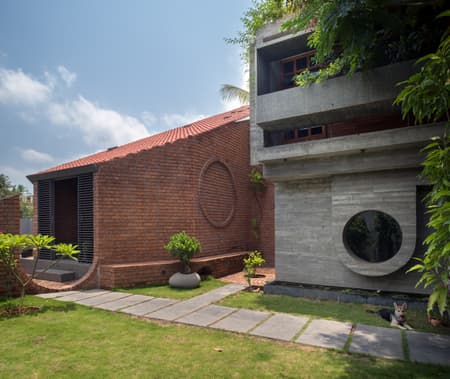
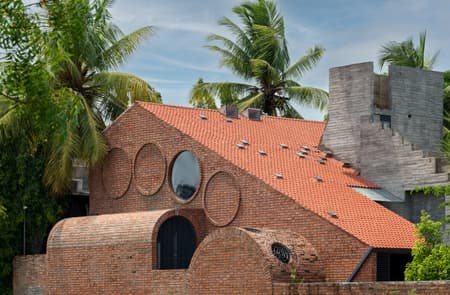
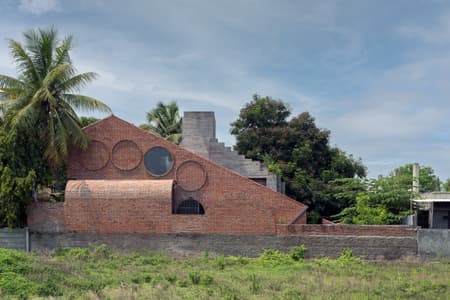
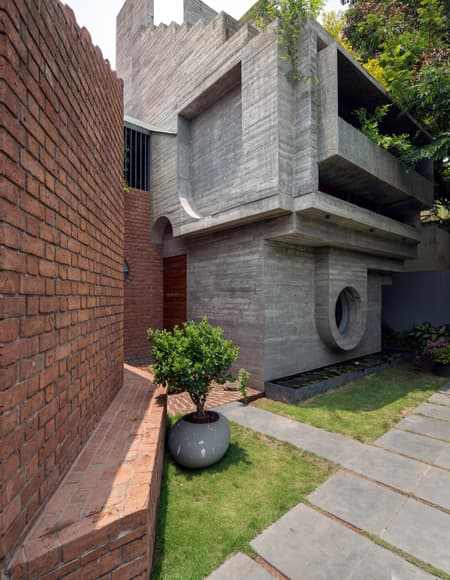
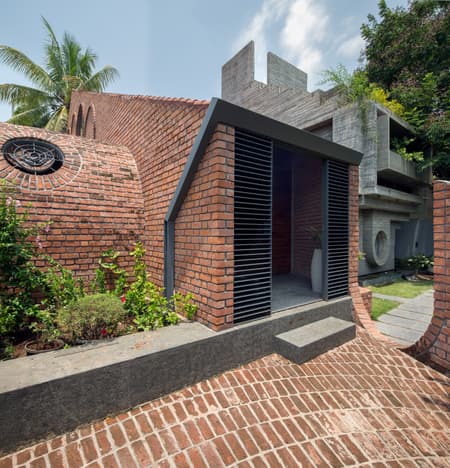
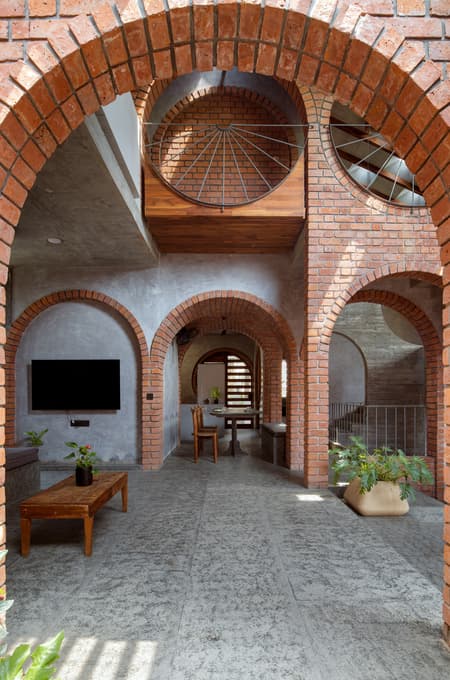
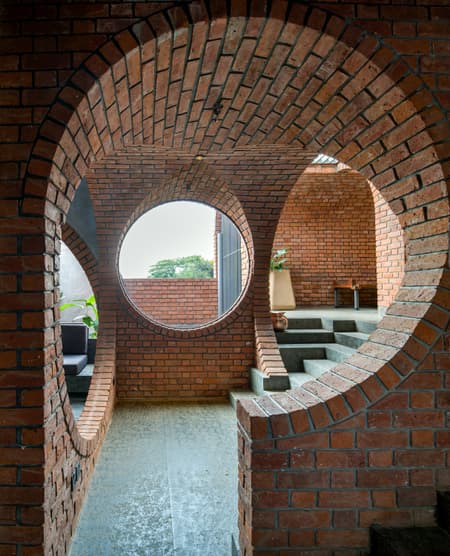
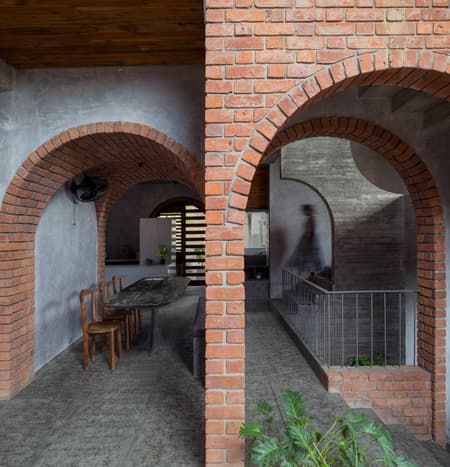
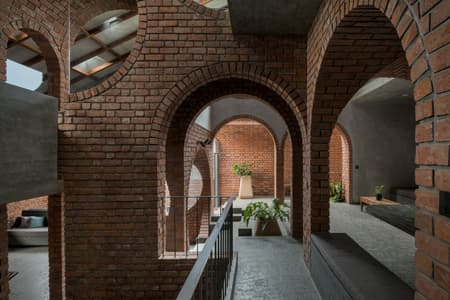
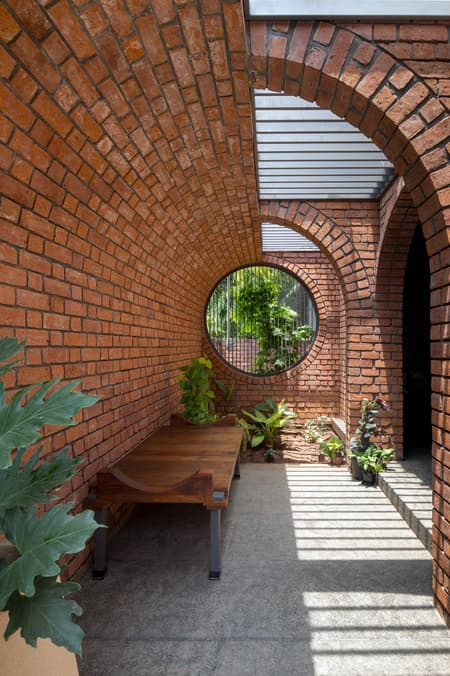
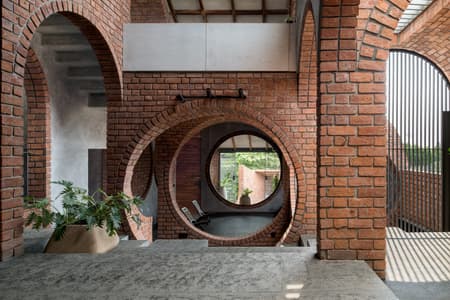
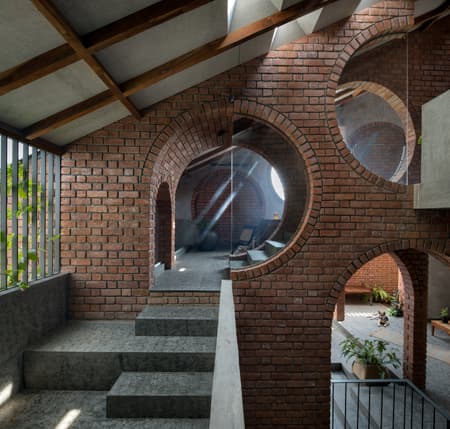
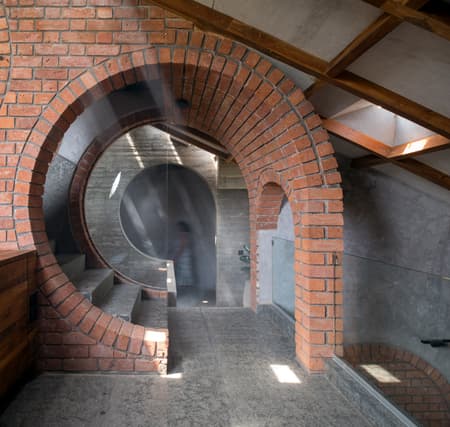
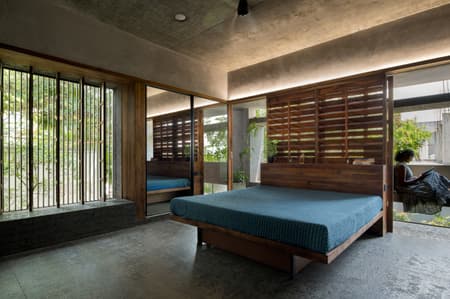
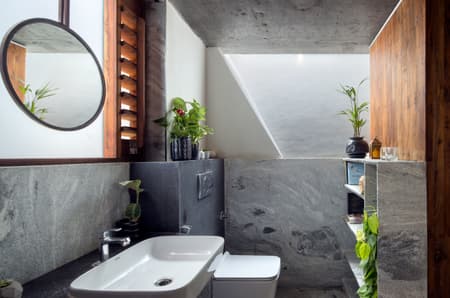
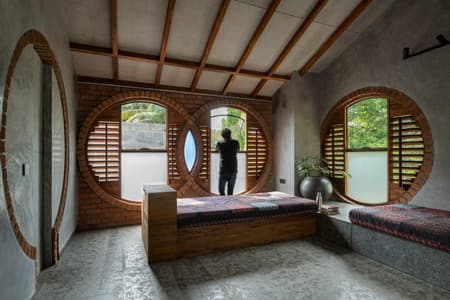
Although internal spaces follow a common grid, each expresses a distinct architectural language. The L-block reveals itself through circular openings, arches, vaults, and niches, lending softness, rhythm, and spatial richness. As this block meets the concrete cuboid, the geometry of openings shifts - arches become straight lines, and curves become planes, marking a subtle transition. The material palette reinforces this contrast: brick brings warmth, tactility, and curvature, while concrete introduces order and stillness. Despite their differences, the two blocks are unified by light, movement, and visual continuity, with the courtyard and staircase mediating between intimacy and openness to form a seamless whole.
The design extends beyond functional requirements to reflect on the identity of place, drawing from Solapur’s architectural history. Before colonial influence, the city’s built fabric was shaped by traditional Wadas , climate-responsive, inward-facing homes constructed with local materials and craftsmanship. Over time, these gave way to more formal, symmetrical designs and industrial materials introduced during colonial and post-colonial periods.
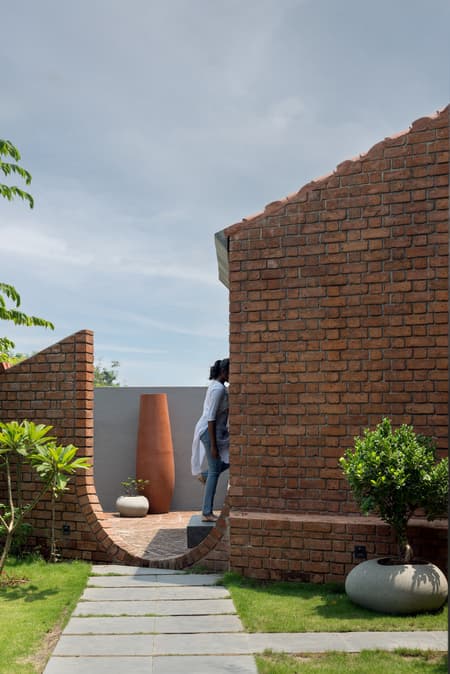
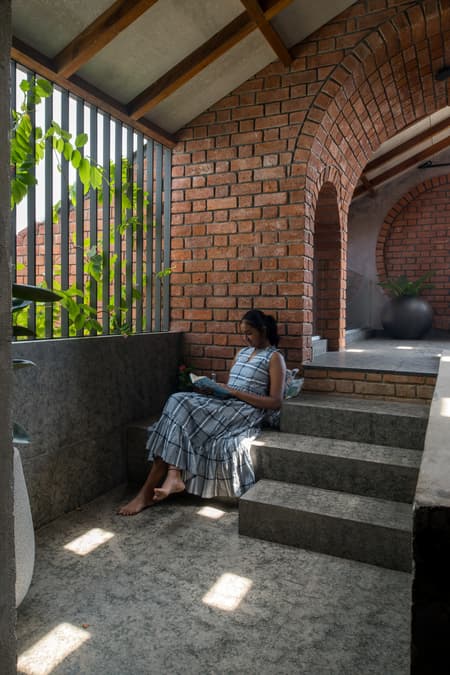
The L-shaped block recalls these traditional sensibilities with its exposed brick walls and a sloping roof that nearly touches the ground. Built with locally sourced brick and crafted by local artisans, it reinterprets vernacular values in a contemporary way. In contrast, the adjoining cuboidal volume draws from the architectural language of the colonial and post-colonial eras. Its 200mm exposed concrete walls reinterpret stone as poured concrete, with layered surfaces and subtle offsets, forming an Indo-brutalist identity. The block concludes with a modest planted terrace offering a quiet pause within the composition.
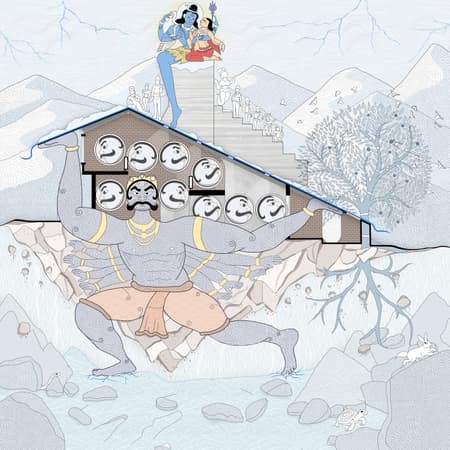
These two distinct blocks, shaped by constraints yet improvising in their own ragas, express a dynamic duality. Though conceived differently, they unite like a ‘jugalbandi’ one open and celebratory, the other calm and introvert. Together, they demonstrate how architecture can embrace contrast and complexity to create a rich, layered spatial experience.
.jpg?w=450&q=75&dpl=dpl_76Rq87wxQwFvSi96M2iBpo5TN6QL)