An individual, a content creator, a brand founder, a mother… When all these identities converge within a single space, this office is asked to hold far more than just "going to work."
Within the same environment, people shift between roles repeatedly throughout the day. Time does not offer clean boundaries between these states; they overlap, interrupt one another, and reshape daily rhythms.
The client of Beijing Sundate Office project lives precisely within this layered reality. As the founder of Sundate, a parenting-oriented lifestyle brand, she manages a growing team while also working as a content creator, a mother, and an individual navigating her own daily life.
Among these roles, that of an influencer is particularly complex. Work and life are closely intertwined, with little separation between on and off time. Meanwhile, content creation has become increasingly professionalized, shifting from an individual practice in domestic settings to a collaborative process involving planning, filming, editing, and operations.
The office supports daily work, internal discussions, visitor reception, and content production, while also accommodating the presence of children. Interruptions, brief pauses, and frequent role changes give the workplace an uneven rhythm.
As a result, emotional buffering, physical ease, and appropriate interpersonal distance became key considerations in the renovation.
milanesi|paiusco set out to create a space that supports the client’s multiple identities—one where work, filming, and everyday life can coexist, leaving room for comfort, mood, and inspiration.
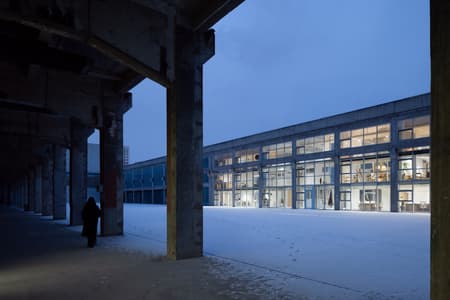
The project is located in Beijing’s Hengtong International Innovation Park, a former industrial site now operated and continuously revitalized by 798 Art District. Companies such as Didi and Baidu have established offices here, alongside numerous design studios. Minsheng Art Museum, designed by Studio Zhu Pei, is also situated within the park. Art, creativity, and commerce develop in parallel, shaping a diverse and dynamic environment.
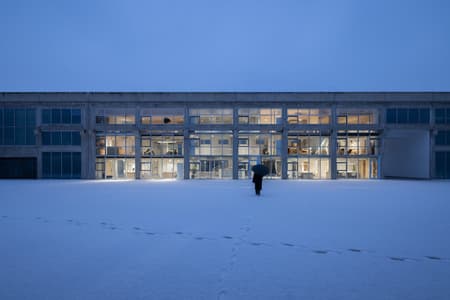
Several industrial buildings frame an internal plaza—a quiet open space within a dense, work-oriented environment. In addition to everyday use, the plaza hosts exhibitions, markets, and temporary events, serving as a buffer within the park.
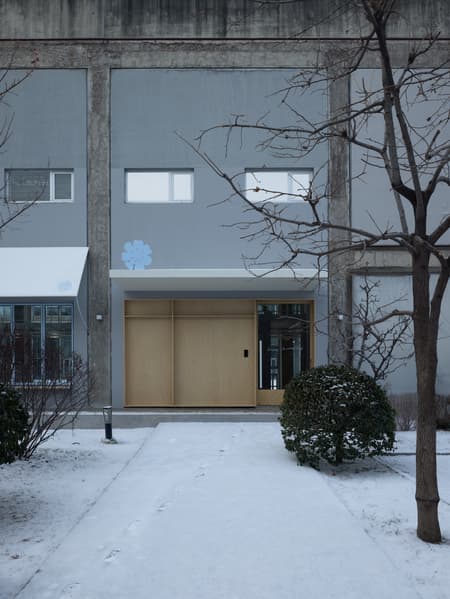
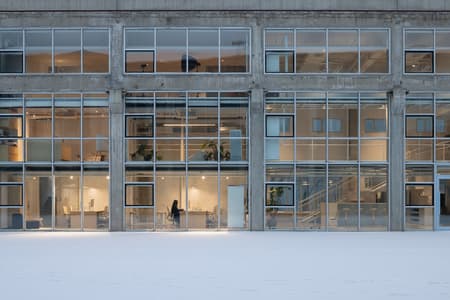
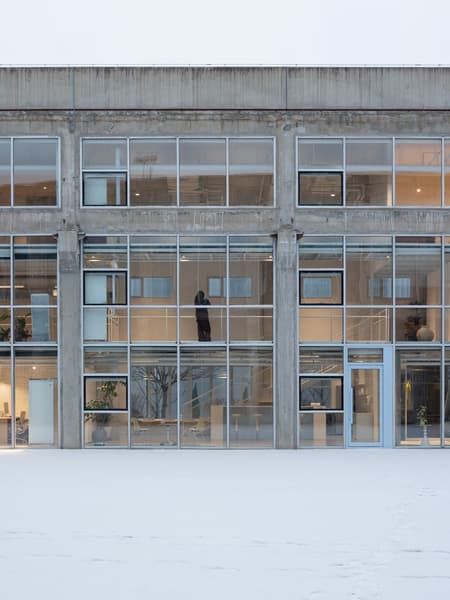
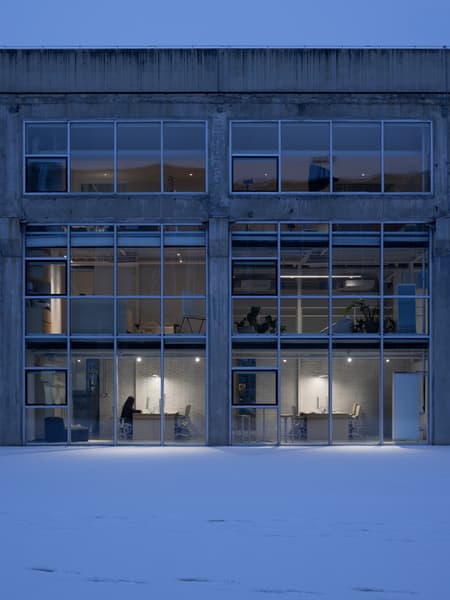
The renovation works within the existing building structure. Unlike other buildings that orient toward the street, the design focuses on the façade facing the plaza, strengthening the relationship between the office and the shared open space. Large transparent openings were retained to bring in natural light and visual connection. The original mullions were reworked, giving the façade a lighter and more restrained expression.
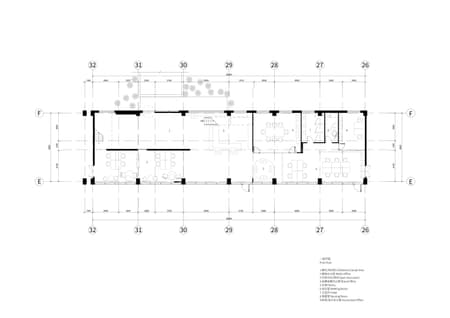
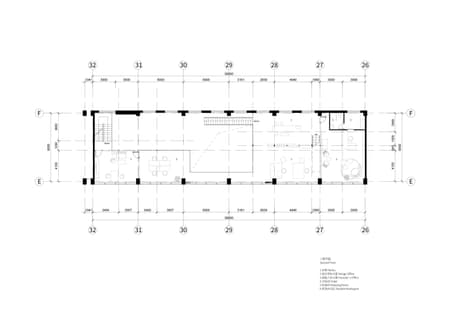
The building's primary structure was kept intact, with renovation efforts concentrated on reorganizing interior use. Without replacing the original systems, spatial layout and MEP conditions were optimized.
Outdated partitions were removed, and structural reinforcement was introduced where needed. Selected industrial elements were retained and unified through consistent treatment, allowing traces of the building's past to remain visible as new daily use unfolds.
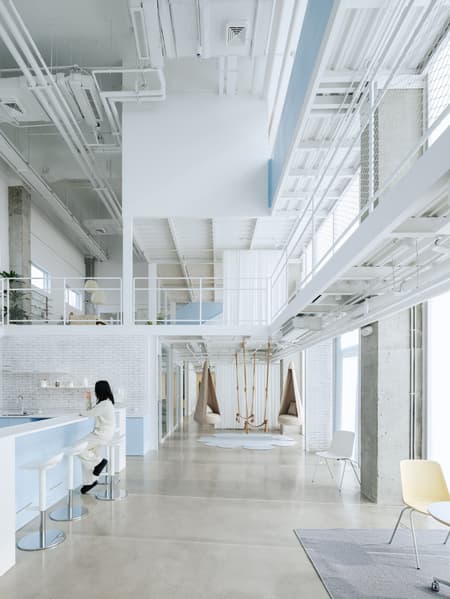
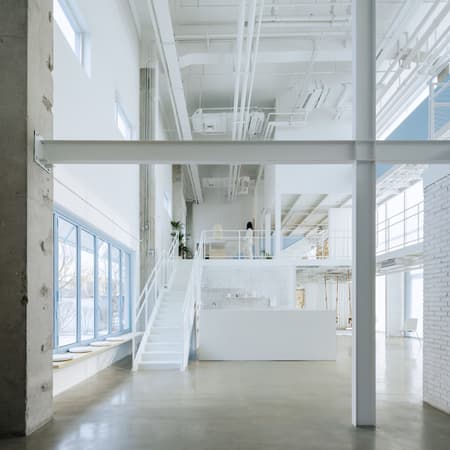
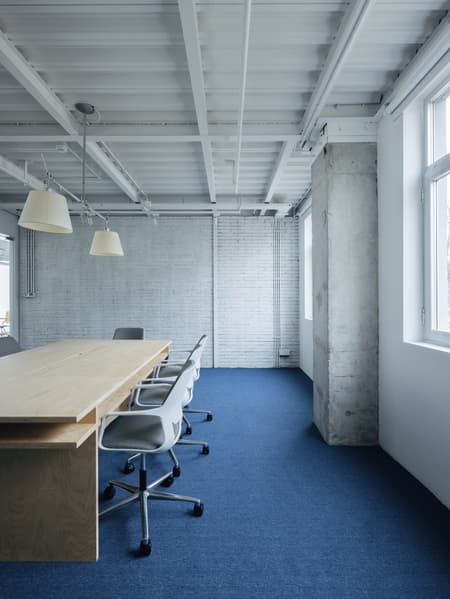
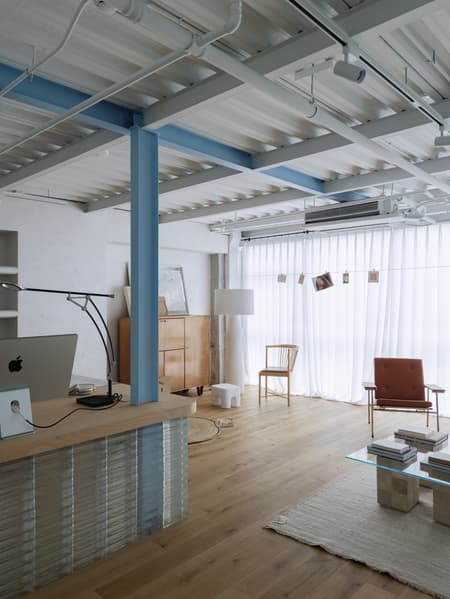
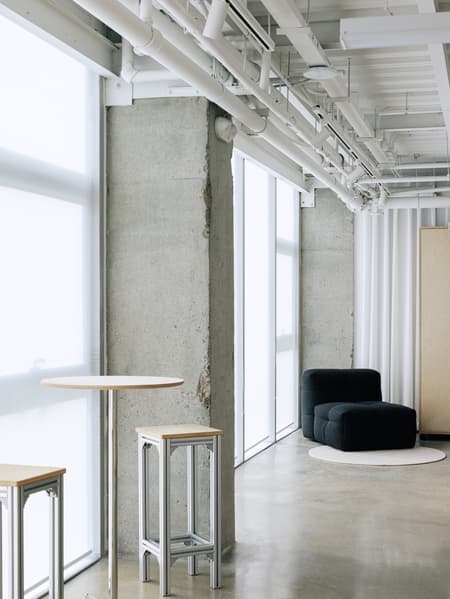
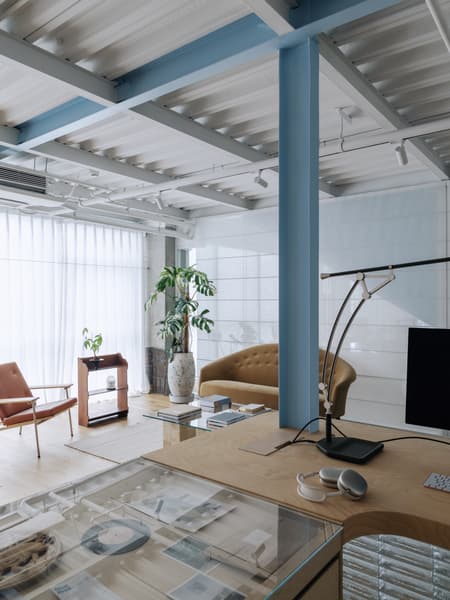
The material strategy begins with preserving the existing structure: the industrial ceiling and concrete columns retain their raw texture, while the white-painted brick walls blend with the current aesthetic yet still carry the traces of time.
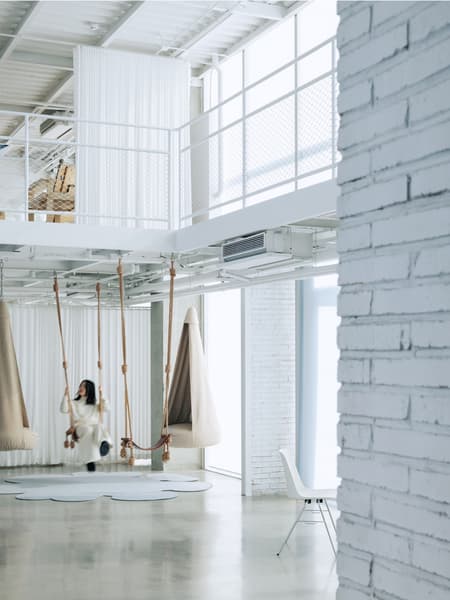
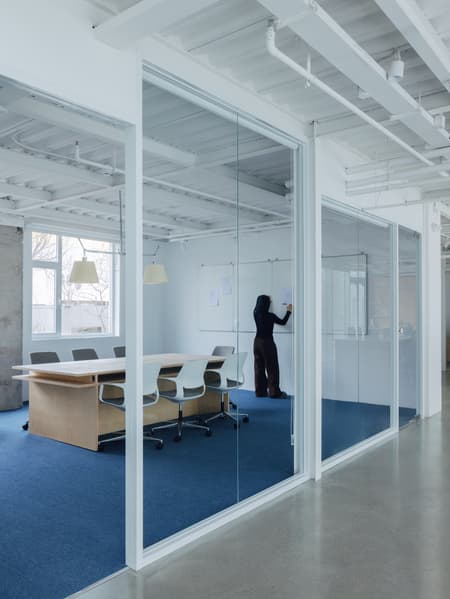
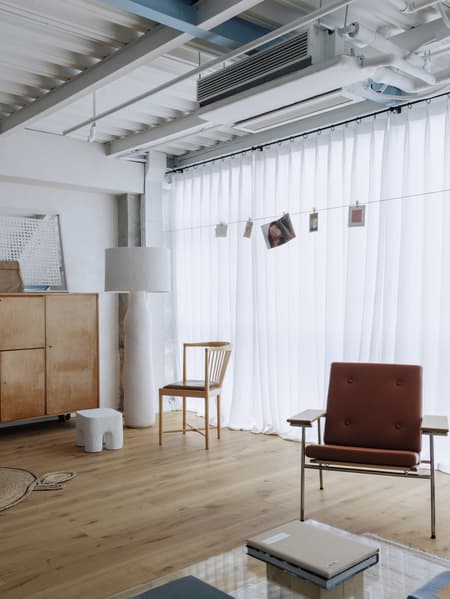
Against this backdrop, wooden flooring and cabinetry introduce warmth. Glass elements enhance transparency and extend sightlines across zones. Carpets soften footsteps and bring a more domestic atmosphere. Flexible curtains act as movable partitions, adjusting openness as needed and creating elasticity between open and more private areas.
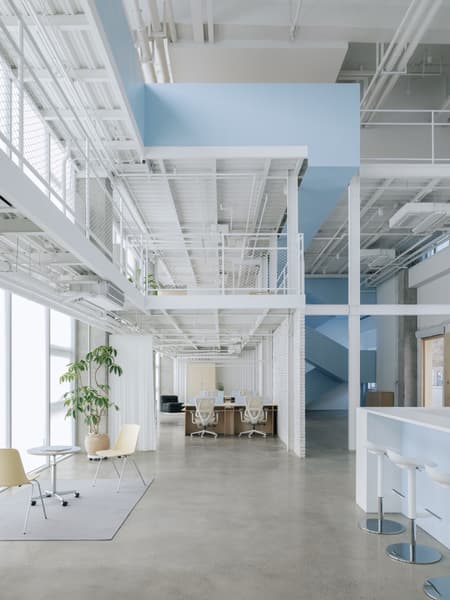
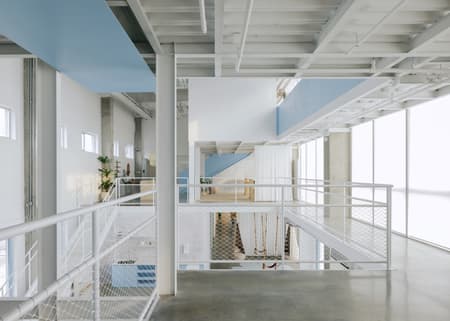
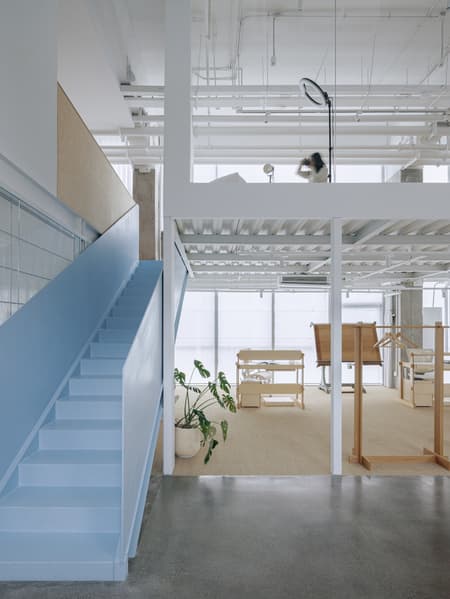
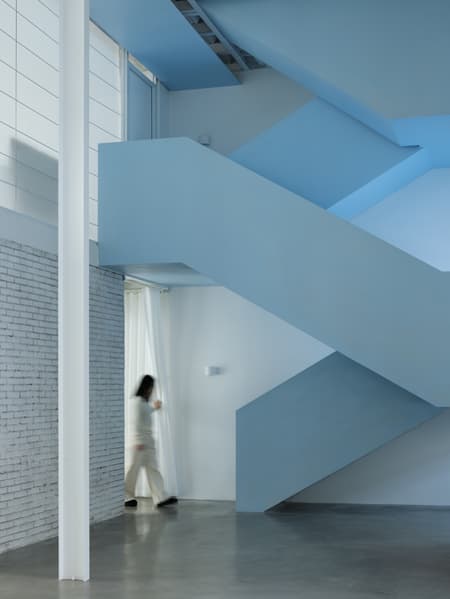
White serves as the primary background of the space, threaded through with Sundate's light blue brand color. The first impression recalls sky, clouds, and sunlight—an atmosphere that feels open and breathable. This palette reflects the brand's temperament: grounded in everyday family life, carrying a sense of lightness and childlike ease.
Natural materials, reuse of existing elements, and selective recycling strategies informed the renovation approach. The industrial ceiling and exposed services were retained, preserving structural clarity and directness. Soft colors, textiles, and carefully considered details temper the atmosphere, making the space more approachable. The contrast between a rigid structural framework and a gentle interior environment is present but balanced.
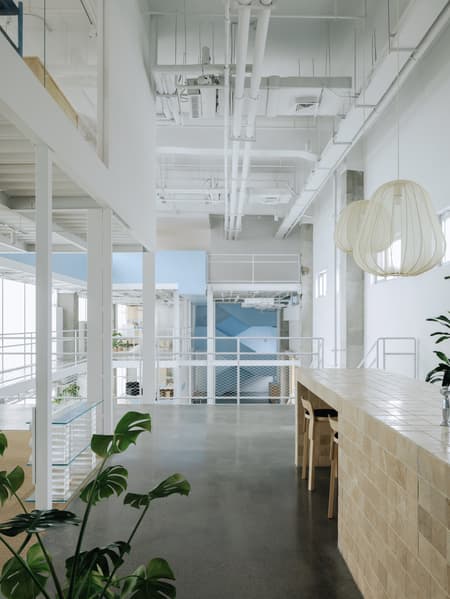
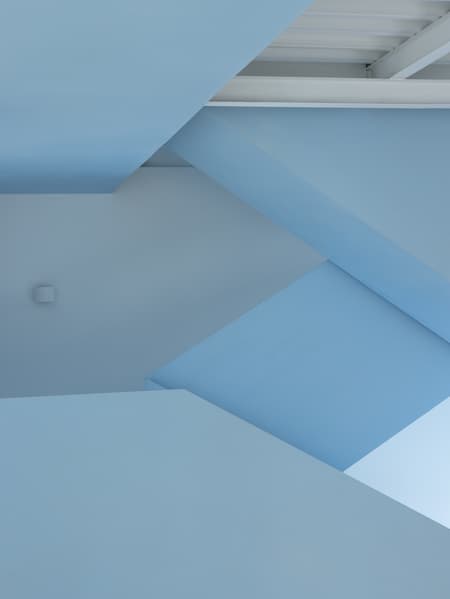
A light blue staircase runs vertically through the building. On each floor, corresponding blue elements echo this core, visually linking different levels and functions. Much like the client and her team, who move between roles and tasks throughout the day, the space shifts in use while maintaining a consistent internal core logic.
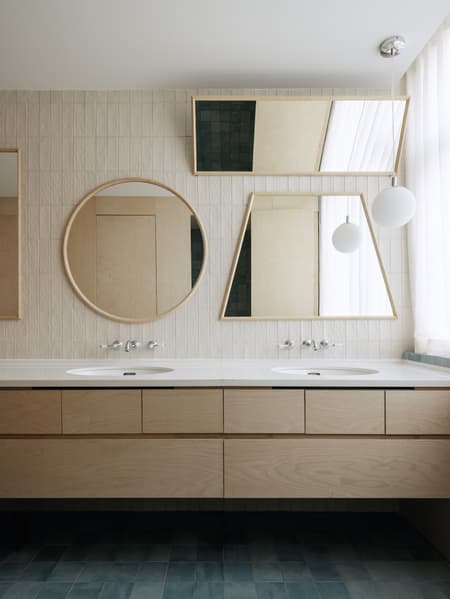
Echoing the parent-child lifestyle brand founded by the client, a touch of playfulness is woven into the spatial concept. Simple geometric shapes, easy for children to read, appear throughout the space, while adults find themselves surrounded by creativity and imagination. Certain unconventional perspectives emerge within the space, triggering fresh ideas in these unexpected corners.
In the restroom, multiple mirrors of different geometric shapes are combined, reflecting fragmented and magnified images of oneself. This playful experience continues the expression of whimsy found throughout the space.
The meeting room retains the building’s original structural character, with exposed concrete columns and whitewashed red brick walls. Against the cool-toned overhead structure, warm lighting from Artemide fixtures and a custom wooden table soften the atmosphere, keeping discussions open without feeling constrained.
For this all-female team, expectations of the workplace were articulated with remarkable specificity. Comfort or inclusivity were not discussed in abstract terms, but through concrete daily scenarios.
The common area is where people gather most frequently. The water bar and discussion zones encourage conversations to happen more often, while a rarely seen rope swing creates a relaxed, natural setting for dialogue. Ideas that rarely surface at the desk emerge here freely.
These decisions bear little relation to stereotypical notions of gender. "Female" functions here as a contextual condition rather than a defining label. What truly matters is that this group understands how they work, how they live, and what kind of environment can meaningfully support that reality.
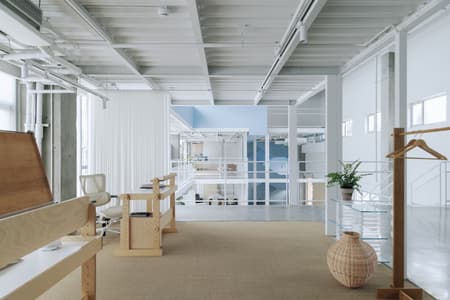
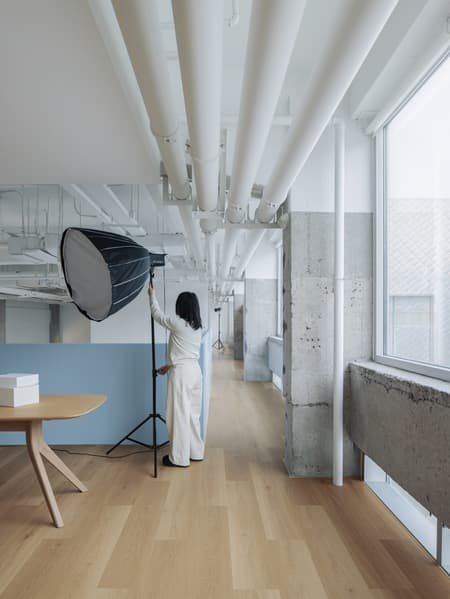
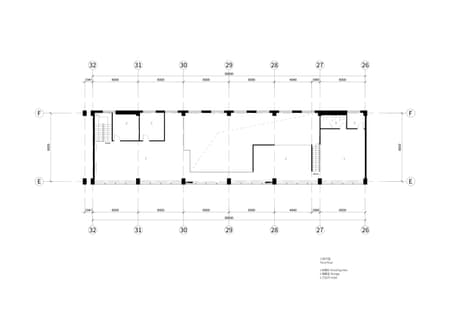
The overall office layout is organized around the working methods of a content creator. In particular, the third-floor shooting area accommodates various types of content—unboxing, outfit styling, and product sharing—all within one place. Different setups can be switched quickly, without the need for repeated clearing or temporary staging.
Equipment is systematically stored and managed. Lights, stands, and cameras each have designated positions, reducing friction in daily use. By separating filming from office functions, this level prevents content production from disrupting everyday work rhythms, giving creative output its own spatial and temporal boundaries.
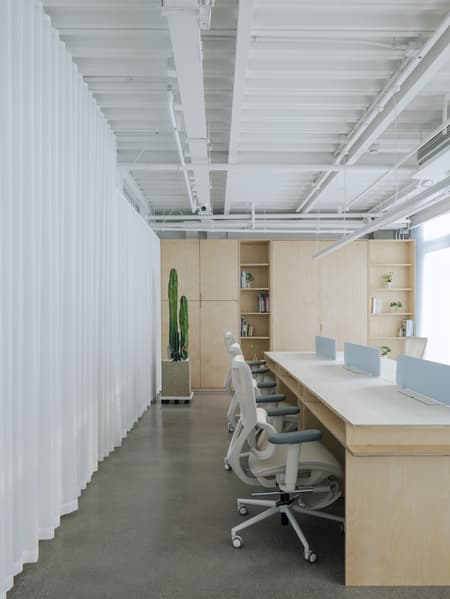
The designers’ workspace is open, with soft partitions acting as flexible boundaries that adjust the space between openness and privacy. Custom desks, glass, wood, and rugs in a playful style create a stable and comfortable environment, allowing designers to focus for extended periods and carry out original creative work.
The owner's office exudes a distinct personal character, with brown-toned furniture and soft furnishings conveying understated French elegance and classic style. In harmony with the preserved original structure, a unique desk was built using glass bricks, forming the main work area behind it. Small objects are displayed beneath the transparent tabletop, where new ideas are organized and developed.
A separate area is dedicated to relaxation, infused with artistic and creative energy. Child-friendly furniture is also included, allowing her to comfortably navigate her role as a mother when needed.
As content creation becomes increasingly professionalized, bloggers face a particular dilemma: work is built on sharing everyday life, and once sharing becomes an obligation, emotions and personal experience are repeatedly activated and consumed, often leading to a sense of intrusion and disorientation.
This condition mirrors a broader reality shared by many workers today—permanent online presence, blurred boundaries between work and private life, and efficiency-driven logics inherited from the industrial era. People are still treated as functional units, while rest and recovery are endlessly postponed to "after work."
In this context, boundaries within the workplace become especially significant. Physical boundaries influence how work is entered and how visible one remains, while emotional boundaries are often informal, compressed into self-management, or entirely absent.
At stake is a single question: whether individuals retain agency over their own states.
Space, therefore, is more than a tool for zoning. Transitional zones—between full engagement and complete withdrawal—can provide buffers for shifts in intensity, allowing movement between states without depletion.
If future workplaces can support such transitions, integrating pause and recovery into the working process itself, they may offer an alternative response to conditions long overlooked in contemporary labor.
Whether work and life should be integrated or clearly separated remains unresolved. Each approach reflects a different understanding of autonomy, boundaries, and long-term sustainability at work.