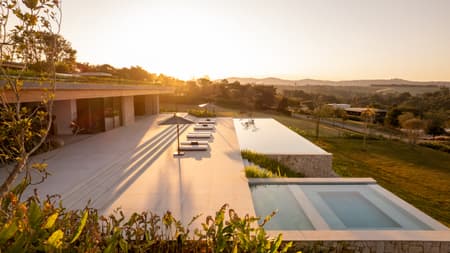
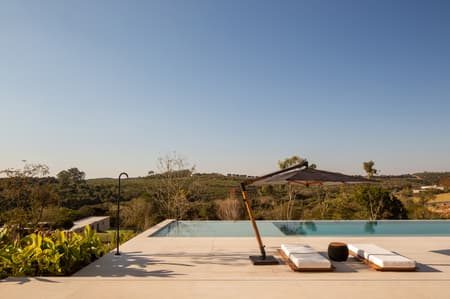
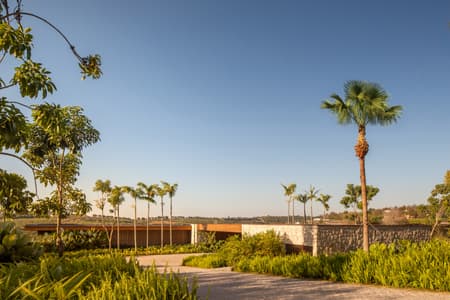
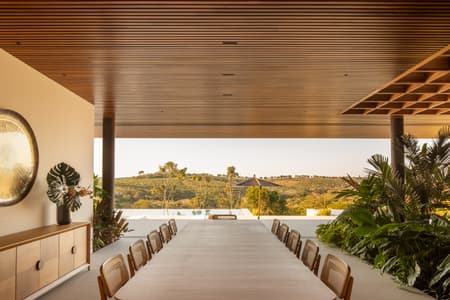
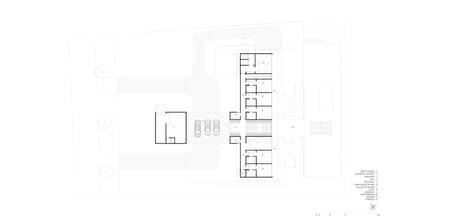
The Ramenzoni House was conceived as a summer residence where architecture acts as a mediator between living spaces and the landscape. The project is based on the principle that the house should not impose itself on the surroundings, but rather reveal and enhance its natural qualities through pathways, framing, and contemplation spaces.
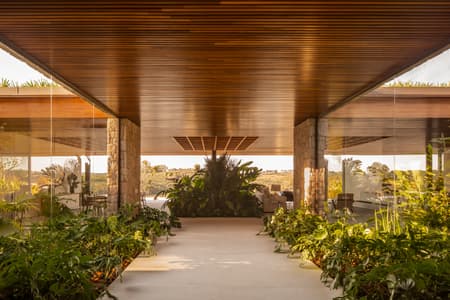
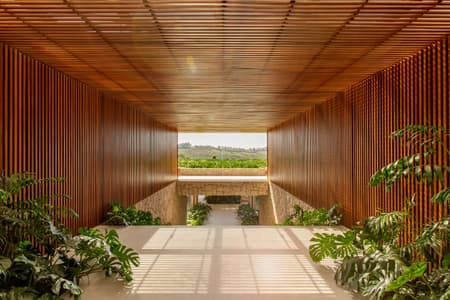
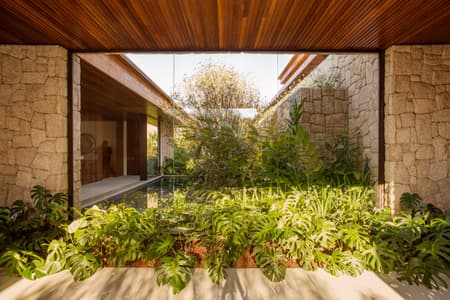
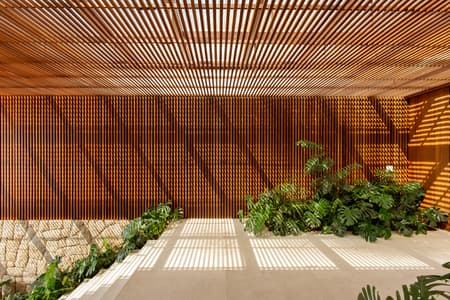
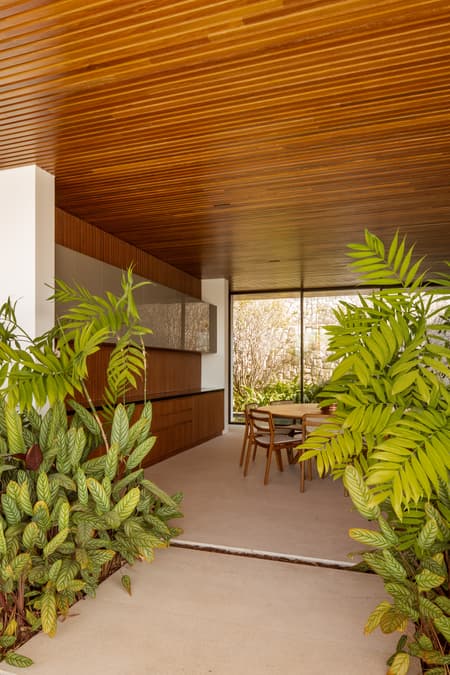
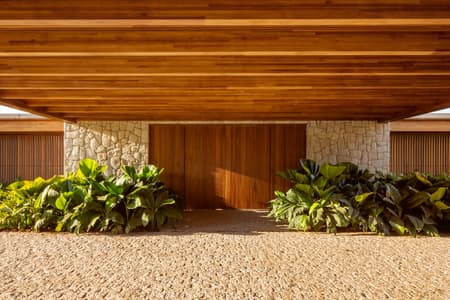
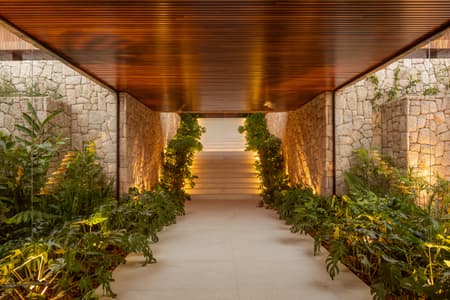
The main inspiration for the project was the direct relationship with the landscape, understood as a central element of the architectural experience. From the beginning, the goal was to create a spatial sequence capable of gradually guiding the resident, allowing for sensory and continuous contact with the surroundings. The entrance hall plays a fundamental role in this concept, functioning as a transition space that frames the landscape like a true living picture, establishing the tone of the experience from the moment of arrival.
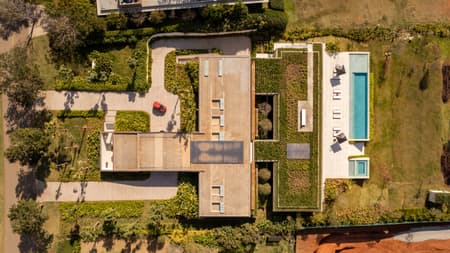
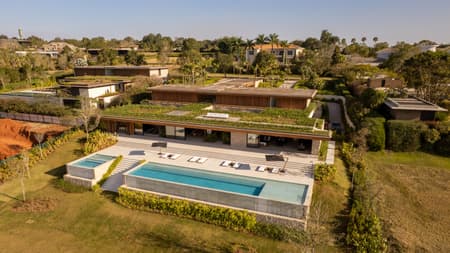
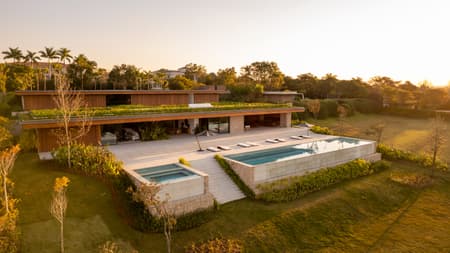
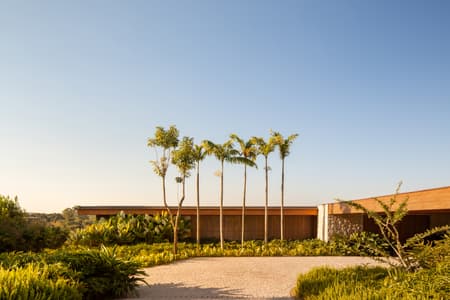
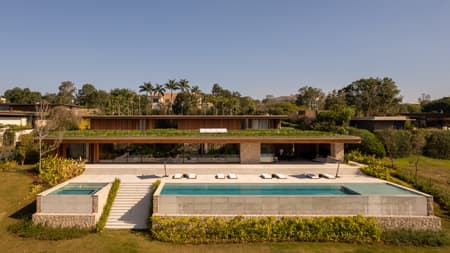
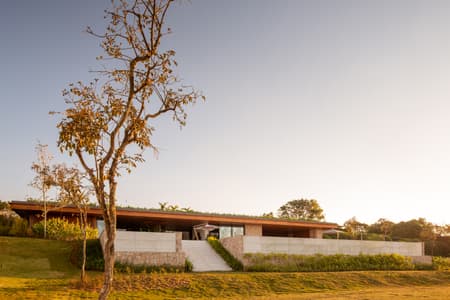
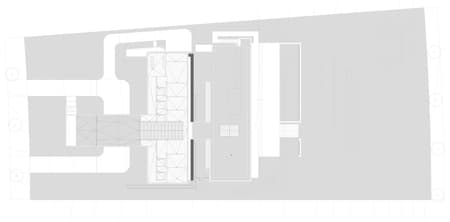
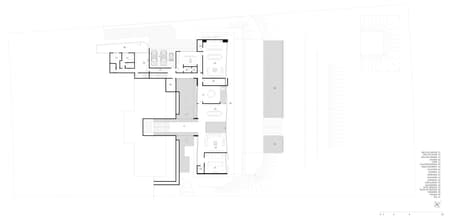
Among the main challenges faced was the placement of the residence on a site with marked topography, requiring a solution that balanced large built areas with a discreet architectural presence. The adopted strategy was the fragmentation of the program into horizontal volumes, following the terrain and reducing the visual impact of the construction. Another obstacle was to ensure thermal and visual comfort in a house that is largely open to the outside without compromising solar protection and privacy.
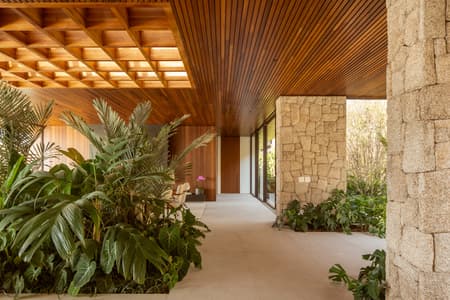
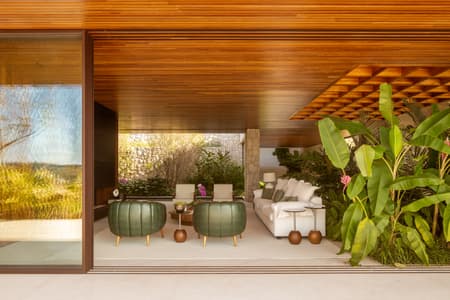
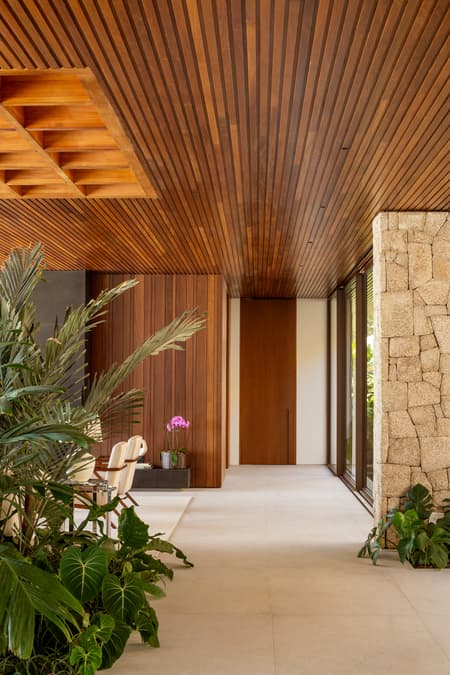
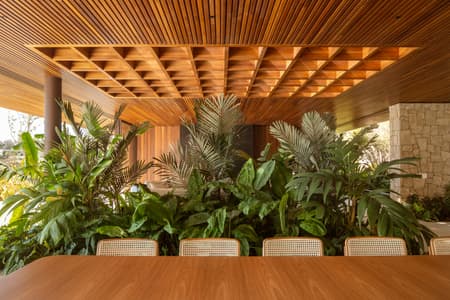
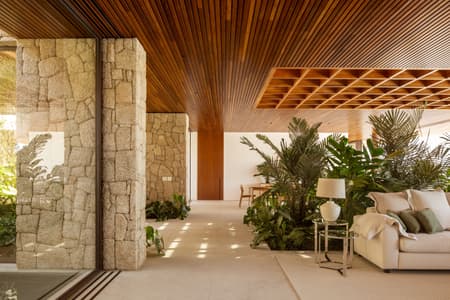
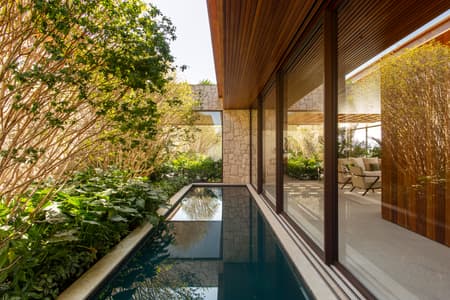
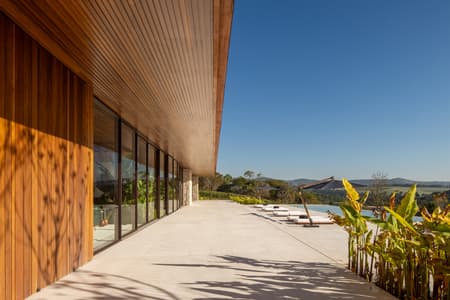
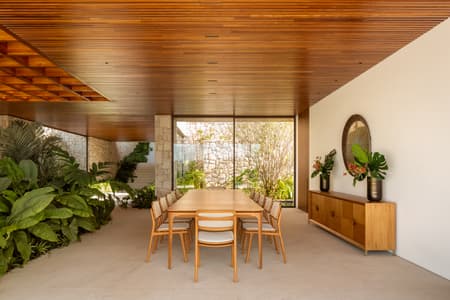
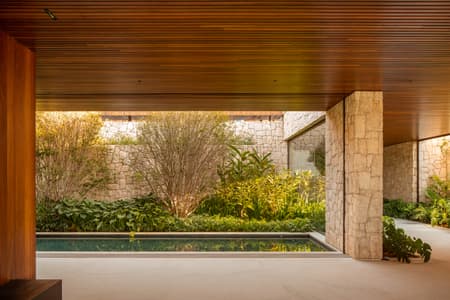
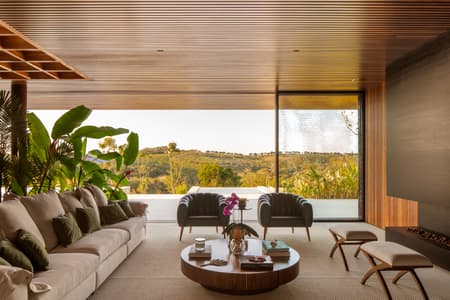
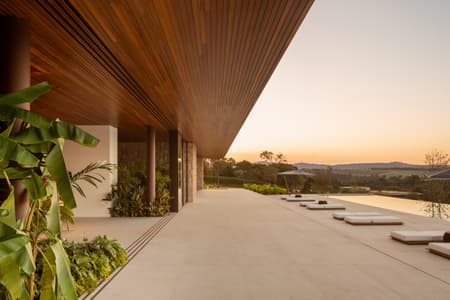
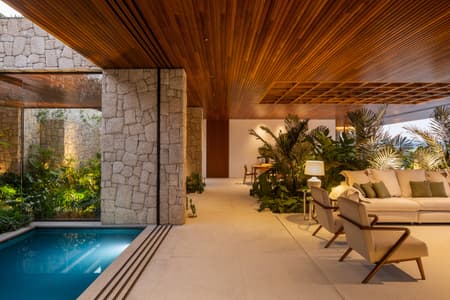
The construction employs traditional techniques associated with precise and detailed execution. The structure combines reinforced concrete with large overhangs, allowing for the creation of generous eaves that protect the indoor spaces. Natural stone appears in the retaining walls and vertical elements, reinforcing the connection to the ground and contributing to a sense of permanence. Wood is extensively used in ceilings, brises, and closures, providing warmth and visual unity to the environments.
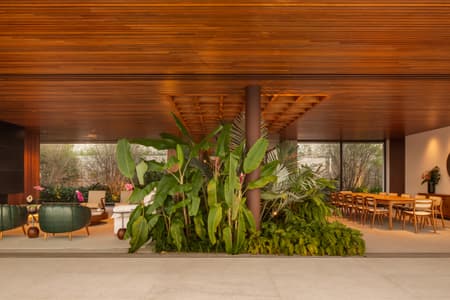
The spatial configuration prioritizes fluidity and integration among the spaces. The social areas are organized continuously, connected to gardens, patios, and outdoor areas through large glass planes. Landscaping is an integral part of the architectural project, crossing through the internal spaces and creating transition zones that dissolve the boundaries between interior and exterior. In this way, the house is constructed less as an isolated object and more as an experience of living in permanent dialogue with the landscape.