Reconnecting Urban Growth with Rural Heritage
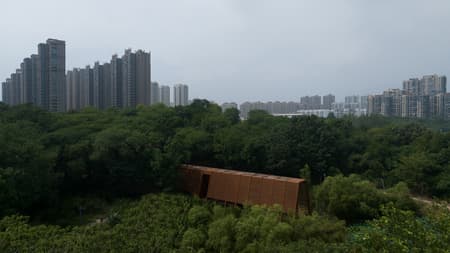
The House of Knowledge is part of the “20 Bookhouses” initiative, which aims to enrich community life in the rapidly growing metropolis of Xinyang. Located in Henan Province in central China, Xinyang has a population of around 12 million. The project site in Yangshan Park, literally “Sheep Hill,” was still rural and shaped by agriculture only about thirty years ago. With accelerating urban growth, this close relationship to the landscape and agrarian culture was at risk of being lost, especially for the younger generation.
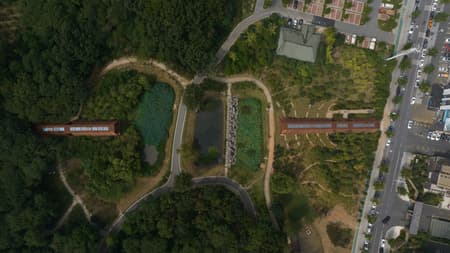
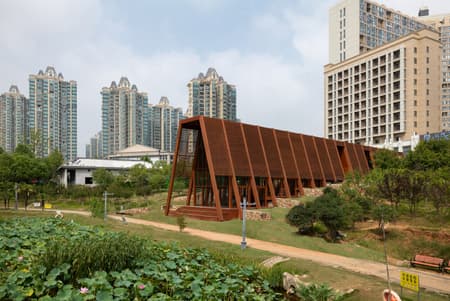
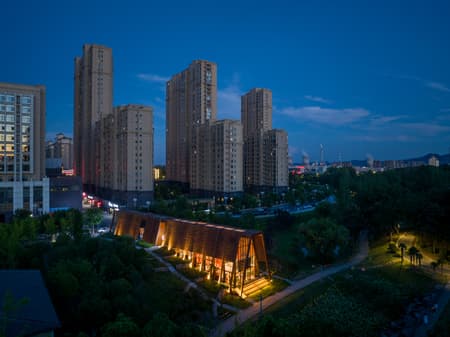
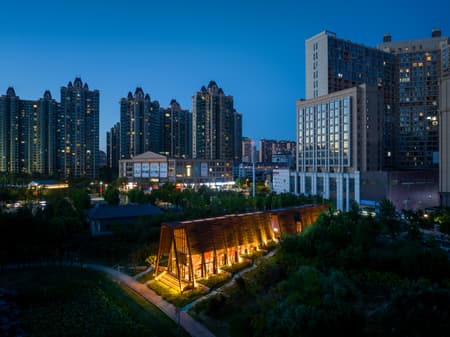
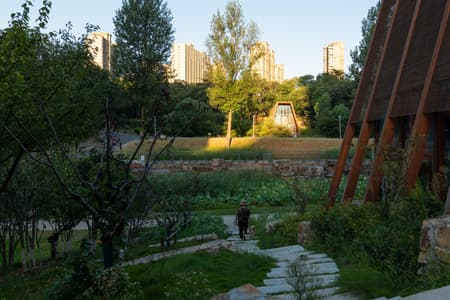
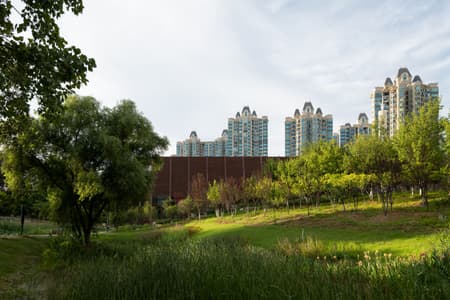
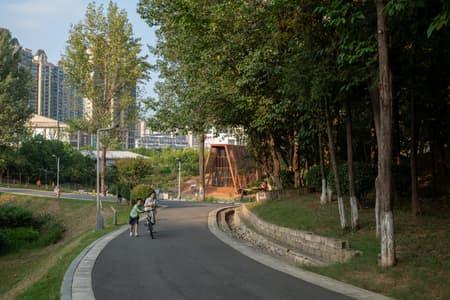
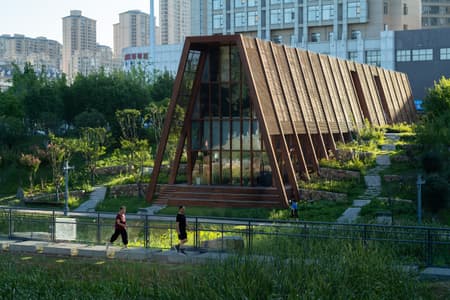
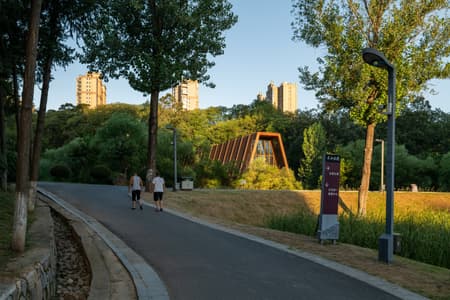
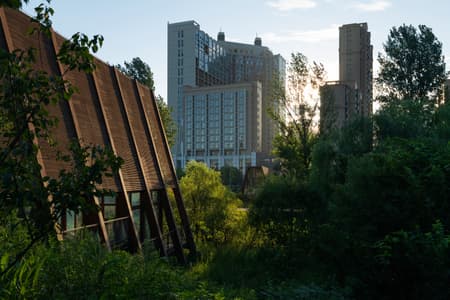
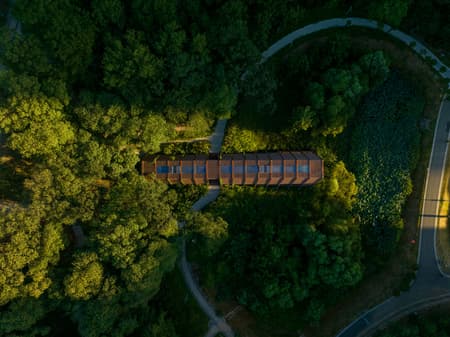
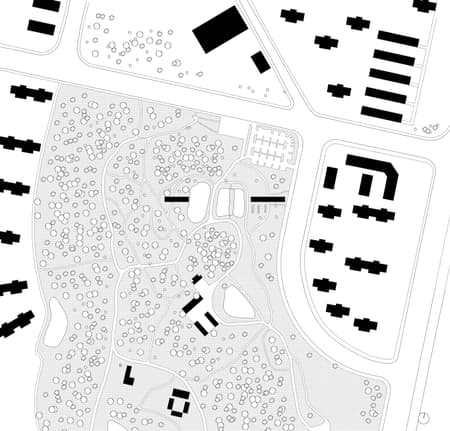
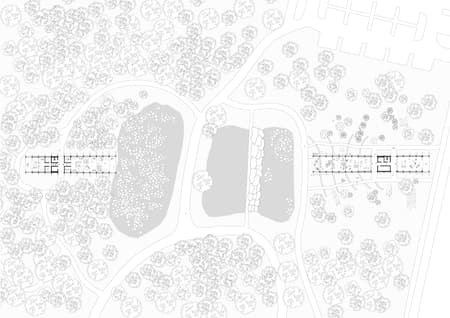
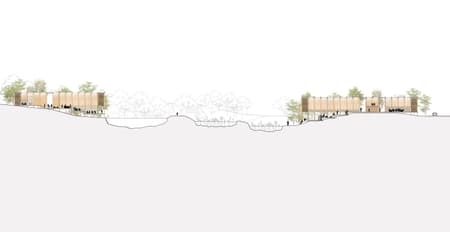
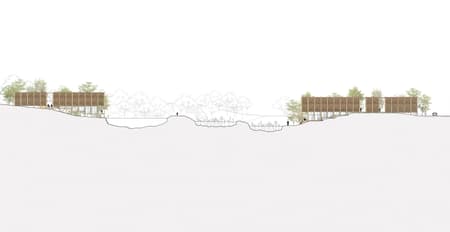
Against this background, the House of Knowledge positions itself as a bridge between past and future. It helps children and young people maintain a connection to agriculture, particularly to horticulture, soil, and regenerative cycles. The project consists of two buildings: a community library with an exhibition hall, and a teahouse. Between the two volumes lie three small lakes, embedded in a biodiverse park landscape and surrounded by dense urban development.
Together, the two buildings form a cultural and social centre that connects architecture, landscape, and education. The library is conceived as a place for learning, exhibitions, workshops, and communal activities. A dedicated exhibition area provides space for creative initiatives and emerging talents from the neighbourhood. The teahouse complements the ensemble as a place for meeting and informal exchange. Its special relevance derives from the regional context, as Xinyang lies within one of China’s most important tea-growing regions, where tea culture is deeply rooted in local identity.
Open Framework for Participation and Learning
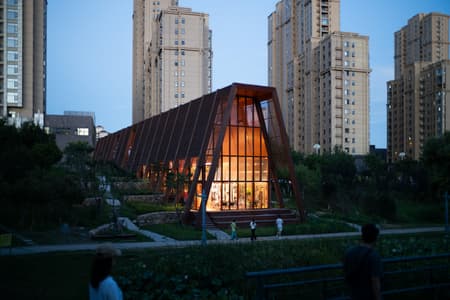
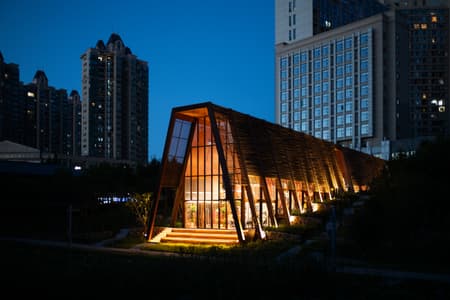
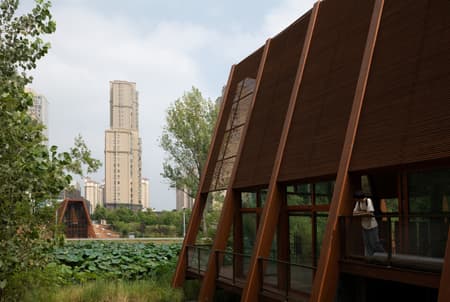
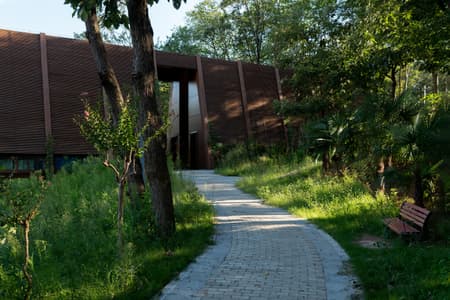
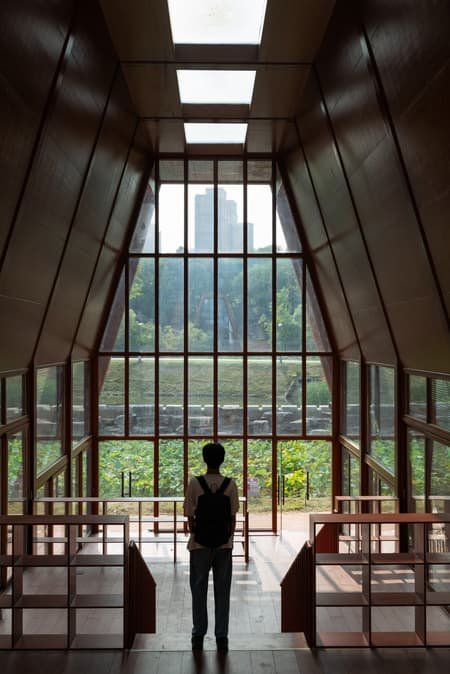
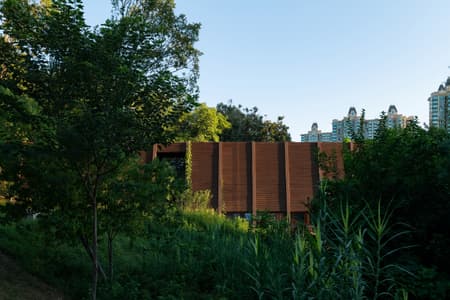
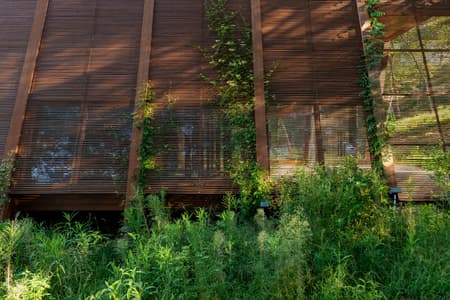
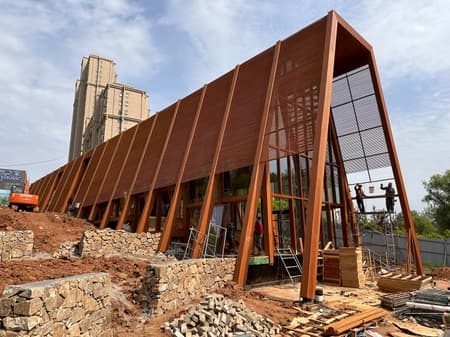
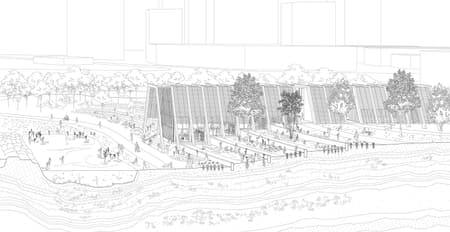
Strong visual connections, generous openings, and a variety of pathways link the buildings to each other as well as to the park and the surrounding neighbourhood. This creates a seamless transition between inside and outside, between city and park. The building volumes are supported on selective foundations and slightly elevated above the landscape. As a result, the ground remains largely unsealed, allowing water and vegetation to flow underneath, while the architecture appears as a floating element within the park.
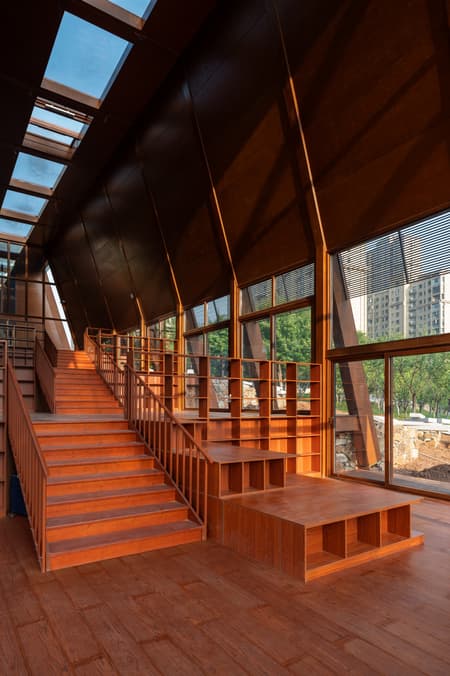
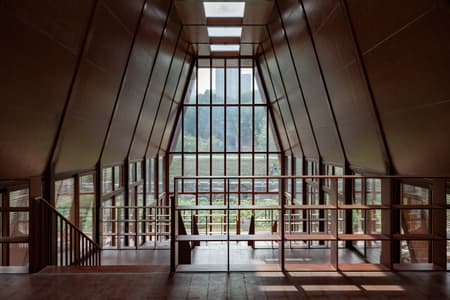
The spacious interiors with high ceilings invite gathering, learning, and participation. The programme is deliberately designed to be intergenerational, addressing children, adults, and seniors alike. It is conceived as something that can unfold over time, allowing the buildings to be gradually activated and filled with life.
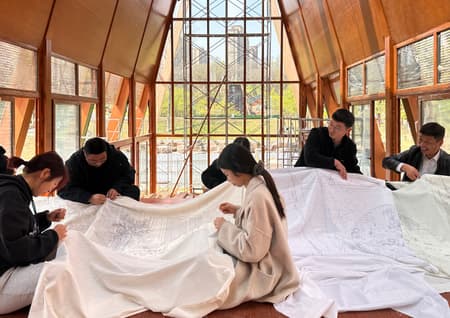
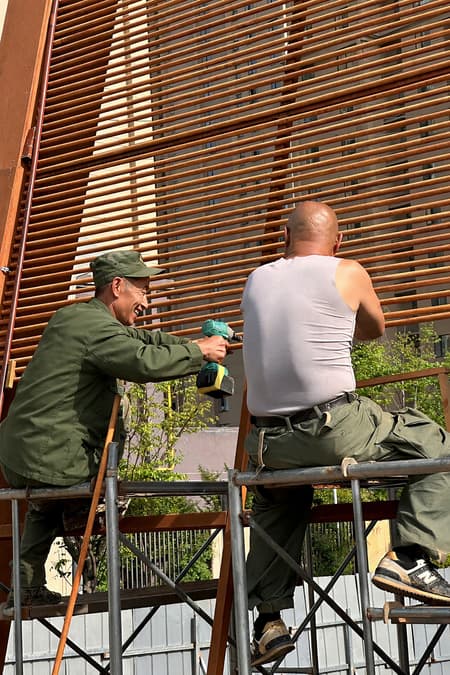
From the very beginning, the neighbourhood was closely involved in the planning and construction process. Residents were not seen as passive users, but as active contributors who support the ongoing development of the community and the ecological diversity of the site. This approach continues into the later operation of the project.
Cultivating Knowledge: Regenerative Thinking and Action
A central ambition of the House of Knowledge is to reconnect two dimensions that have increasingly fallen out of balance: the social and the ecological climate. On the one hand, the project creates an open and inclusive framework that fosters community, exchange, and collective learning. On the other hand, it provides hands-on knowledge about agriculture and biodiversity.
The surrounding landscape is conceived as a living classroom. Community gardens, ponds, and site-specific plantings within the park are organised according to permaculture principles. Children can dig into the soil with their hands and feet, plant and harvest, and directly experience how agriculture and horticulture function and how ecological cycles are formed. In this way, nature experience, education, and everyday life are closely interwoven.
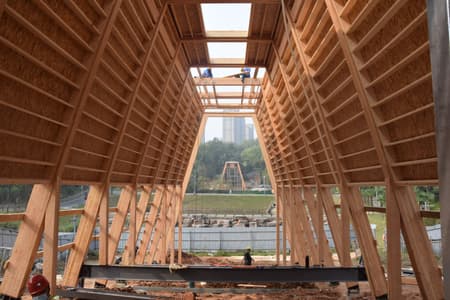
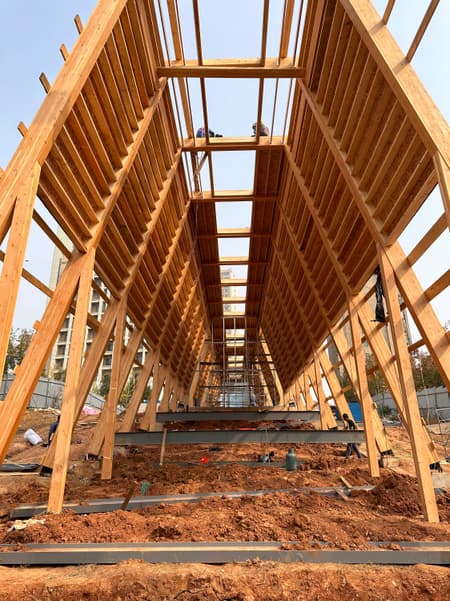
The buildings are constructed from natural materials such as bamboo timber sourced from the region. Structural shading, natural cross ventilation, and a climate-responsive design ensure comfortable use throughout the year. Heating and cooling systems are based on renewable energy sources. In this way, building, landscape, and use are connected into a coherent ecological and social system.
The House of Knowledge proposes a model for cultural and community infrastructure in rapidly urbanising contexts. It is not merely a place for consuming knowledge, but a place where knowledge is collectively created, and where regenerative thinking and action become part of everyday life.