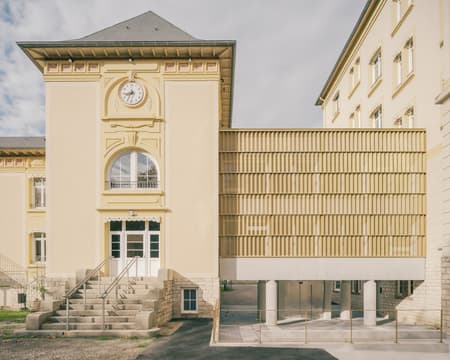


A project typically begins with a commission driven by necessity. The very formalization of a project—beyond this initial program—involves the combination of two inseparable perspectives: a broader view of the urban and landscape context, and a focus on the building itself and its interior. This constant interplay allows the project to transcend its own necessity and subtly address questions of place and society.
Far removed from fleeting trends and ephemeral fads, the building must strive for a form of timelessness, transcending gratuitous formalism. It therefore inherently demands a unique and irreplaceable response. The resulting projects thus attempt to demonstrate that a single building, through the precision of its geometry and placement, can support a site that remains precious.
The relative abundance of objects has deprived the city of monuments. Many projects thus become the object of a flashy, advertising-style image, rendering them insensitive to urban and topographical contexts. Yet the city is primarily built of housing, schools, and shops, whose unity makes the urban environment the natural territory of humankind.
This urbanity implies a certain ordinariness and a certain self-evidence in the architecture produced. It allows the building to refocus on its inhabitants while contributing to the existing urban and landscape complexity. While this approach often leads to failures and sometimes to incomprehension from juries or clients in the face of more alluring and seductive images, it also allows for the preservation and amplification of a place's intrinsic qualities through a project that is both utopian and concrete.